Ruben Gonzalez-Vicente | Can Jamaica be the Singapore of the Caribbean?
Loading article...
-
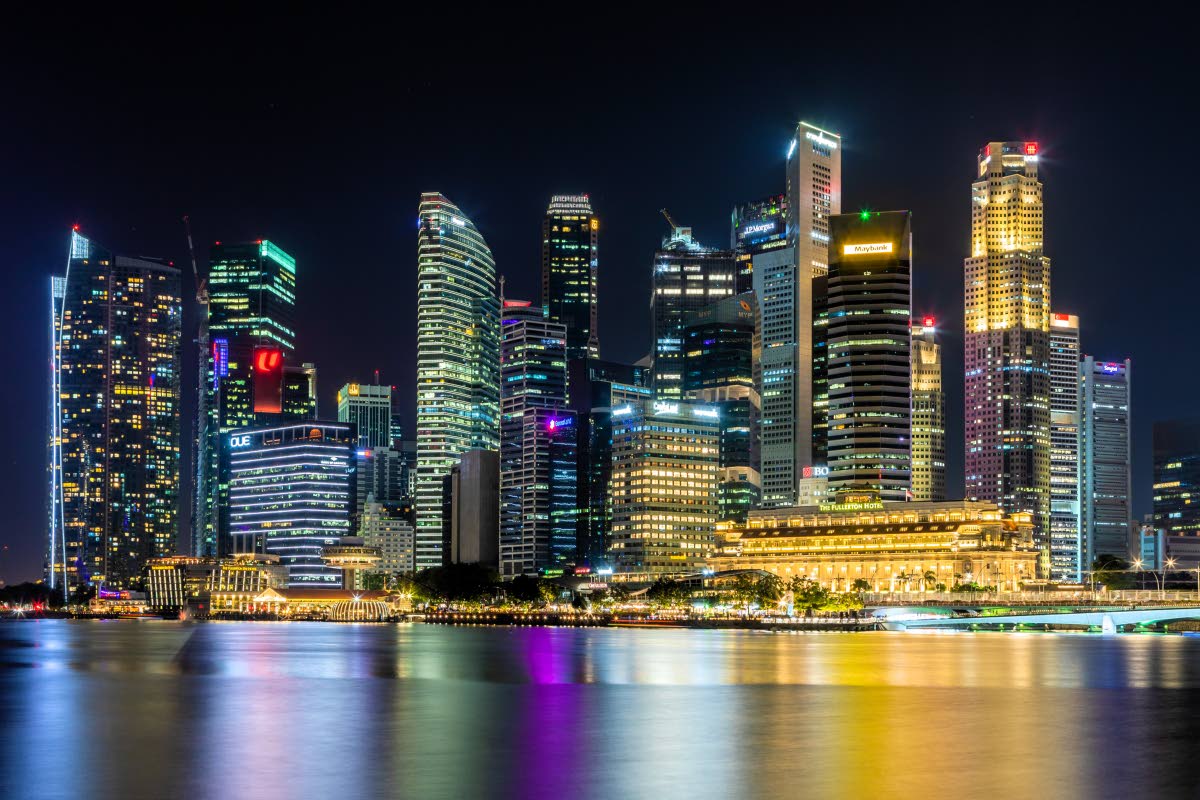 Skyline of the Central Business District of Singapore. Photo - Bijay Chaurasia / Wikimedia Commons
-
Skyline of the Central Business District of Singapore. Photo - Bijay Chaurasia / Wikimedia Commons
-
 Ruben Gonzalez-Vicente. Photo - Contributed
Every so often, Singapore reappears in Caribbean political conversations as a model to aspire to. This is hardly surprising. What is not to like? Singapore is a tiny tropical island with few natural resources that emerged from British colonial rule and now has a GDP per capita of almost US$99,000, more than 12 times Jamaica’s US$8,003.
If Singapore could become one of the richest countries in the world, why could Jamaica, or another Caribbean island state, not do the same? There is nothing wrong with that aspiration. One could hardly object to a more productive economy capable of improving ordinary people’s living standards. The problem is that many of the recipes proposed for turning Caribbean countries into the ‘Singapore of the Caribbean’ rest on a selective reading of Singapore’s history and of the model that emerged from it.
A first problem is that the colonial histories of Singapore and most Caribbean islands were very different. Singapore, like Hong Kong, was not primarily a plantation colony. It was a commercial gateway into a much larger regional economy, built around a strategically located harbour. By independence in 1965, it had long attracted merchants, capital and commercial expertise from across Southeast Asia.
This does not make colonialism benign. Singapore was a highly specialised cog within a wider machinery of colonial extraction, with European firms dominating important areas of international commerce. But Lee Kuan Yew’s government inherited commercial and financial infrastructure with few equivalents in the Caribbean. Jamaica, by contrast, emerged from centuries of plantation slavery and an economy built around agricultural exports, later supplemented by bauxite and tourism, both dominated by Western investors. History does not determine the future, but it certainly helps shape the possibilities open to a country.
SINGAPORE MODEL
The comparison becomes more problematic when we turn to the recipes usually attached to Singapore’s success after independence. The familiar version goes like this: low taxes, a business-friendly government, openness to foreign investment, fiscal discipline and an unsentimental embrace of the market. Prime Minister Dr Andrew Holness has invoked Singapore in precisely these terms, linking openness to international investment to his promise that Jamaica would become “the Singapore of the Caribbean”.
There are elements of truth in this story. Singapore has enthusiastically welcomed international capital and trade. But that leaves out a large part of the picture. Consider the scale of the state itself. Close to 80 per cent of Singapore’s resident population lives in housing built by the public Housing and Development Board. The state also used compulsory land acquisition on a huge scale, giving the government enormous power to decide where housing, industry and infrastructure would be located.
Nor did the government simply create favourable conditions and wait for private enterprise to emerge. It created companies of its own in shipbuilding, shipping, banking, manufacturing and other strategic sectors. In 1974, many of these were brought together under state-owned Temasek, which today manages a portfolio worth US$401 billion, almost 18 times Jamaica’s annual GDP. The state also financed industry, developed industrial estates and invested heavily in infrastructure and education. Singapore may be one of the great centres of global capitalism, but it is difficult to describe its rise as the triumph of a small state getting out of the market’s way.
COLD WAR FACTOR
The Cold War also mattered. Singapore, like South Korea, was a firmly anti-communist ally in a region where Washington feared the spread of communism, giving its government room to build a capitalist economy in which the state nevertheless played a central planning role. Jamaica occupied a very different position. In the 1970s, Michael Manley’s democratic socialism, ties with Cuba and efforts to gain greater control over bauxite were viewed with deep suspicion in Washington. The lesson is not that Singapore was allowed to be socialist whereas Jamaica was not. Singapore was hardly that. It is that similar forms of state intervention were treated very differently depending on who pursued them and where.
And then there is the less comfortable part of the Singapore story. For all its economic success, Singapore remains a highly controlled and punitive society. Its economy also depends heavily on a large migrant workforce, particularly in construction and domestic work, whose members do not enjoy the same rights and protections as citizens and permanent residents. The same political party has governed since 1959, while opposition politics, public protest and freedom of expression operate under significant legal constraints.
Even its remarkable public housing system has also been used as an instrument of social management, with the allocation of housing upgrades at times entangled with electoral politics. Singaporeans enjoy many personal freedoms, but political and social discipline has also been part of the country’s development story. Critics have questioned whether that degree of discipline and conformity comes at a cost to risk-taking and creativity, something that might sit uneasily with the kind of cultural creativity for which Jamaica is internationally renowned. Those are less attractive lessons for a Caribbean region shaped by long struggles for political freedom and democratic rights.
REAL SINGAPORE
Singapore certainly has lessons to offer Jamaica and the wider Caribbean. But perhaps the first lesson is to look at Singapore itself rather than at the idea of Singapore. The country that actually exists is highly capitalist and extraordinarily open to international trade and investment. It is also built on extensive public ownership and social provision, long-term planning, state investment and unusually strong government direction, alongside forms of political and social control that few in the Caribbean would wish to reproduce.
That is a more complicated story than any slogan can capture. It is also a much more interesting one.
Ruben Gonzalez-Vicente is associate professor in political economy, Department of Political Science and International Studies at University of Birmingham.