25 years later, ‘Life and Debt’ still resonates
Loading article...
-
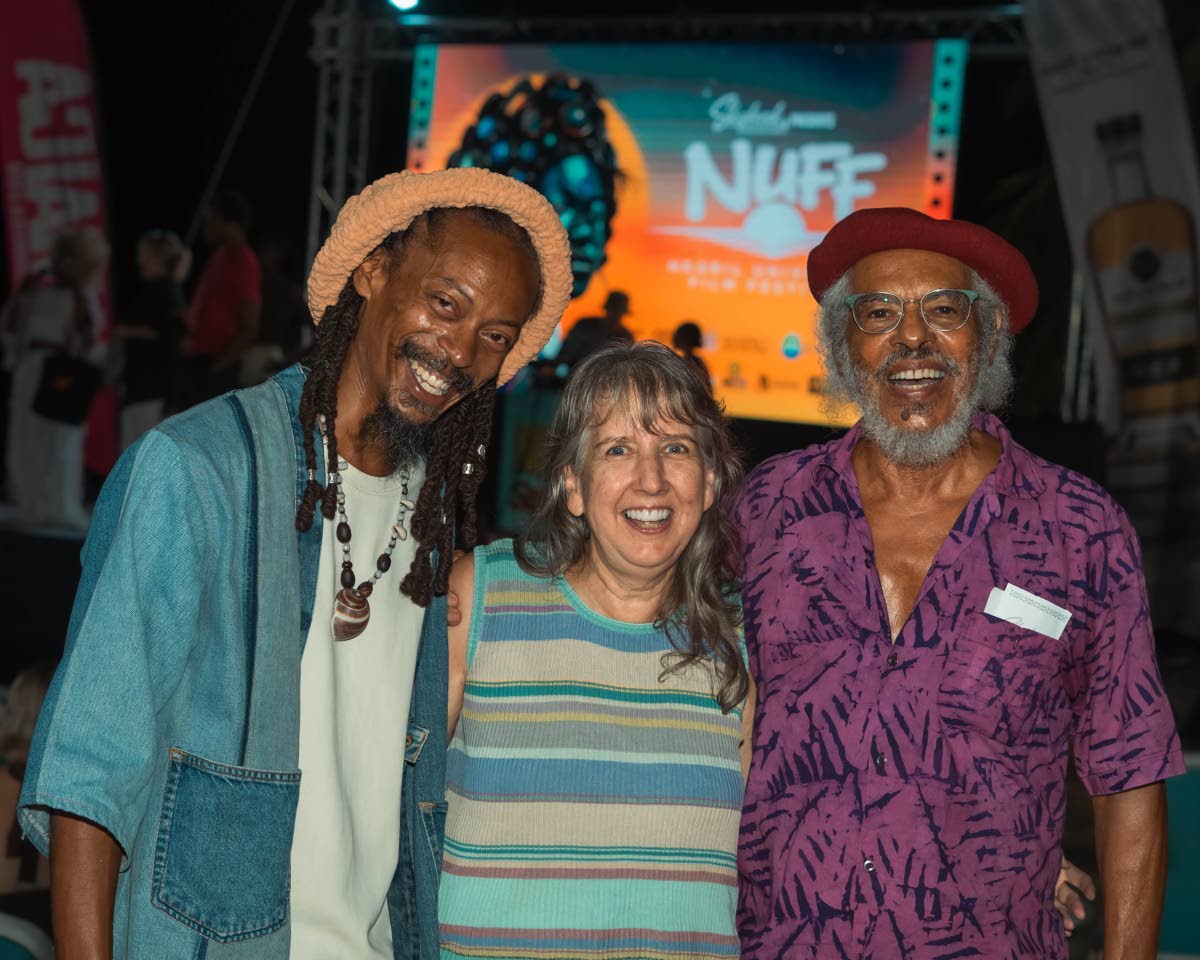 Following the 25th anniversary screening of ‘Life and Debt’, Negril Universal Film Festival founder Gareth Cobran (left) shares company with the documentary’s director, Stephanie Black, and Dr Michael Witter (right), retired senior lecturer in economics at the University of the West Indies. Photo - Anchardo Patterson
-
Following the 25th anniversary screening of ‘Life and Debt’, Negril Universal Film Festival founder Gareth Cobran (left) shares company with the documentary’s director, Stephanie Black, and Dr Michael Witter (right), retired senior lecturer in economics at the University of the West Indies. Photo - Anchardo Patterson
-
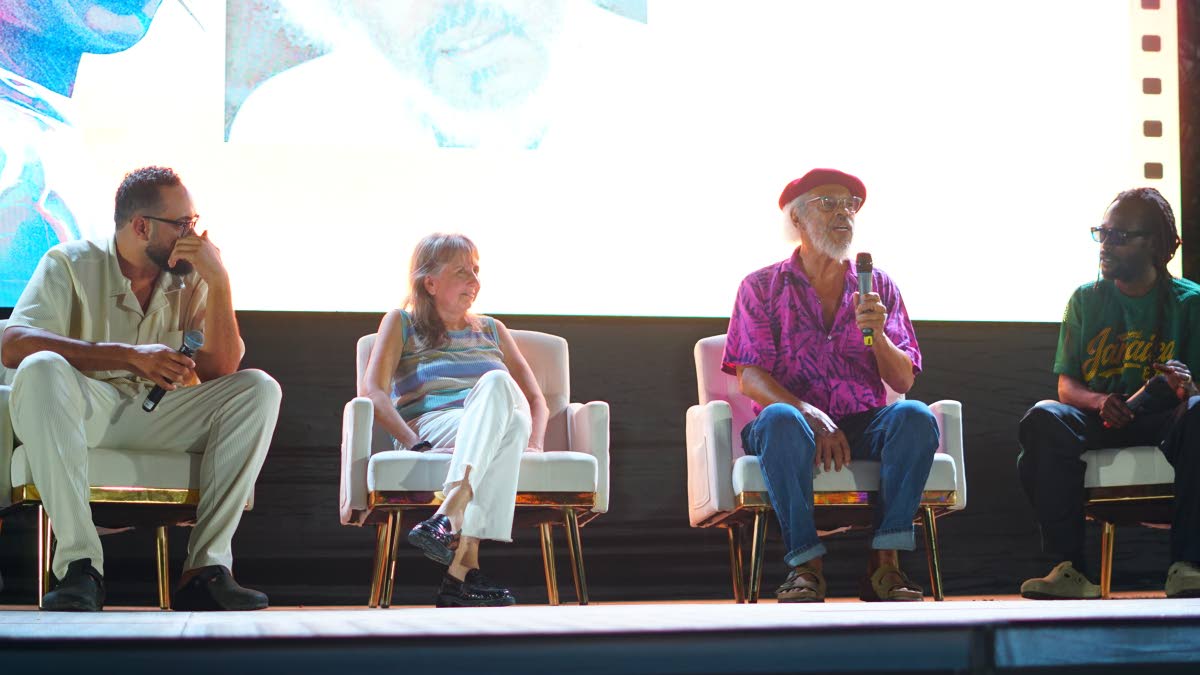 Documentarian Stephanie Black (second left) listens as economics professor Dr Michael Witter (second right) makes a comparative analysis of past and present financial landscapes during a panel discussion at Skylark Negril Beach Resort last Thursday. The session, which invited questions from the audience after the film’s showing, was moderated by media personality Reuben Hussey (left), while reggae artiste Jesse Royal was a panel member. Photo - Du Vaughn Burke
The past and present lives of filmmaker Stephanie Black intersected on the Jamaican coastline. Awash with euphoria, the New Yorker paused to process feedback from the audience who had just watched her influential 2001-released documentary Life and Debt, which was the opening selection for the Negril Universal Film Festival (NUFF) at Skylark Beach Resort last Thursday.
“I am blown away by the reception and the response,” she mused. “It feels amazing watching the film on the beach in Jamaica. It’s been shown mostly abroad, so I have seen it more with foreign audiences.”
The last time Black sat with local filmgoers was decades earlier when Life and Debt debuted at Palace Amusement’s now long-defunct Island Cinema in New Kingston.
“I haven’t had the experience except 25 years ago when it first showed in Jamaica,” she recounted after NUFF’s commemorative anniversary screening.
Black’s 86-minute documentary zoomed in on the economic and social fallout of the dairy and garment industries on The Rock, set against the backdrop of late Prime Minister Michael Manley-led administration’s signed agreement with the International Monetary Fund (IMF).
With the stranglehold policies of the World Bank as a focal point, the documentary, which paints a contrasting narrative of the tourist and local working-class experiences, spotlights a host of revelatory interviews. Among those offering analysis on the imbalance of globalisation on small nation economies were Manley; the late Minister of Foreign Affairs and Foreign Trade, David Coore; retired University of the West Indies economics professor Dr Michael Witter; and late First Deputy Managing Director of the IMF, Stanley Fischer.
Fischer’s on-camera candour about inequitable terms meted out to developing countries through IMF agreements elicited audible groans and shaking heads from NUFF’s rapt beachfront audience.
BIG INTERVIEW GET
How did Black secure such frank talk from the then high-profile power broker? The documentarian behind the 1990-released Florida sugar cane industry exposé H2 Worker and 2008’s Bob Marley family music concert film, Africa Unite, copped to employing a sleight-of-hand approach for her Life and Debt big interview get.
“I was working as a freelance producer and director with the PBS show Sesame Street at the time when I was making Life and Debt,” she recalled, describing her repeated efforts to get a sit-down with the IMF’s leading man.
“A Mrs White was the person I had to contact to get the interview. I had spoken to her but wasn’t getting through. Luckily, I called back two weeks later and she was on vacation,” Black said remembering with a wry smile.
“I told the person who was filling in for Mrs White I had done children’s programming and wanted to do a documentary where children could better understand the IMF, and she told me to submit questions, which I did. Then I scheduled an interview with Mr Fischer and we did that quickly before the real gatekeeper came back.”
The doc’s eventual release did not find Black in Mrs White’s good graces.
“When it came out, she called me and, let’s just say, I held the phone very far from my ear,” she told The Gleaner.
The seminal film has since become essential viewing for UWI students across several faculties on the Mona campus. Reflecting on how it resonates with her 25 years later, Black said:
“The experience of this anniversary showing at NUFF came about very casually but, at the screening, it didn’t feel casual at all. It felt important beyond what I had anticipated, in that the film, in some ways, seems to serve as a call to action. There were a lot of young people at the screening who spoke to me after and expressed [that] they are interested in nation-building. They want things to be equitable. It was very moving to see the film land in that way.”
Meanwhile, for Dr Witter, who was one of the interview subjects in Life and Debt, in re-watching, he said: “I was very moved by it because of the parallels.”
Witter observed of the filmmakers and creatives at NUFF, “To understand what is happening now, and make their own films, I think it is important for them to understand what Stephanie was trying to depict and go beneath the surface to understand what were the social processes it was trying to capture of its time.”
Giving his take on what he attributed to the adage ‘the more things change, the more they remain the same’, the economics expert remarked, “At that point [of the film’s initial release] there was an initiation of economic processes that cheapened Jamaican labour, ostensibly so that we could export more. That process has continued. There has been continuous cheapening as indicated by the movement of the exchange rate, which is now 160 to 1. It is also indicated by the weakening, and almost disappearance, of trade unions and, therefore, labour has now found itself without secure contracts, so much so the International Labour Organization calls it precarious employment.”
Looking at where things stand in the present day, Witter opined, “I wouldn’t say things are exactly as they were then. We are in a different world with different technologies. We didn’t have at the time call centres, but call centres and special economic zones are just a version really of Free Zone manufacturing, as was depicted in Life and Debt. In terms of the character of the economy, in my view, we are worse off because we are more dependent on basic survival.”
Seated among Skylark’s audience for the documentary screening was Norway resident contract manager Nickosha Arnold-Johansen.
Visiting Negril with her Swiss citizen twin sister Noella, the Jamaican-born Nickosha revealed a deeper connection to Life and Debt.
In fact, watching it as a 20-year-old living in Irish Town, St Andrew, directed her path towards reading for a degree in international relations at UWI.
“I remember exactly where I was when I first saw it. In the back bedroom of my family home, which was my brother’s room at the time,” she recalled. “We had a little TV, and we were watching it on CVM. There were a lot of things about it that just stuck with me.”
Further recalling the film’s impact on her psyche, Arnold-Johansen said it was the first time she understood how Jamaica fit into how the world operated.
“We were hearing a lot about globalisation. It was the buzzword at the time. I was still figuring out what I wanted to study, and what my interests were. I remember that scene in the film where the dairy farmers had to dispose of their fresh milk. That scene broke me. There was something about seeing the milk on the ground and hearing the farmers talking about it. Powdered milk was coming in and was far cheaper, and people were consuming that. Watching how the entire dairy industry was destroyed by the signing of this one document was an eye-opener.”
FILM’S LEGACY
Black is proud of the legacy of the film, particularly as its resonance still weighs heavily.
“I was very impressed that this film was shown in this lively Negril environment and people took on this serious matter and are really wanting to embrace and address these issues. There’s a community where people are thinking about that.”
Following its NUFF screening, the filmmaker joined Dr Witter and reggae artiste Jesse Royal for a panel discussion moderated by media personality Reuben Hussey, to answer questions from the audience at Skylark Beach Resort.
She held a second anniversary screening on Tuesday, October 13, at the Carib 5 cinema, where another panel discussion came after, this time moderated by Mutaburuka. She was joined by former Finance Minister Peter Phillips, Deputy Spokesperson on Education Dr Maziki Thame, and Dr Michael Witter.
Black is set to host a 25th anniversary screening in New York next month at BAM Cinema in Brooklyn in the film’s original 35mm print.
The documentarian revealed to The Gleaner that she is currently in production on two documentaries, which she described as “Caribbeanists and follow along in the similar area of interest and focus on previous work I have done.”
entertainment@gleanerjm.com