Christopher Tufton | Consumers have shifted their spending
Loading article...
-
 Photo - Pexels
-
Photo - Pexels
-
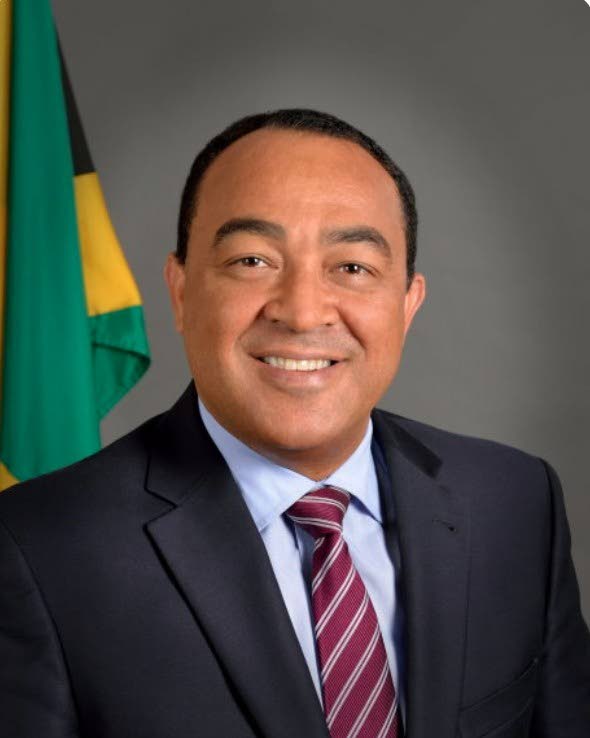 Christopher Tufton, minister of health and wellness. Photo - AG Guest Guest
Last week’s headline that a major Jamaican manufacturer would place 141 workers on a three-week rotating lay-off, with the new tax on sweetened beverages among the reasons given, has prompted a great deal of comment.
Since then, I have received a letter from the union representing those workers, setting out its concern for its members and its wish to understand how the tax affects the business, the workers, and the public.
The union is right to write and to be heard. A policy that touches people’s livelihoods should be able to withstand their scrutiny. The union’s own framing is the correct one: it describes this as a matter of economics, labour, and health, three things that must thrive together. That is the spirit of collaboration in which I want this conversation to proceed.
WHY THE TAX IS DESIGNED THIS WAY
Let me begin with the tax itself because much of the public discussion has described it inaccurately. The Special Consumption Tax on non-alcoholic sweetened beverages is charged at 22 cents per gram of added sugar. It is not a tax on bottles or on volume. A drink with no added sugar attracts no tax at all. A drink with a little added sugar attracts a little. It is levied on the manufacturer or importer and remitted by them to Tax Administration Jamaica. It is not collected at the till.
Manufacturers have said that paying at source, before the product is sold, strains cash flow, and I do not dismiss that. But the design is deliberate. Because the tax is charged per gram, every gram a manufacturer removes from a recipe lowers its tax bill on that product immediately. This is a tax that companies can reduce by doing precisely what the health of the country requires.
The last Jamaica Health and Lifestyle Survey found that 54 per cent of adults are overweight or obese, that one in eight has diabetes and four in 10 of them do not know it, and that one in three has high blood pressure. Between 2010 and 2017, obesity among adolescent boys nearly doubled, from 5.3 to 10.3 per cent, and seven in 10 adolescents reported drinking a soft drink every day. Non-communicable diseases account for close to 78 per cent of deaths in Jamaica. Those are the numbers this tax was introduced to change.
The World Health Organization counts 116 countries with such taxes. Three cases are instructive. The United Kingdom introduced a levy graded by sugar content in April 2018. A controlled study published in PLOS Medicine in 2020 found that the share of soft drinks above the taxable threshold fell from 52 per cent when the levy was announced to 15 per cent after it took effect. Government monitoring shows that between 2015 and 2024, the sugar sold through soft drinks fell by 40 per cent while the volume of soft drinks sold rose by 13.5 per cent. The Treasury had forecast that the levy would raise £520 million in its first year. It raised roughly £240 million because manufacturers reformulated faster than anyone expected. Industry-commissioned forecasts of more than 4,000 lost jobs did not materialise.
Mexico taxed sugary drinks by the litre in 2014. Household purchases of taxed drinks fell by 5.5 per cent in the first year and 9.7 per cent in the second, while purchases of untaxed drinks, mostly bottled water, rose. A study in Preventive Medicine tracking national manufacturing and retail employment for two years after the tax found no reduction in employment in beverage manufacturing or retail.
South Africa introduced a levy per gram of sugar in 2018, the closest design to our own. A study in The Lancet Planetary Health found that the volume of taxable drinks purchased fell by 29 per cent, and the sugar purchased through them fell by 51 per cent, while purchases of untaxed beverages rose by 10 per cent. An analysis of the national labour force survey published this year found no statistically significant association between the levy and employment in cane farming, beverage manufacturing, or retail.
Across dozens of studies, the pattern is consistent. A 10 per cent rise in the price of sugary drinks reduces purchases of those drinks by roughly 10 per cent. That is the behavioural response the policy is designed to produce, and it is exactly what our manufacturers are now observing.
FOLLOW THE CONSUMER
As consumer behaviour adjusts, do we sufficiently understand what Jamaicans are buying instead? If sales of some higher-sugar beverages are declining, are consumers moving towards lower-sugar alternatives, water, different brands, or other products altogether? Understanding where that demand is going is critical because the international experience suggests that consumers do not necessarily stop spending. They shift their spending. The opportunity for Jamaican manufacturers is, therefore, to understand that shift and position themselves to meet it.
Because international evidence is clear on this point above all others. Consumers did not stop spending when sugary drinks were taxed. In Berkeley, bottled water sales rose by 15.6 per cent. In Mexico, untaxed beverages rose by four per cent. In South Africa, by 10 per cent. In Britain, total soft-drink volume grew. The money left the sweetest products and went to lower-sugar products, to water, and to the reformulated versions that manufacturers were quick enough to offer. Spending shifted; it did not disappear.
The tax was designed to move the market towards products with less sugar, and the market is moving. The task for Jamaican manufacturers is to move with it, towards the products consumers are telling them, through their purchases, that they want. It is what the policy intended.
My door remains open to manufacturers, workers, unions, public health advocates, and consumers who want to contribute constructively to how we manage this transition. The way forward must be guided by evidence, not assumptions, and as better data become available on consumer behaviour, sales, reformulation, employment, and health outcomes, we must be prepared to examine them together.
Christopher Tufton is the minister of health and wellness.