A.J. Nicholson | Wielding the awesome power of overlords
Loading article...
-
 The Caribbean Court of Justice in Port of Spain. Photo - File
-
The Caribbean Court of Justice in Port of Spain. Photo - File
-
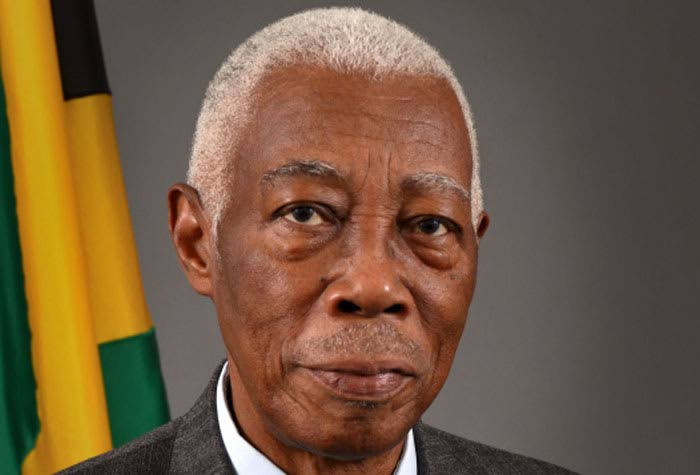 A.J. Nicholson. Photo - AG Guest Guest
For their Heroes Week get-together at their village in the foothills of Bull Head Mountain, the pre-determined topic for discussion by Farmer Joe and his compadres was: “This governing political party leadership heartlessly depriving our people of their entitlements”.
The convenor, the eldest among them, led the reasoning. As he saw it, after the landmark abolition of slavery, two entitlements remained for a feeling of full emancipation, namely, privileges “to freely vote to choose who should govern us, and to seek and receive justice in every court of law”.
Otherwise, he maintained, it could not be said that “our kind” were living in a just society. Irritatingly, Jamaica’s governing political party leadership did not see things that way.
Solid proof was provided by two indefensible positions taken by them “against the general well-being of our people”, the first during colonial times and the second, equally astounding, since the attainment of Independence. And there are others.
Growing up in the 1940s, he heard adults discussing whether the right to vote should remain the privilege of people with property or be extended to everybody who reached a certain age, complaining that “one party don’t want ordinary people like us to have the vote”.
He later came to the understanding that there was a political party whose leadership did not wish for the right to vote to extend beyond the privilege of the wealthy.
However, it was colonial times and they did not have the power to have their way. The British, who held that power, appropriately extended the right to vote to our kind, with the Jamaica Labour Party unforgettably in disagreement.
Today, 64 years after political Independence, the Jamaica Labour Party government is empowered to lead the process to extend to the entire citizenry unhindered access to justice from the highest court.
“Heart-rendingly, they use that power to slam the door shut in our faces. How do they reckon with that uncomfortable truth of callousness as Heroes Week is observed?” Remaining calm, he poured himself another drink.
Farmer Joe’s niece, the attorney, spending Heroes Week with him and in attendance at the gathering, sought to “comment on the utterly depressing issue addressed by our gracious host”, namely, the local political party leadership seeking to assume positions that the former British overlords wanted to abandon.
COULD NOT STOP THE SHOW
While the British overlords wished to relinquish their power to withhold the vote from the everyday citizen, the local political party, wanting to assume that power, “could not stop that show, thankfully”.
For Jamaica to transition to our accessible, affordable regional final court, she explained, the situation is altogether different.
The British authorities have long pushed for that transition to take place, but the political party has the power to block it. That power, granted by the Constitution to parties in Parliament, provides that their consensual support is required for a successful transition.
British colonial governors here in the Caribbean, at their 1947 Bridgetown meeting, recognising that access to the London-based court was unavailable to the everyday citizen and that, affordability challenges aside, it is impossible for domestic final courts created in these small Caribbean territories to be insulated from powerful pressures and to receive international acceptance, recommended a regional court of last resort.
The 1970 Hugh Shearer-led Jamaica Labour Party government, urged on by regional barristers, adopted the colonial governors’ reasoning, followed by all-round support on the issue for over three decades.
Regardless of the present UK Supreme Court President Lord Reed’s observations these days, the attorney reflected that, early in this century, Privy Council judges were studiously forthright and “in your face” about us moving on from their court.
In October 2003, one of their celebrated judges, Lord Hoffmann, “on Caribbean soil for the first time”, addressing the Law Society of Trinidad and Tobago at its annual dinner in Port-of-Spain, strongly urged that a regional court, along with the other branches of government, would assist meaningfully in our development and should be embraced.
In September 2009, with the CCJ in its fifth year of full operation, a straight-talking Lord Phillips, first president of the newly established Supreme Court, declared, hardly diplomatically, that “in an ideal world”, independent Commonwealth nations would stop relying on the Privy Council and instead establish their own courts.
Nonetheless, one month before Lord Hoffmann’s Port-of-Spain exhortation, then Jamaica Labour Party Leader Edward Seaga, who, hauntingly, had been a member of the 1970 Shearer-led Cabinet, made the stunning pronouncement that, “for the JLP, Jamaica’s attachment to the Privy Council as the final Court of Appeal is paramount”.
SIGNATURE STANCE
Farmer Joe’s niece stressed that the local political party leadership clearly could not resist returning to its signature stance that “billionaires’ interests take precedence”, as it had projected concerning voting rights soon after the birth of the party.
They imperiously insist that, apart from the constitutional provisions to effect transition, Jamaicans should be bullied into voting in an unnecessary referendum essentially to indicate whether they wish to remain attached to a court to which they do not have access.
“Instead of dutifully supporting a transition vote in Parliament,” she grieved, “they heartlessly committed an unimagined breach of the Constitution to block our kind from access to justice.”
Farmer Joe reminded the gathering of how “these nowadays overlords” would have been gleeful at the leak of the CCJ judges’ private correspondence.
While he firmly expected measures to be employed to effectively address the issues exposed by the Port-of-Spain newspaper report, he observed that the CCJ had operated with resounding success for 21 evolutionary years without any such hiccup emerging, hopefully never again, while in some organisations similar unfortunate occurrences take place almost routinely.
The gathering shared the distress caused to Farmer Joe by “the irrational, uncaring approach of these government rulers, leading to epic foul-ups and unceasing failure in legal and constitutional matters”.
He was unyielding that “we cannot stop complaining publicly, for they wanted to block us from the vote and now, imagine, most of them coming from among us, our own kind, they disdainfully block us from justice”.
He deplored how, following the general election a year ago, the Prime Minister wrote to the Opposition Leader proposing Vale Royal talks about moving toward republican status, and nothing further has been heard from him since Hurricane Melissa’s devastation set back any foreseeable timeframe for holding the costly referendum required for Jamaica to become a republic.
A pregnant silence persists because the constitutional affairs ministry, which was created specifically to move Jamaica to republican status, is left without any work.
They absolutely cannot justify further expenditure of our scarce taxpayer dollars on that inactive ministry, with its staff complement, unless a conscientious decision is taken for it to be occupied with pursuing the inexpensive, empowering slice of the constitutional reform process, namely, fulfilling our treaty obligation to accede fully to the CCJ.
“That would benefit our kind, so expect nothing from these public servants wielding the awesome power of overlords,” he agonised, as they freshened their drinks.
A.J. Nicholson is former minister of justice and attorney general of Jamaica. Send feedback to columns@gleanerjm.com.