GoodHeart | Dr Curtis Sweeney still championing inclusion
Loading article...
-
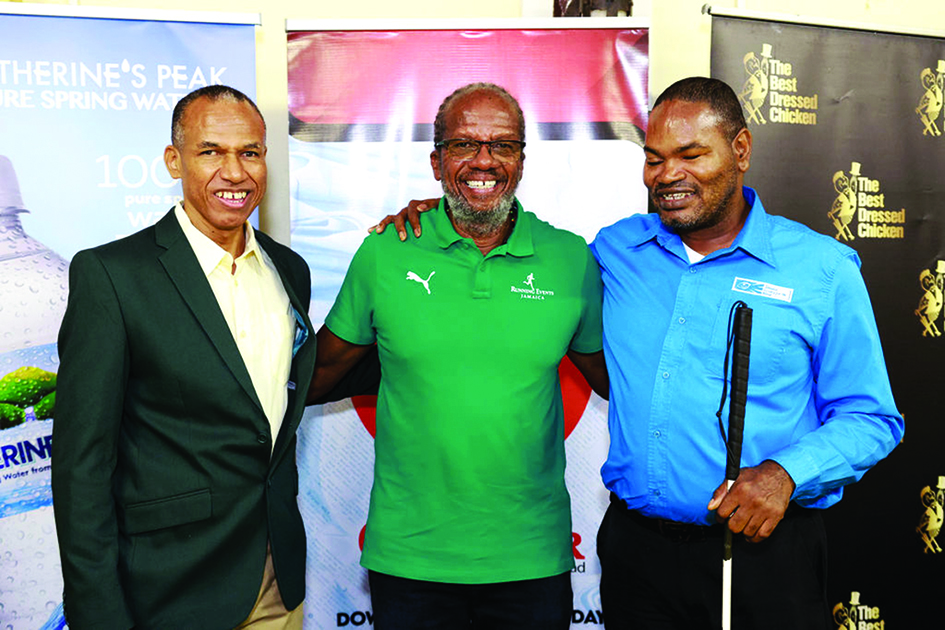
United in promoting wellness, inclusion and community engagement, (from left) Dr Curtis Sweeney, counselling psychologist; Alfred Francis, race director, Running Events, and Daemion McLean, chairman of the Jamaica Society for the Blind, shared a moment following the launch of the Everyone's A Winner Road Race, set for Sunday, June 21 at Hope Botanical Gardens.
-
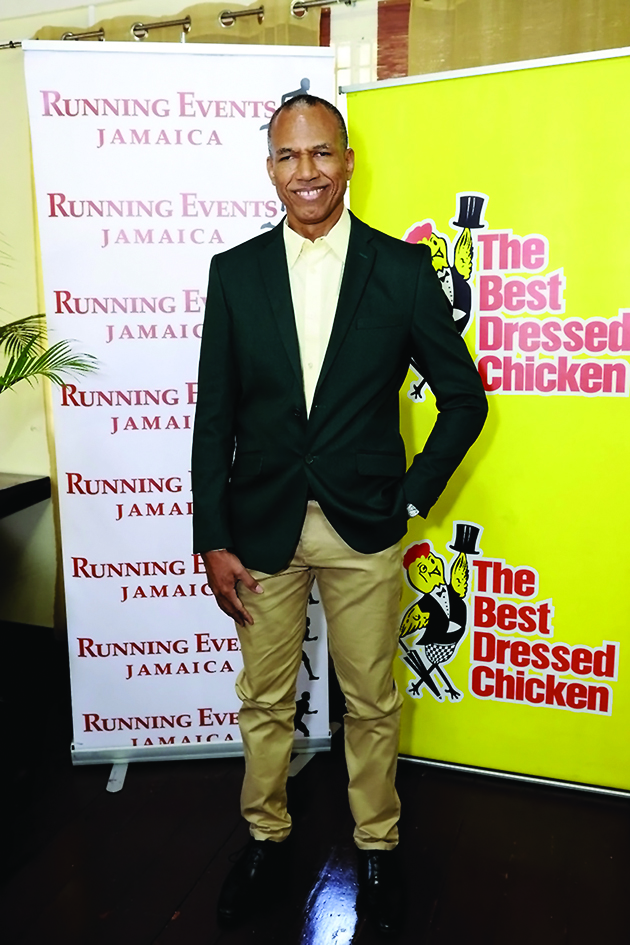
A champion for mental wellness, inclusion and resilience, Dr Curtis Sweeney has dedicated his career to helping others overcome obstacles while redefining what is possible.
Born in 1965 in a farming district in Clarendon, Dr Curtis Sweeney’s story is one of resilience, purpose and the power of refusing to let circumstances define one’s future. He moved to Kingston at the age of four and attended Musgrave Prep before continuing at Harbour View Primary, where he later earned a place at Jamaica College. His academic journey took him across several institutions, culminating in a PhD in Counselling Psychology from Northern Caribbean University, where he graduated as valedictorian.
Long before psychology became his profession, Sweeney began working at GraceKennedy as a teenager in the accounting department immediately after high school. Even then, he was fascinated by human behaviour and deeper questions about life and purpose.
“My passion ha[s] always been psychology,” he explained. “It arose from my curiosity about life, purpose and human behaviour.”
That curiosity became deeply personal when he was diagnosed at age 14 with Retinitis Pigmentosa, a hereditary eye condition that would eventually lead to blindness. Although he had experienced vision difficulties from childhood and began wearing glasses at age seven, the diagnosis forced him to confront an uncertain future at a young age.
As his vision deteriorated, Sweeney became increasingly reflective and, in time, more outward-looking. He found himself drawn to supporting others and discovered meaning in being present for people in need. “It made me more intense and introspective. I also realised that my personal struggles sensitised and made me more empathetic to the difficult situations of others,” he said.
By his mid-twenties, his vision loss had become more pronounced. He could no longer read regular print and had to move through different roles within GraceKennedy as the company worked with him to identify new ways forward.
Rather than stepping away from work, he continued to adapt. With support from GraceKennedy’s HR team and the Jamaica Society for the Blind (JSB), he transitioned through roles including marketing and later the telephone switchboard. What might have been seen as setbacks became stepping stones.
It was during this period that he completed both his bachelor's and master's degrees in psychology while working full-time. As assistive technologies became available, he embraced them fully. “With the support of the JSB, I was able to acquire and master the use of the technology. This equipped and empowered me to function like a normal employee,” he explained.
After volunteering for a year in a counselling role, he proposed the creation of a dedicated counselling psychologist position at the Grace and Staff Community Development Foundation.
The proposal was approved, leading to the establishment of a role that strengthened youth development programmes and expanded mental health support within the organisation.
“Looking back, I believe the transition to counselling psychology was divinely ordered,” he reflected. “Almost like a revelation of the purpose God had for me based on how it unfolded.”
Today, decades after first joining GraceKennedy as a teenager, he continues to serve as a counselling psychologist. His journey also reflects an organisation willing to invest in ability rather than focus on limitation, allowing him to grow into a pioneering role in workplace mental health support.
His academic path was demanding. Reading heavy course material, completing assignments, and navigating statistics and research work required immense effort. “I had to work perhaps three times harder than the average student,” he said. “If I was going to fail, it would not be due to a lack of effort.”
The emotional toll of vision loss was equally significant. During the early stages, he experienced denial, depression, and self-doubt. A visit to the Jamaica Society for the Blind became a turning point.
“Interacting with other persons who were blind opened my eyes to the reality that there is life after blindness, even happiness,” he said. “It was a watershed moment. I eventually learned to acknowledge and focus more on my assets [despite] my deficits, my abilities and less on my disability,” he reflected.
As a practising counselling psychologist, Sweeney adapted his clinical approach by relying on tone, pauses, movement and other sensory cues to understand clients more deeply. Over time, these adaptations became strengths that enriched his therapeutic work.
Now, he continues to advocate for greater inclusion and understanding of persons living with disabilities, noting that stigma, infrastructure gaps and limited opportunities remain persistent challenges.
His advocacy was recently highlighted when he served as guest speaker at the launch of the Everyone’s A Winner Road Race, which will take place on Sunday (June 21) at Hope Botanical Gardens. Sweeney will also participate in the upcoming race, joining the Jamaica Society for the Blind team on the day as part of the initiative’s broader effort to promote inclusion and celebrate ability.
goodheart@gleanerjm.com