Ashleigh Onfroy | Bridging educational inequality in secondary schools
Loading article...
-
 Ashleigh Onfroy
-
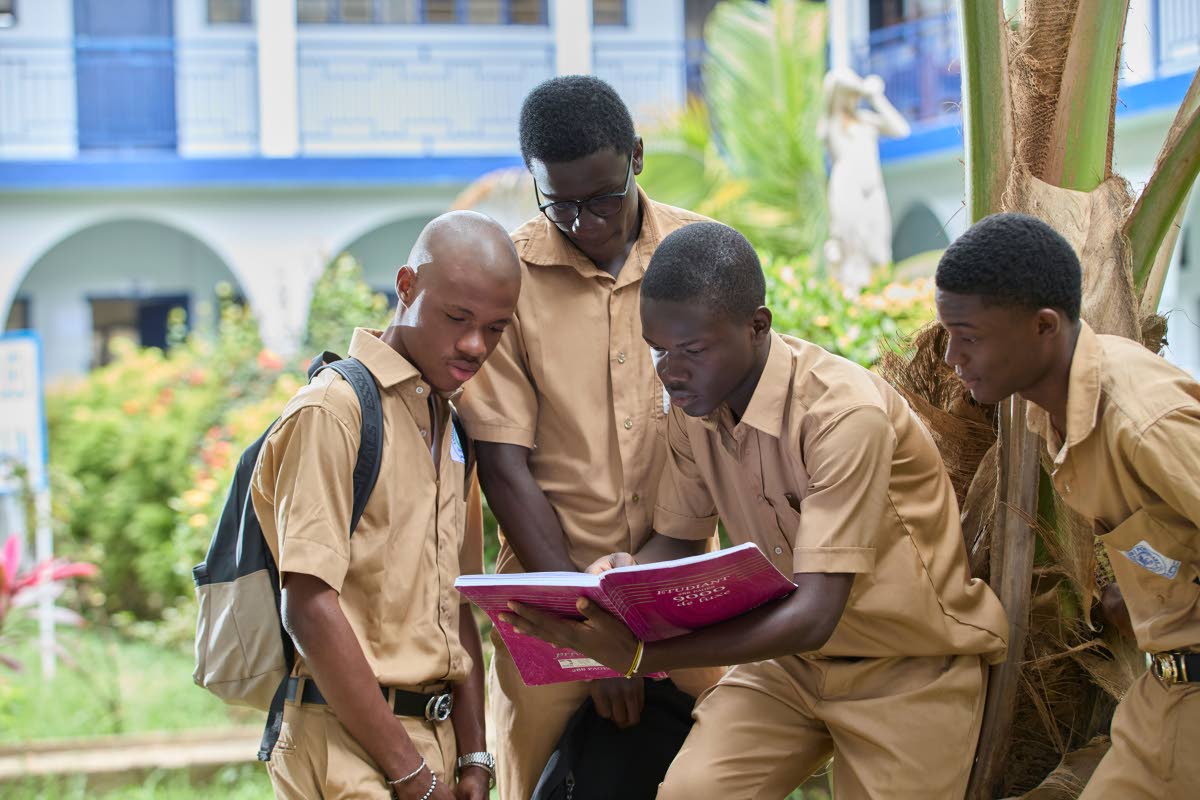 Representational image of a group of students are seen reading a book.
There is consensus among social scientists that education is the most critical vehicle for development. Among its by-products are employment, social stability and character formation. However, in Jamaica, there is a deeply uneven structure where the type of secondary school a child attends often determines his or her academic outcomes and future opportunities. As shown by MG Smith, Orlando Patterson, Canute Thompson, Errol Miller and others, this education access gap is not accidental, as it reflects longstanding social and economic inequalities that continue to shape student performance, and the quality of society.
One of the clearest indicators of this disparity is performance in the Caribbean Secondary Education Certificate (CSEC) examinations. Jamaica’s pass rates in core subjects remain troublingly low. Even with recent improvements noted by the Ministry of Education, Skills, Youth and Information, only about 44 per cent of students passed mathematics and 85 per cent passed English in 2025, with just 19.2 per cent achieving five or more subjects including these core areas. This means that four-fifths of students are leaving secondary schools without the qualifications needed for higher education or stable employment, in a service-based economy where these competencies are crucial. With most traditional schools achieving over 70 per cent matriculation rates, have you ever considered the mass of schools that did so poorly that they reduced the national average to 19 per cent? Many may be tempted to question the competency of teachers, pedagogy and student-learning styles but these national averages call for a closer investigation into the resources and infrastructure available within different types of schools.
Secondary School History and Typology
The high-school system in Jamaica dates to 1879. Since its inception, there have been several improvements, but it remains clear that there is still much work to be done. In Jamaica’s immediate post-Emancipation era, education was a privilege that was granted based on race, gender and social status. Today, access to education is still dramatically differentially distributed.
Barry Chevannes, in 1999, wrote that “we reap what we sow”. There are no miracles in education; output has always been associated with input. In 2022, I worked in a research project carried out for the Ministry of Education that divided secondary schools into five broad performance groups: all-girl (89 per cent matriculation), all-boy (69 per cent) co-educational traditional (61 per cent), technical (17 per cent ) and new secondary (10 per cent). The data in this study showed that all-girl schools had 10 times more resources than failing new secondary ones. Most traditional high schools, as their name suggests, are typically older, better funded, and more selective in their student intake. These institutions benefit from structured church and trust funding, strong alumni networks, better infrastructure, more experienced teachers, and a culture of academic excellence. In contrast, new secondary schools, which were established to absorb students who did not score highly on entrance exams, frequently struggle with limited resources, overcrowding, and a culture of lower academic expectations.
Socio-economic Disparities and Lack of Infrastructural Support
At the core of these educational disparities in secondary schools is the strong link between socio-economic background and school placement. Students from wealthier families are more likely to attend traditional high schools because of several factors including better support from primary-level education, stable environments that support better childhood development, or because their families can afford additional tutoring and support. These students enter institutions that are already well equipped to help them succeed, reinforcing their advantage.
On the other hand, despite isolated success stories from students from lower-income communities, the reality remains that they are disproportionately placed in under-resourced secondary schools. Research from Global Journal of Emerging Trends in Education and Social Science highlights that rural and inner-city schools often face shortages of qualified teachers, inadequate learning materials, violent environments, and poor infrastructure. These conditions make it significantly harder for students to achieve strong academic outcomes, regardless of their individual potential. The result is a cycle of inequality; and the structure of the education system itself is reproducing it.
Bridging the Inequality
It is not enough to make regional comparisons and lament on Jamaica’s examination scores. Berating parents on poor involvement in their children’s academic lives, and teachers on their depleted morale because of systemic failures are not solutions. Addressing this issue requires deliberate and sustained intervention. It requires public-private partnerships and revisions of existing educational governance policies and procedures. First, resource allocation must be more equitable. Schools in disadvantaged communities need greater investment in infrastructure, teaching materials, and technology. This includes modern classrooms, access to digital learning tools, and properly equipped libraries and laboratories. Second, these schools need greater investment in social and behavioural change – more guidance counsellors, parenting workshops, and community partnerships for greater mental, social and physical protection of the students in attendance. Third, businesses should continue to increase their corporate social responsibility by aiding new secondary, technical and vocational high schools. This means providing more grants, need-based scholarships and meaningful internship opportunities for students.
In conclusion, Jamaica’s educational gap is not just an issue of schools but reflects broader social inequalities. The type of school a child attends should not determine his or her future. Closing this gap will require systemic reform, equitable investment, and a commitment to ensuring that every child, regardless of background, has a fair chance to succeed. Countries that are serious about development do not cater to the well-being of only a few of their children and youth, but strive to ensure that they all have a chance to become productive citizens.
Ashleigh Onfroy is a social anthropology researcher. Send feedback to columns@gleanerjm.com and ashleighconfroy@gmail.com.