Ruthlyn James | Flush the policy
Loading article...
-
 Photo - Pexels
-
Photo - Pexels
-
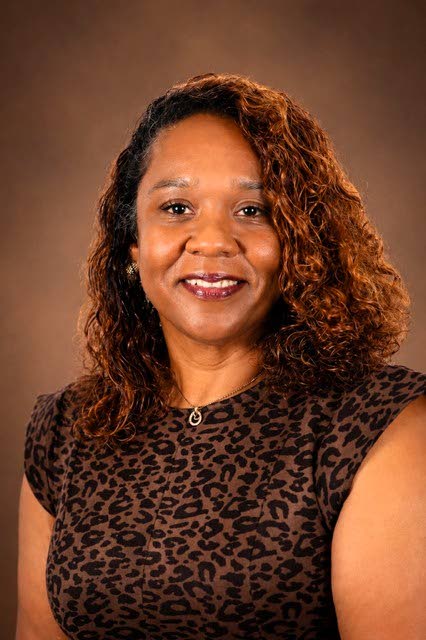 James. Photo - File
Jamaica is big on discipline. Rules are rules. Newly trained educators enter schools excited to start their careers. However, with the current educational climate, many enter the classroom with preconceived notions of the behaviours they will face.
Children need boundaries, which is clear, because a classroom without structure can be as harmful to learning as one governed by fear. My concern is what happens when authority is confused with control, particularly when the triggers are neurodevelopmental.
The recent bathroom incident gives us an opportunity to examine this.
Restricting bathroom visits is not new in education. People remember being told the same thing; some even confessed to experiencing the same shame. Some spoke of being beaten for defying the teacher and advocating for themselves. The rationale is familiar across all schools: Children will use the bathroom to escape work and waste instructional time.
There is some truth in that. But there is another truth. A child’s bladder or bowel is not a behaviour chart.
SCIENCE WE ARE MISSING
Teacher education today cannot afford to neglect developmental science. We often focus on pedagogical guidelines. We teach curriculum and classroom management, but every teacher should also understand sensory development, regulation, executive functioning and the hierarchy by which children’s developmental systems support learning.
Educators consider learners’ sensory styles, from the visual to the tactile. However, this incident brings the understanding of interoceptive sensory development into the conversation.
Interoception is our ability to notice and interpret signals from inside the body. These include hunger, thirst, temperature, pain, and bladder and bowel needs. These signals help us understand what our bodies need and respond appropriately. They allow us to recognise subtle bodily cues, including the need to locate a bathroom before urgency develops.
Emerging research in school-age children has found relationships between aspects of interoceptive awareness and executive functioning, including inhibition and self-monitoring.
The classroom faces increasingly complex inclusive demands, with greater recognition of neurodevelopmental differences, sensory needs, and concerns about children’s patterns of screen exposure. Therefore, teacher education must be strengthened to support understanding of sensory development and executive functioning, the cognitive processes children use to control impulses, shift attention, organise themselves, plan and complete tasks.
These abilities develop throughout childhood. They do not suddenly appear because a child puts on a primary-school uniform. School policies must include a developmental framework that guides teachers. Unscheduled bathroom breaks should not require a doctor’s note to justify accommodation. The reason may be developmental or psychological. A child can have a phobia of public toilets or of sharing spaces during crowded lunch hours.
WITHOUT HUMILIATION
Behaviour modification has contributed useful strategies to education; routines and clear expectations can support children tremendously. But no behavioural strategy, school rule or adult authority should strip away a child’s dignity.
There is too much ambiguity in school rules. Children, as citizens, need respect for their autonomy and protection of their mental health. Policies and procedures must now be revised with a stronger understanding of developmental science, not only educational outcomes.
The bathroom debate will eventually disappear, another school incident will replace it. If we respond only to each incident, we will continue treating symptoms.
The greater opportunity is to examine the system that prepares adults to understand children before those adults are given charge over them.
A child needs boundaries, a teacher needs authority, and a school needs rules. Developmental science threatens none of those truths. In fact, developmental knowledge makes each of them more effective because good discipline is not merely the ability to control behaviour; it is the ability to understand what must be developed for better behaviour to become possible.
MEND THE SYSTEM
Perhaps the lesson we should draw from the controversy is to examine the system that produced the circumstances in which both the teacher and the child found themselves.
A teacher TikToker stated that the teacher cannot be fired. She followed the school’s policy, and educators can be sanctioned for breaking school rules. So, in this situation, who is responsible: the policy or those who approved it? Are these policies outlined during parent-and-teacher orientations?
The Ministry of Education cannot be positioned as the institution that arrives after educational harm to investigate, clarify, reassure and contain. Its greater power lies upstream, in strengthening the systems that make some of these incidents less likely in the first place.
That means refocusing our attention on strengthening our early childhood sector, where sensory development should be a priority, as it forms the foundation of cognitive development. It is also where children must begin to learn to recognise and communicate their needs, advocate for themselves appropriately, develop bodily autonomy, and understand that seeking help from a trusted adult is a right, not misbehaviour.
Teacher preparation must also reflect what modern classrooms require. The question is whether we have equipped teachers to understand the developing human being they are expected to teach.
A child’s bowel movement brought us into this conversation. The question now is whether we remain educational janitors, arriving after every mess, or finally redesign teacher preparation around developmental science, equipping educators with the knowledge, judgement and responsive practice today’s classroom demands.
Ruthlyn James is the founding director of Adonijah Group of Schools Therapy and Assessment Centre. Send feedback to columns@gleanerjm.com.