Sergey Petrovich | The seabed is not a no-man’s land
Loading article...
-
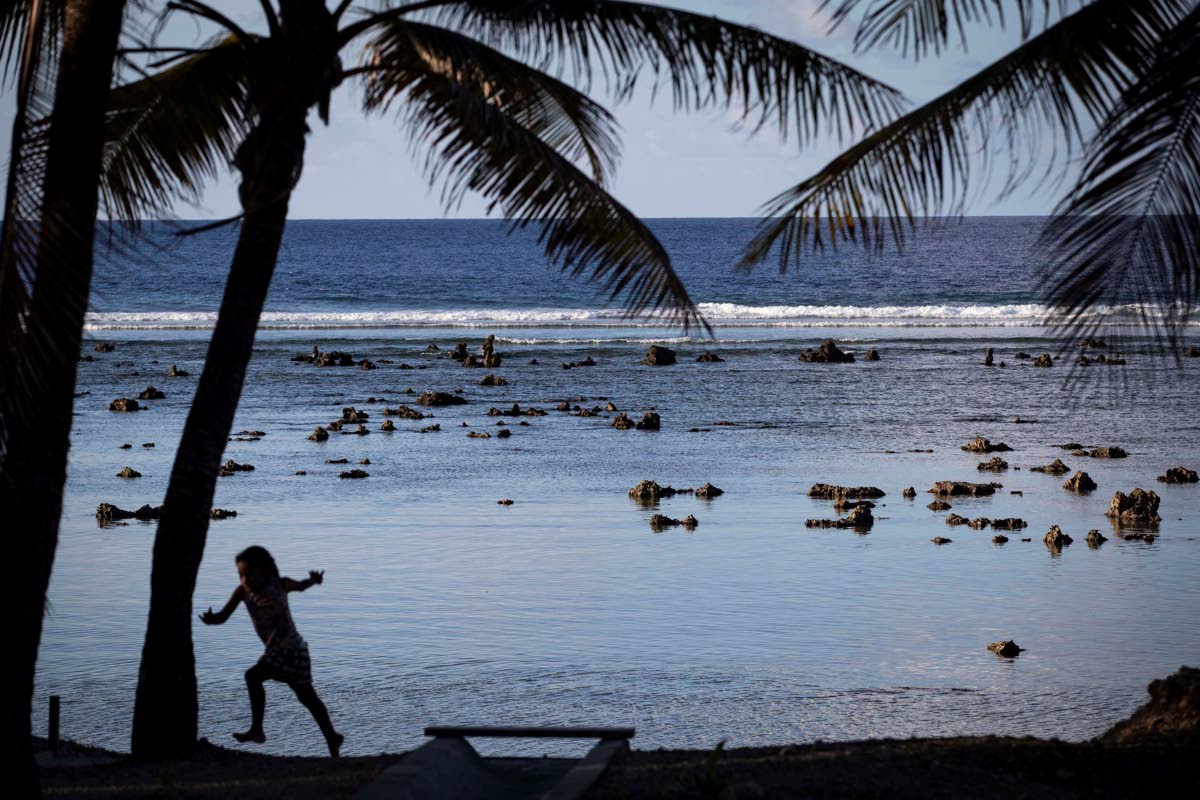 A child plays near the beach in Nauru during the Pacific Islands Forum on the Pacific nation of Nauru. Photo - AP
-
A child plays near the beach in Nauru during the Pacific Islands Forum on the Pacific nation of Nauru. Photo - AP
-
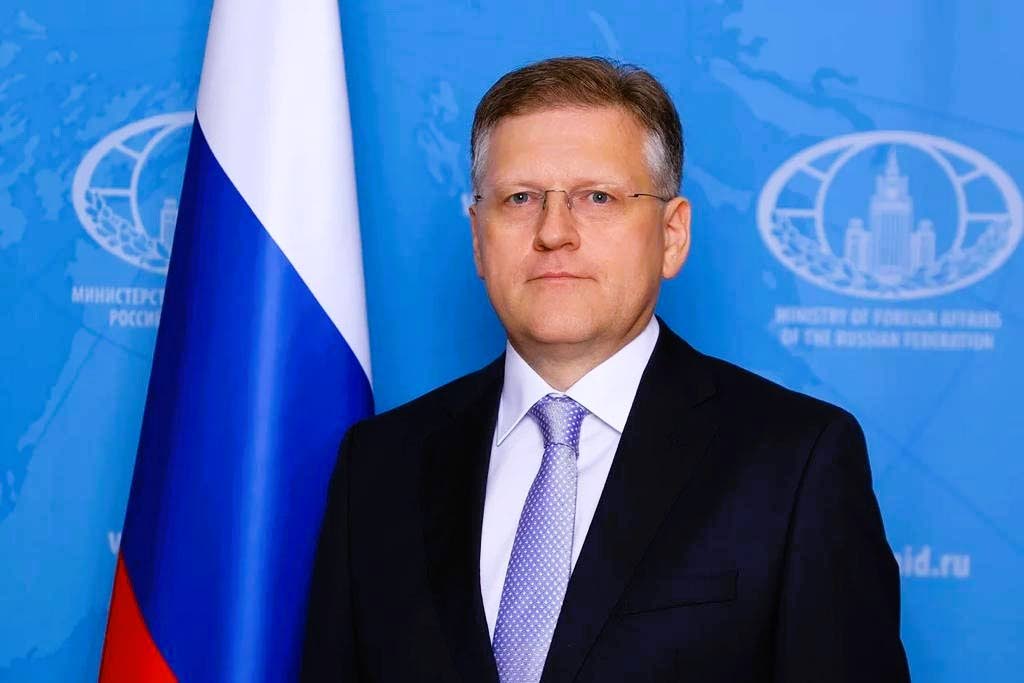 Photo - Contributed
International seabed and its resources belong to all humanity. Yet, the United States is trying to appropriate them.
The 31st session of the International Seabed Authority (ISA, headquartered in Kingston) closed on July 31. Over the three weeks that it lasted, more than 300 delegates, representing 85 member states, worked through the many aspects of regulating deep-sea mining in the international seabed area (the Area).
On many issues agreement is still out of reach, though the steady work of narrowing the differences is becoming more tangible. The wider prospect of kicking off commercial mining in the Area also remains unclear: 46 countries now favour a moratorium or a precautionary pause until the environmental consequences of such activity are fully understood. Many hold that the risk of launching the business without a completed book of rules for all to go by is too great. These member states press for the exploitation regulations to be settled and issued.
It is remarkable, though, that on one point all the delegates were unanimous. The 1982 UN Convention on the Law of the Sea is to be the legal foundation of deep-sea mining, and the Area and its resources are to be treated as the common heritage of humankind. Therefore only the ISA may authorise such activity, the organisation having a total of 171 member states, each of which, whether big or small, has an equal voice.
LEGAL REGIME UNDER STRAIN
That regime is being put to the test by those who stand outside the Convention’s legal framework.
In December 2023 the US unilaterally published the outer limits of an ‘extended’ continental shelf across seven ocean areas, bypassing, in doing so, the Commission on the Limits of the Continental Shelf, the body the Convention created precisely to make sure that claims of this kind are examined in the round. Needless to say, Russia cannot recognise any limits established that way, i.e. by abandoning, as the US did, the accepted international practice and neglecting the procedures that the Convention has provided for. It should be added that Washington thereby helped itself to roughly a million square kilometres of the Area (comparable to about half the total area of the Caribbean Sea) and its resources, precisely those that are enshrined as the common heritage of humankind.
April 2025 brought the US President Trump Executive Order on Deep-Seabed Mining, extending US legislation to encompass not only the aforementioned appropriated stretch of the shelf but also the seabed beyond the geographical limits of the national jurisdiction. This May, the consolidated application by the US company TMC, filed immediately after the Order was published and meant to cover some 65,000 square kilometres of the Clarion-Clipperton Zone in the Pacific, was found fully compliant with US home legislation. The mining permit is expected by early 2027.
Objections to this do not come from just Russia. The international community, including ISA Secretary-General Leticia Carvalho, has warned that unilateral steps of this kind set a precedent capable of destabilising the whole system of ocean governance.
Washington replies to the effect that its own legal framework meets high environmental and transparency standards, and that receiving an application is not the same as granting one. But the crux of the matter remains the same: what we are witnessing is the United States, not being party to the Convention, agreeing its rules with no one, whereupon intending to decide on its own the fate of a large international seabed area and its resources.
SO WHAT’S AT STAKE?
The seabed holds three principal kinds of mineral resource. The first one is polymetallic nodules. They contain nickel, cobalt, copper and manganese. The second one is deep-sea polymetallic sulphides rich in copper, zinc, gold and silver. The third one is cobalt-rich ferromanganese crusts that carry cobalt, platinum and rare earth elements. This is precisely the set which battery and electronics manufacturing depends on. Rough estimates have it that the nickel, cobalt and manganese reserves in the Clarion-Clipperton Zone alone match or exceed those known onshore. We are talking about a resource base capable of shaping the balance in the global economy for decades.
This is why the Convention guarantees the developing countries a share in that wealth. The way it is envisaged is as follows. Once there is an application for an area of the international seabed to be explored, one half of that acreage is allotted to the International Seabed Authority as area reserved for being developed by either a developing state or by the Enterprise, which the ISA, acting on behalf of the entire international community, has established.
Landlocked and geographically disadvantaged states have their interests covered too. Remoteness from a seabed area under development must not deprive them of their share in the common heritage. The principle is a simple one: access to the wealth of the seabed cannot depend on the fleet, the ports, the money or the relevant technology that this or that country has in place or does not have.
Yet as the interim Director-General of the Enterprise, Eden Charles, reported at this session, American applications filed outside the Convention overlap such reserved areas by some 80,000 square kilometres.
Washington’s unilateral steps invert the above logic found by the international community. Once the Americans start commercial mining on their own, the nodules they extract will not generate a single cent for anyone but the United States.
In the meantime, the entire architecture of the Convention rests on the opposite premise, which is that the benefits of the activity in the Area should reach all countries through the ISA, developing states foremost among them. Dozens of states would lose the share promised to them in return for their acceptance of the regime of the Area itself.
You don’t need a magnifying glass to see in this a continuation of the old colonial pattern: the raw materials are to be shipped out, the profit ending up in the same capital cities that used to divide other peoples’ wealth before. Neocolonialism changes its form, not its essence.
REGULATIONS FIRST
None of this means that the mineral resources of the Area should remain untouched forever. All future mining is to meet two criteria: economic feasibility and environmental compliance. Meeting just one of them won’t do. There is a third requirement, which is beyond discussion: the proceeds must be distributed fairly and without discrimination, irrespective of a state’s geography or level of development.
Humanity has come close to the edge, beyond which the decades of deep-sea exploration will give way to industrial extraction. What that transition is to look like is being decided right now in Kingston, in the offices and conference hall of the ISA. The exploitation regulations are not finished yet, and preparing them may still take sometime. But one thing is clear to everyone: only a decision taken by consensus can serve as a legitimate basis for the mining to begin.
The resources of the international seabed must belong to every country in the world, not only to those which reach them first. Russia, along with other members of the ISA, calls once again on the US to accede to the 1982 Convention, and on all states to refrain from unilateral steps and creating Convention-unfriendly regulatory mechanisms.
Sergey Petrovich is ambassador of the Russian Federation in Jamaica and permanent representative of the Russian Federation to the International Seabed Authority.