The glory days of Jamaica’s banana export empire
Loading article...
-
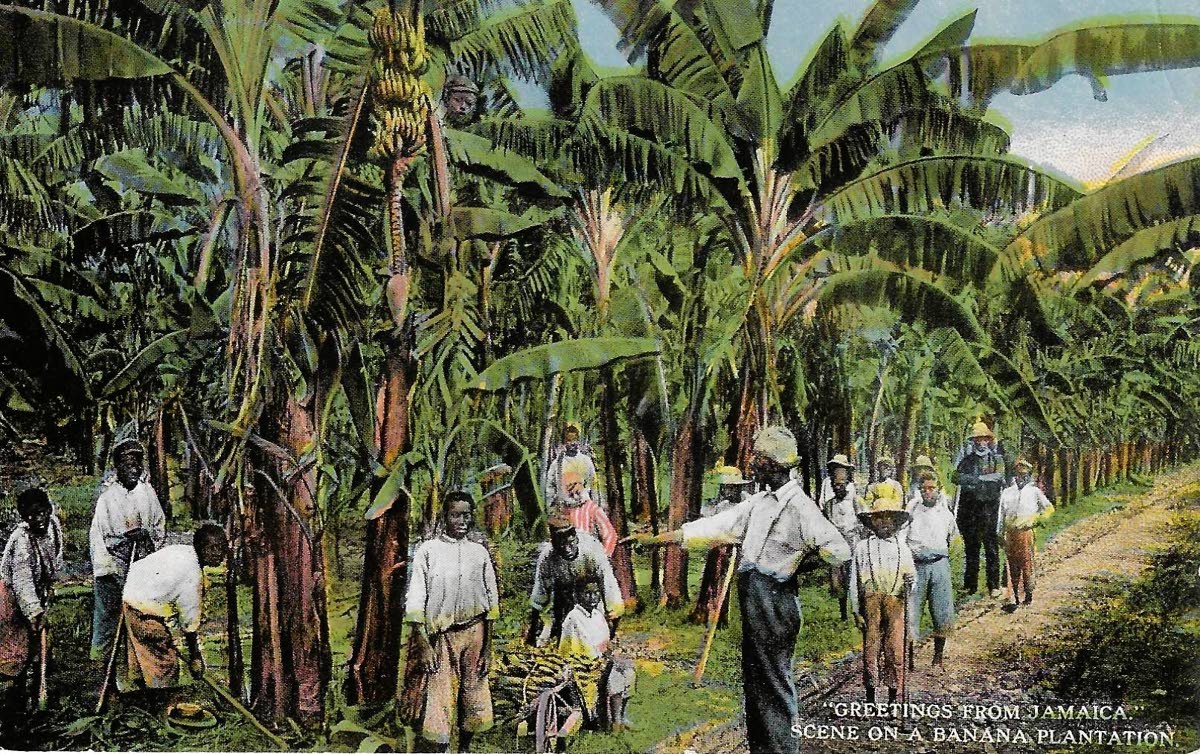 A postcard depicting a banana plantation.
-
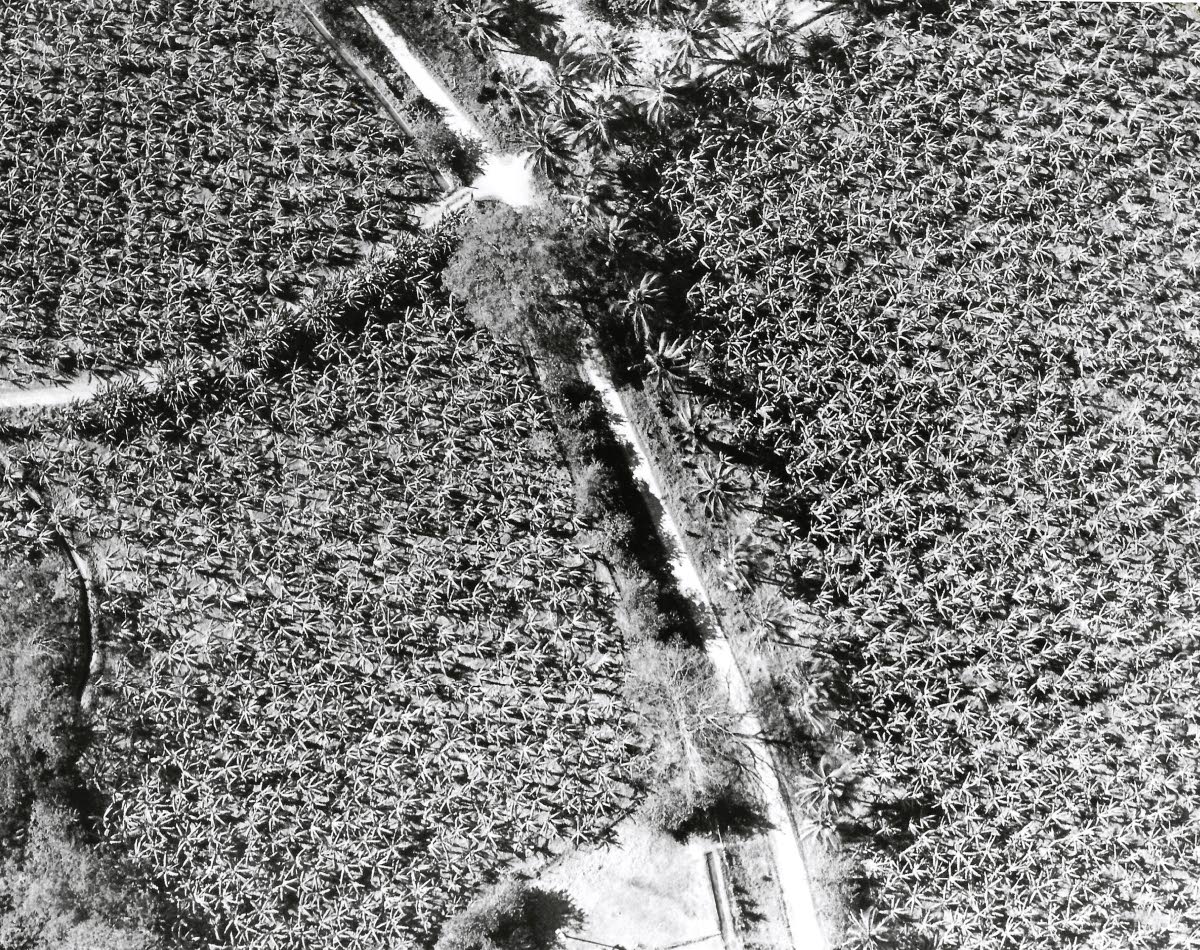 An aerial view of banana plantations
Jamaica’s banana industries once stood among the pillars of the island’s agricultural economy, shaping rural livelihoods, export trade, and international business relationships. Although the industry has declined since its peak in the early 1900s, its historic impact remains deeply rooted in the nation’s landscape, economic development, and cuisine.
Jamaica’s banana industry rose to prominence in the 1800s as the sugar economy weakened and small farmers sought alternative cash crops. Bananas proved to be an ideal choice because they are relatively fast-growing, productive, and well-suited to both small and large farms. Around the same time, expansions in steamship networks opened the local economy to the export of fresh produce to overseas markets, particularly the United States and, later, Europe.
Early exporter Captain Lorenzo Dow Baker, an American steamship sailor and businessman, is typically credited with launching the local banana trade with his 1870 voyage from South America to Jamaica and then to Philadelphia. He then joined forces with other businesses to found the Boston Fruit Company, which later became the United Fruit Company (UFC), now Chiquita Brands International. This major corporation held a near-monopoly in the Central and South American banana trade, becoming so powerful that it could significantly influence regional politics and economies.
Known for exploitative labour practices, it turned countries into “banana republics” by controlling land, railroads, and governments. The company’s malicious legacy includes the 1928 Banana Worker Massacre in Colombia, where up to 2,000 striking UFC employees were killed by the Colombian army after the Colombian government was pressured by the UFC to ‘quell’ the strike by any means necessary. There is also the 1954 Guatemalan coup, driven primarily by the UFC to protect massive landholdings that President Jacobo Árbenz sought to redistribute, thereby risking the breakdown of the UFC’s monopoly in Guatemala.
TOP EXPORTS
As the banana trade grew in Jamaica, new railways, ports, and buying stations were constructed in major banana-producing parishes, including St Mary, Portland, and St Thomas. Bananas became one of Jamaica’s top exports and provided many rural jobs during the first half of the 1900s. Notably, despite US exporters’ antagonistic business practices, some locals moved beyond merely farming the fruit and became major exporters as well. Alfred Constantine Goffe, aka the Jamaican Banana King or Banana Garvey, was a Jamaican merchant and agricultural exporter who ‘battled’ American corporations to become a local shipping tycoon. Together with his brothers and Italian business partner, Antonio Lanasa, he purchased bananas from small farmers who hadn’t yet signed contracts with larger US companies. He then shipped them to Baltimore, where the distribution network they established would bring them into the US market. Eventually, the production of multiple small banana farmers would rival the export force of US corporations.
Jamaica’s banana industry was not invincible and suffered several major setbacks, leading to its eventual collapse. Several storms, including major hurricanes levelled farms and destroyed equipment across the island. Plant diseases such as Panama disease and Black Sigatoka reduced crop yields and necessitated costly treatment and control measures. Changes in international trade laws also eroded Jamaica’s preferential access to European markets, forcing many farmers to compete internationally and leading to a sharp decline in banana exports. Most bananas are now grown for local consumption, with only a small amount exported as niche or fair-trade products. Today, small-scale farmers across the island sell their bananas at local markets and roadside stalls, ensuring that fresh bananas are readily available to the Jamaican public.
Today, Jamaica’s banana industry is more diversified and quality-focused rather than export-oriented. Production is smaller than in its peak decades. Current improvements emphasise sustainability, farmer resilience, and market specialisation rather than high-volume global trade. Two major areas of improvement have been disease management and crop resilience though hurricane resilience remains a challenge. Following these substantial losses, agricultural agencies now promote disease-resistant varieties and improved field management. Government and regional agricultural programmes have supported rehabilitation projects, hurricane recovery efforts, and technical assistance, particularly following major storm damage.
Though some banana fields exist on the island, only images such as this one, taken by Jack Tyndale-Biscoe and postcards of banana plantations held by National Museum Jamaica, remain of the vast fields that were once cultivated.
Contributed by Romaine Thomas, assistant curator, National Museum Jamaica, Institute of Jamaica