Of Wood and Water explores landscape, memory and transformation in Jamaican art
Loading article...
-
-
-
 Heather Sutherland Wade’s Greenwich In Full Bloom (2025) (L), and The Hills Are Alive (2025.)
-
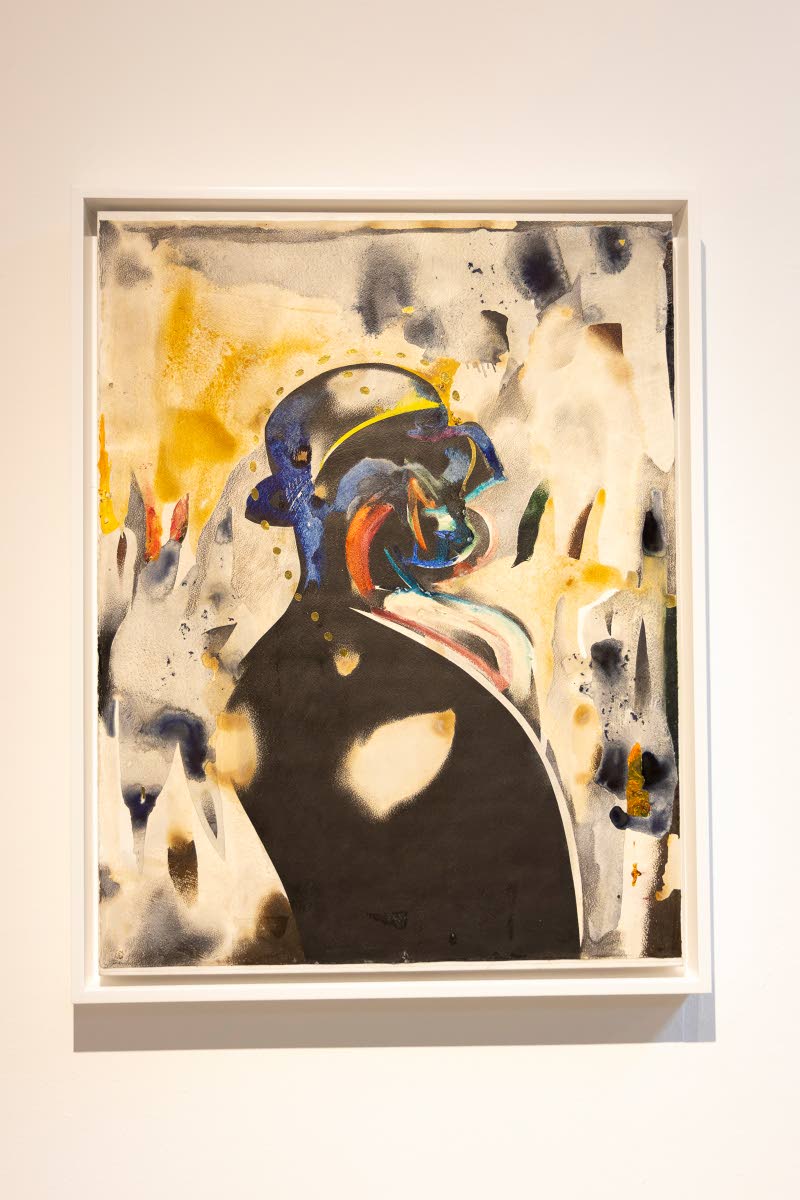 Ambition As A Form Of Longing (2022) by Leasho Johnson
-
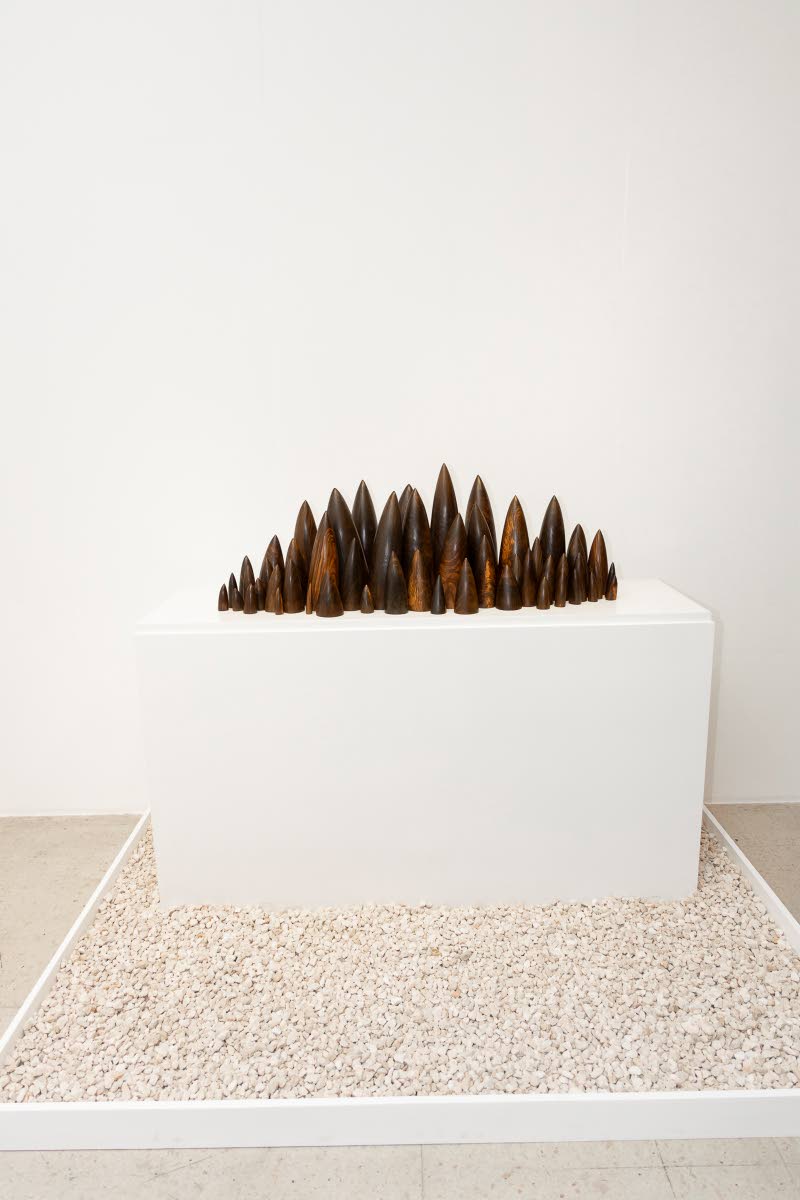 POINTS by Laura Facey
-
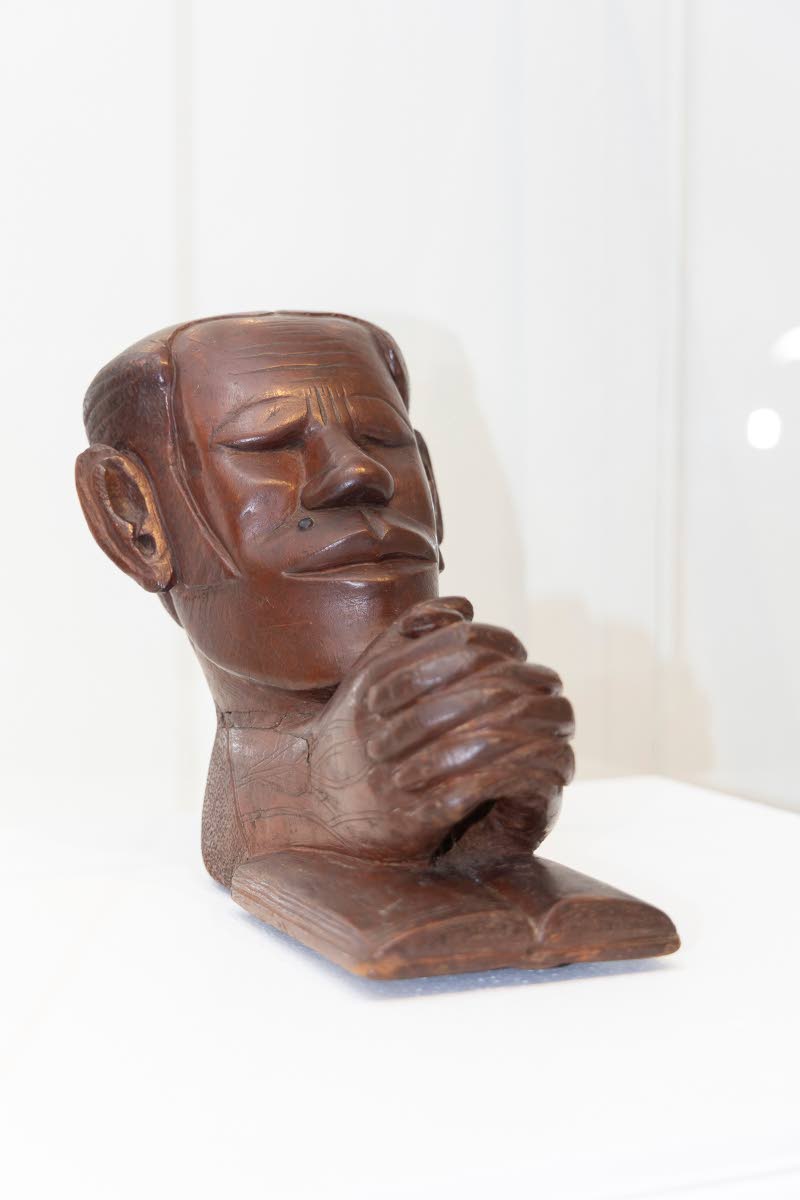 Deliverance (1939) by John Dunkley.
-
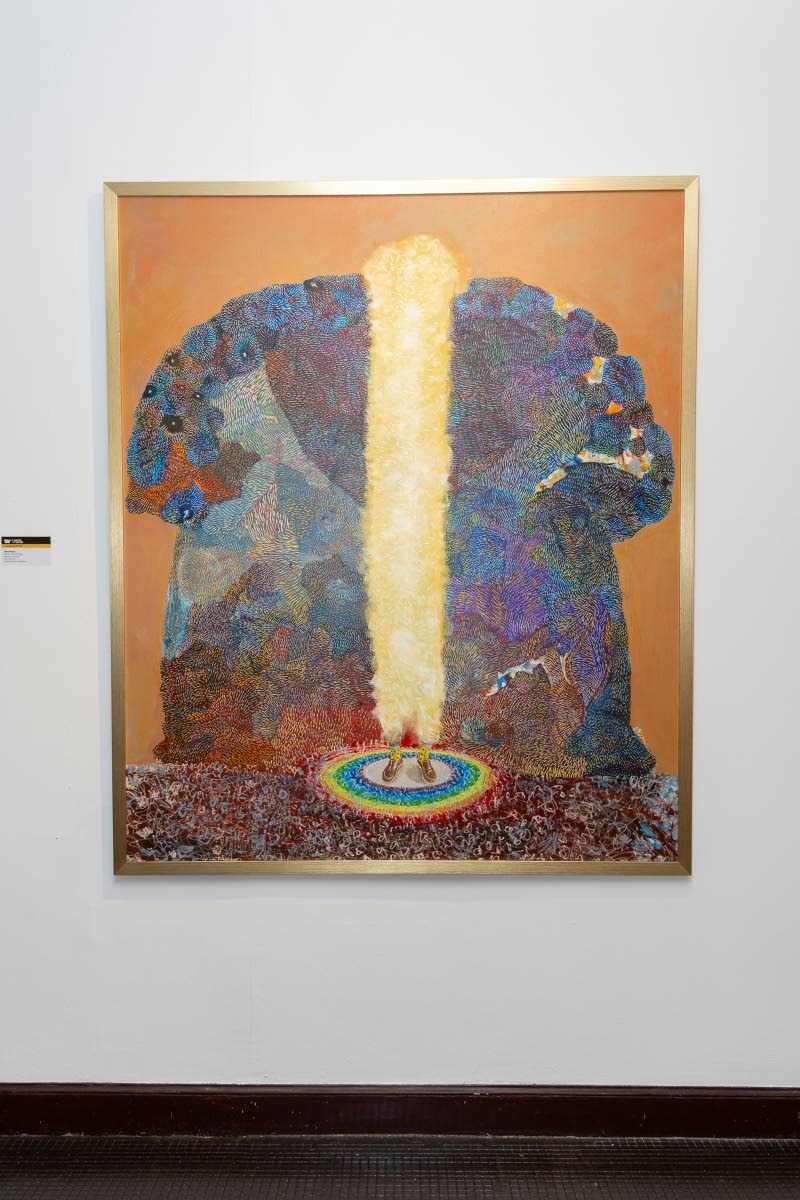 Where I Stand (2024) by Oliver Myrie
Of Wood and Water: The Scotiabank Collection, examines Jamaican landscape, identity and cultural memory through a curated selection of works from the Scotiabank Jamaica Art Collection and Jamaica’s National Collection.
Drawing on the Taíno name for Jamaica, Xaymaca: “the Land of Wood and Water”, the exhibition is grounded in the idea of the island not as inert terrain, but as a living, evolving system shaped over millions of years through volcanic formation, tectonic movement, and ongoing environmental transformation. Within this framework, the exhibition proposes a parallel truth: while geology shapes the land, it is human presence: history, memory, migration and creativity, that continuously reshapes it in return.
Unfolding across three thematic chapters, superposition, metamorphism, and rupture, the exhibition borrows from geological language to explore deeper cultural conditions of Jamaican life, identity and artistic expression.
SUPERPOSITION
Superposition draws on the geological principle in which older layers remain preserved beneath newer formations, holding traces of deep time, memory and ancestral knowledge.
In this chapter, these ideas extend into spiritual and intuitive artistic practice. Intuitive artists, such as Everald Brown, Mallika ‘Kapo’ Reynolds and Albert Artwell embody a form of creation rooted in revelation, scripture and personal spiritual conviction, producing works shaped by visionary experience and inherited African diasporic knowledge systems.
This lineage continues through contemporary voices such as Oliver Myrie, whose reflective practice explores cycles of creation and destruction, and Richard Nattoo, whose work draws on folklore, nature and personal memory to recover layered histories embedded within everyday life.
Together, these artists suggest that beneath the visible surface of contemporary Jamaica lies a continuous accumulation of memory, belief and cultural inheritance that persists across generations.
METAMORPHISM
Metamorphism examines transformation as a gradual but irreversible process; one shaped by pressure, time and internal change.
In the Jamaican context, this becomes a reflection on national formation: from colonisation and emancipation to independence and ongoing conversations around identity and governance. The exhibition also revisits how Photlandscape painting once framed Jamaica through colonial perspectives of extraction, absence and possession.
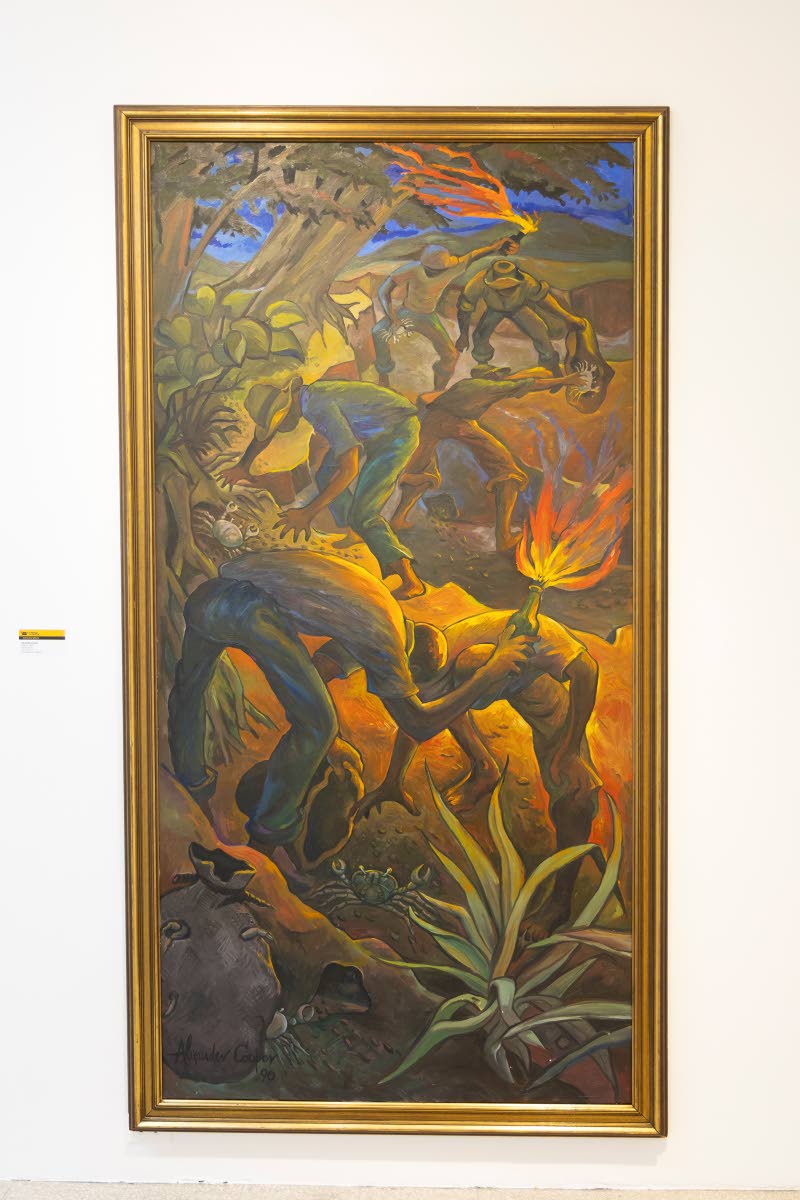
Post-independence artists such as Albert Huie, Alexander Cooper and Barrington Watson reimagined the island as a place of belonging and nationhood, while artists such as Heather Sutherland-Wade and Amy Laskin expanded this vision by centring the landscape as a site of beauty, memory and cultural identity.
This dialogue continues through works, such as Eugene Hyde’s ‘Good Friday’, which reflects the uncertainties of nationhood, and Ken ‘Abendana’ Spencer’s depictions of Jamaican life, which present an idealised, yet deeply familiar visual archive of everyday experience. These perspectives are further extended in Wainwright Allen’s ‘Jamaica 2000’, which captures the aspirations of a nation in transition.
Metamorphism, in this sense, is neither linear nor complete. It is an ongoing reconfiguration of land, identity and imagination.
RUPTURE
Rupture explores moments of sudden disruption (geological, environmental, social and emotional), and their impact on both landscape and lived experience.
Here, the exhibition turns to the force of rupture not as exception, but as condition. In a world shaped by climate instability, natural disasters and social tension, adaptation becomes a continual state of being.
Artists, such as Alexander Cooper, revisit the Caribbean landscape through the lens of hurricane destruction, revealing nature’s dual capacity to devastate and renew. Leasho Johnson explores internal and societal conflict within postcolonial and queer experience, while John Dunkley’s meditative works reflect prayerful responses to global unrest and instability.
Laura Facey, in contrast, turns toward healing and renewal through sculptural works that invite reflection and stillness, marking over 50 years of artistic practice dedicated to spiritual and material restoration.
The chapter also honours the memory of Mazola aa Mwashighadi, whose practice explored climate change and colonial legacies through sculpture made from discarded materials, underscoring the fragility and urgency of environmental and social realities.
Together, these works frame rupture not only as loss, but as a site from which resilience, reflection and renewal emerge.
Across all three chapters, Of Wood and Water implores us to recognise change as an important part of our collective story, whether it is slow, transformational or sudden, it is a necessary part of who we are.
By bringing together works from the Scotiabank Jamaica Collection and the National Collection, the exhibition creates a layered visual dialogue across time, generation and artistic practice, revealing that Jamaica is not simply inhabited, but continuously shaped and reshaped by those who live within it.
Of Wood and Water runs at the National Gallery of Jamaica until September 13.