The humble earthen lamp that lights a million hearts
Loading article...
-
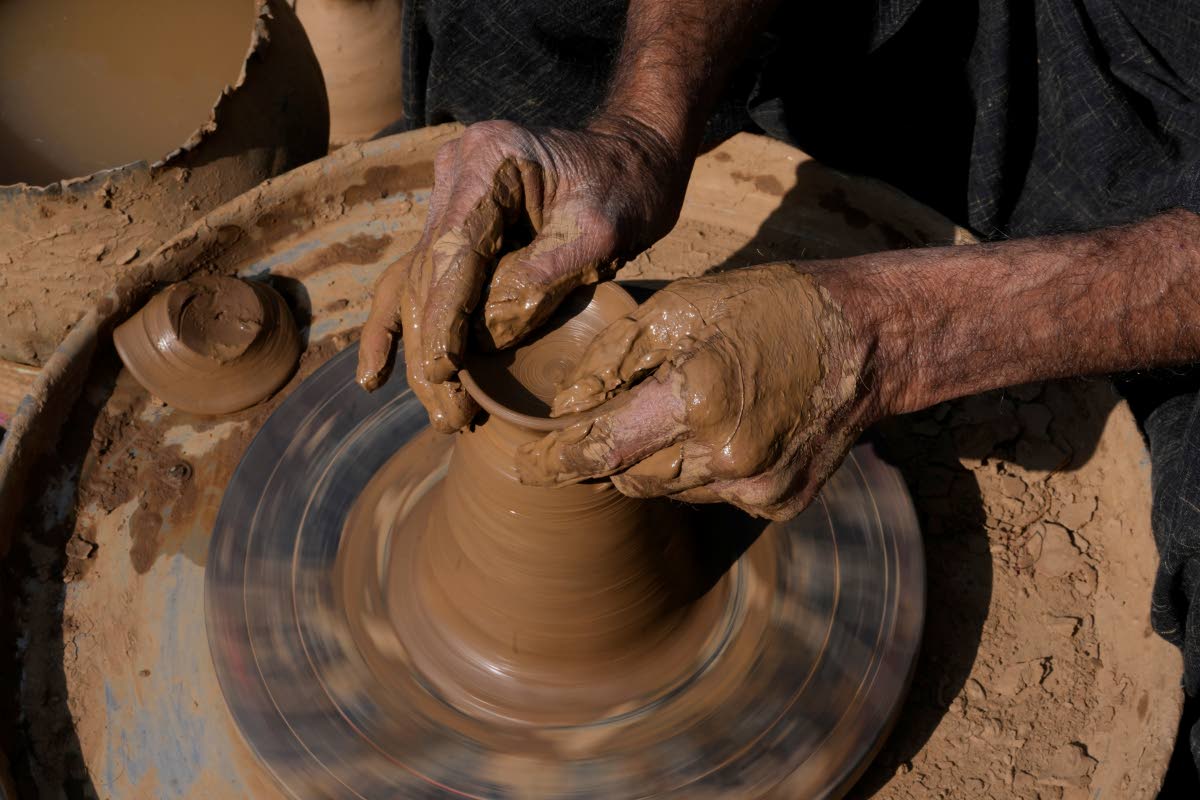 Abdul Salam Kumar, makes traditional diyas, ahead of Diwali at his workshop. Photo - AP
-
Abdul Salam Kumar, makes traditional diyas, ahead of Diwali at his workshop. Photo - AP
-
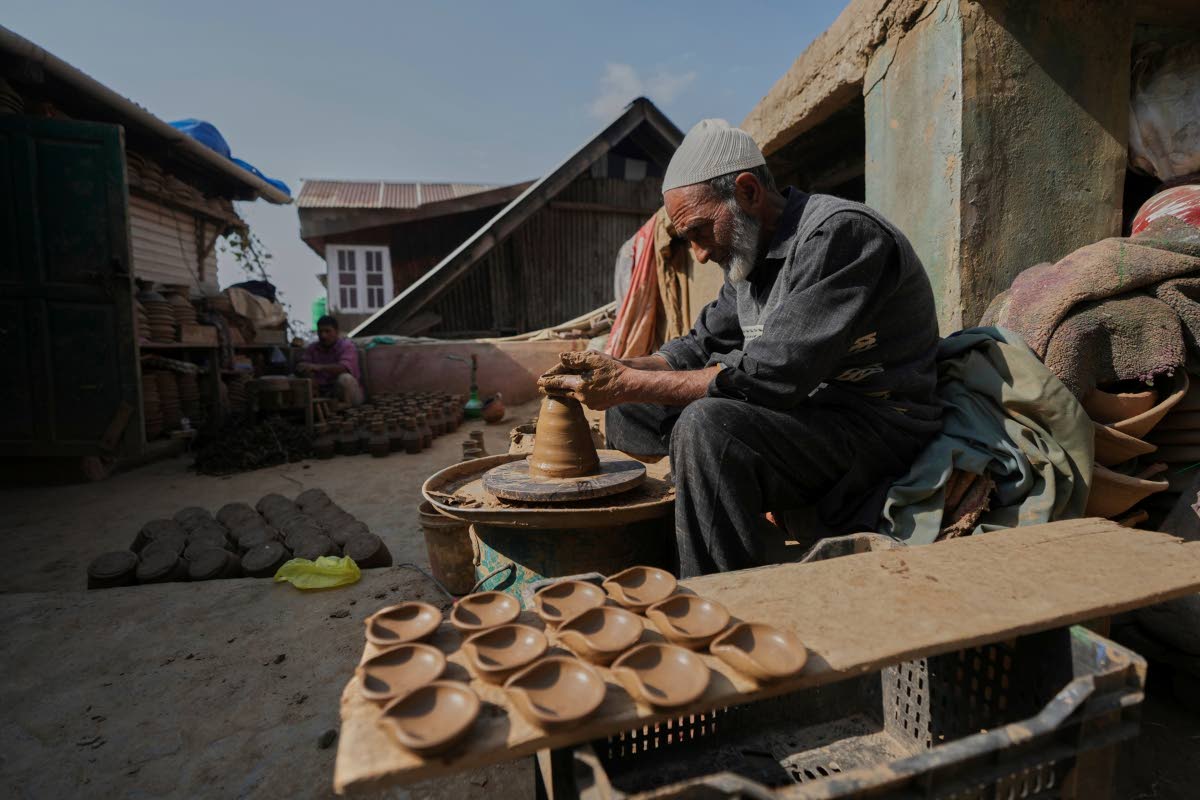 Abdul Salam Kumar, 62, makes traditional earthen lamps, known as diyas, ahead of Diwali at his workshop on the outskirts of Srinagar, in the northern Indian state of Kashmir. Photo - AP
-
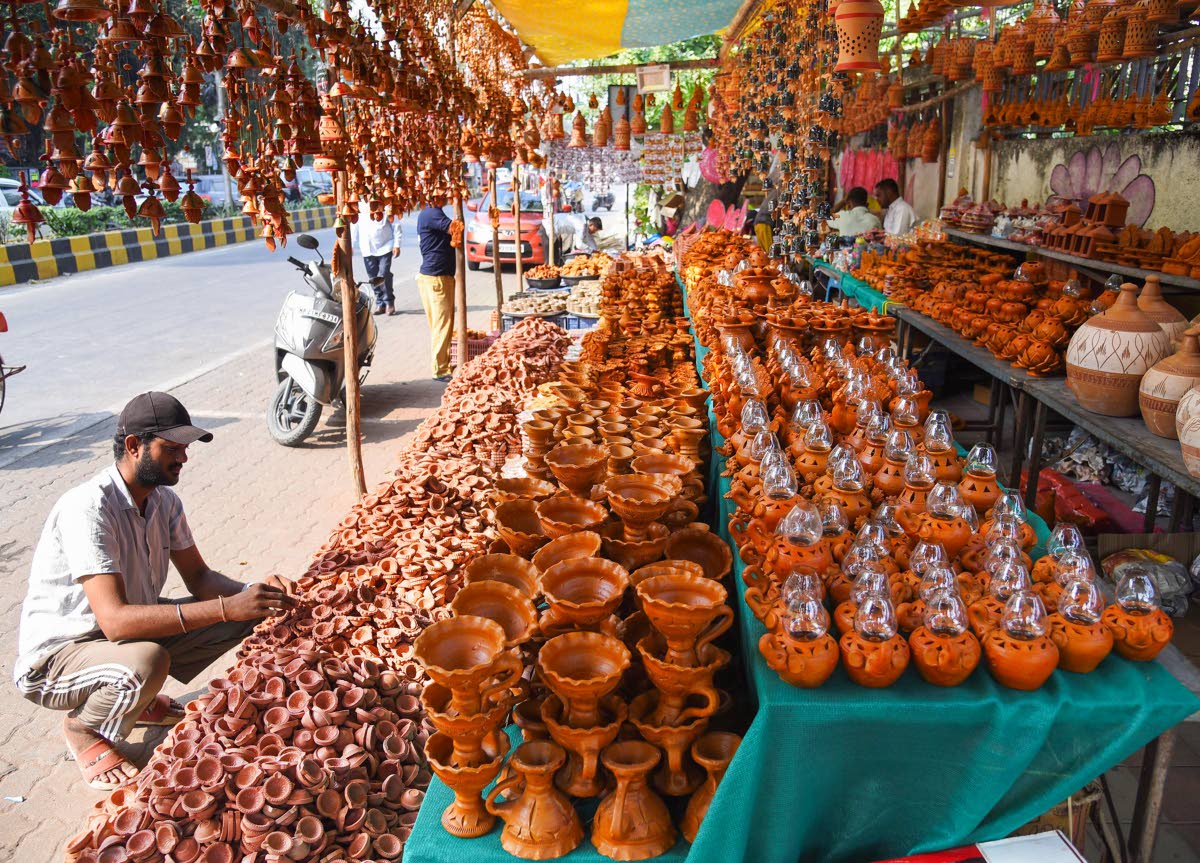 A shopkeeper arranges diyas (earthen lamps) for buyers at a market for Diwali festival in the western Indian city of Nagpur. Photo - ANI
-
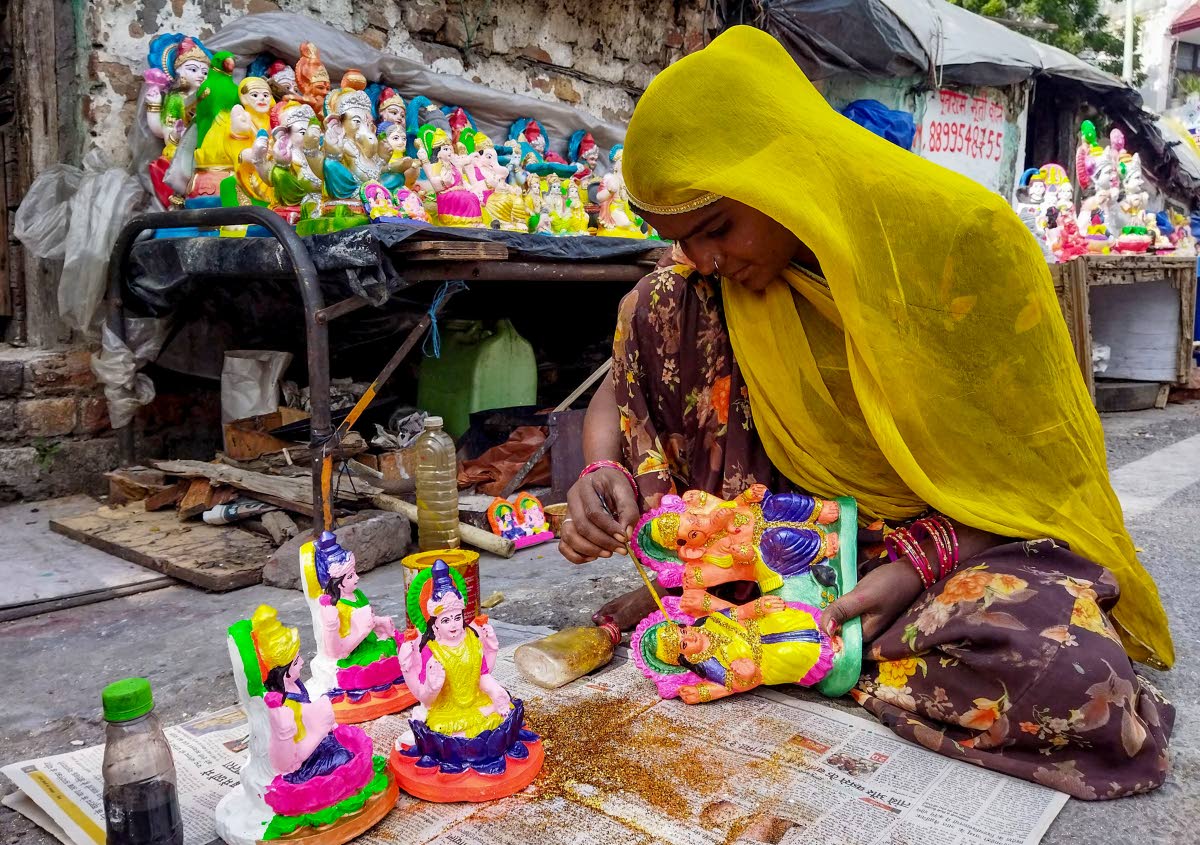 An artist gives final touches to the idol of Hindu goddess of wealth and prosperity Lakshmi in the northern Indian city of Lucknow. Photo - ANI
-
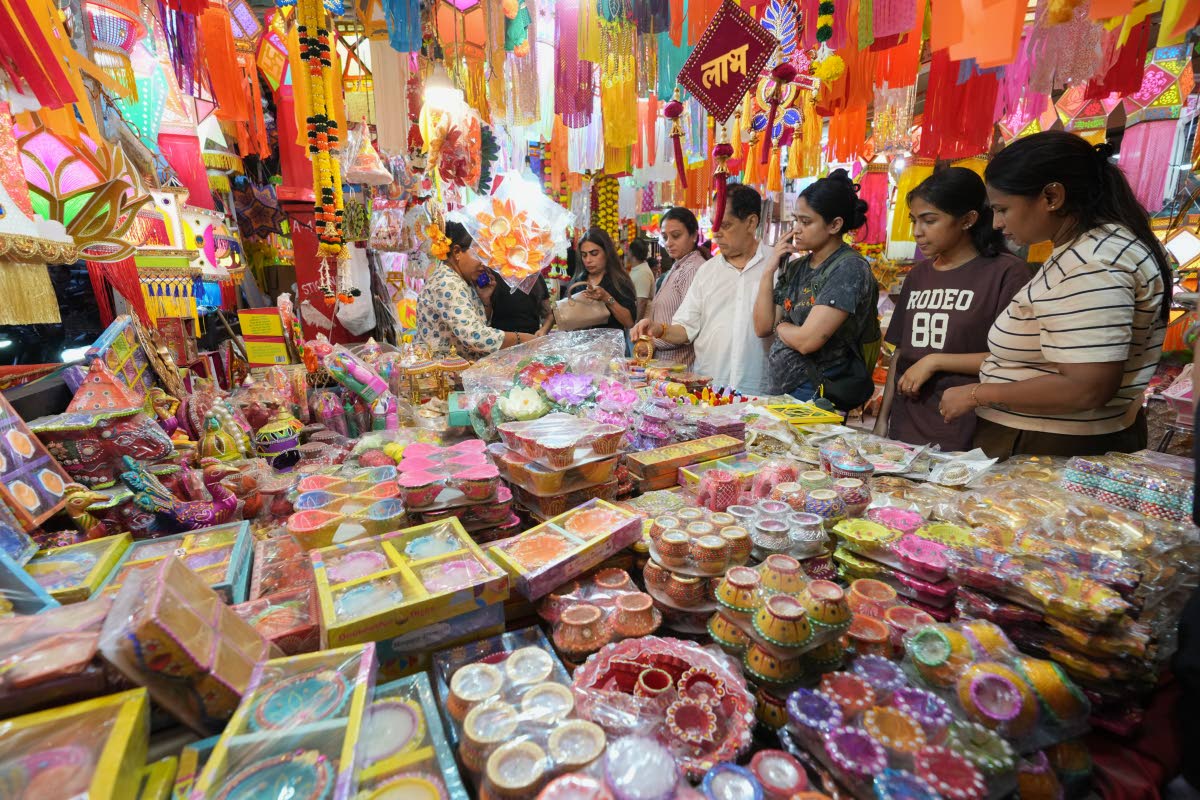 People shop for items at a roadside stall ahead of Diwali in Mumbai, India. Photo - AP
-
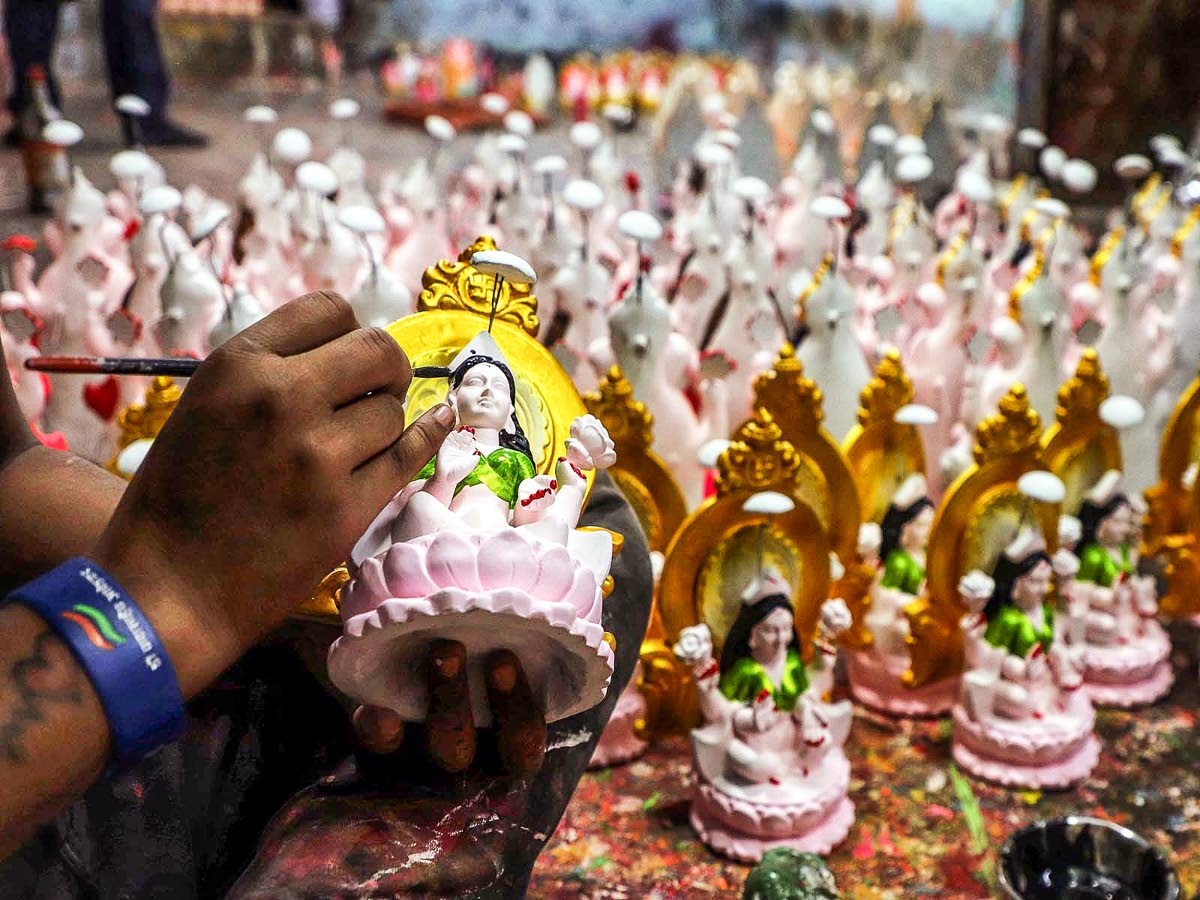 An artist giving a final touch to the idols of Lord Ganesh, the deity of auspicious beginnings and remover of obstacles, and Goddess Lakshmi, ahead of Diwali festival, in the northern Indian city of Jammu. Photo - ANI
-
 Amitabh Sharma. Photo - Contributed
As the darkness of the new moon night descends, India is illuminated by the tiny flames which flicker to life, lining doorsteps, illuminating windowsills, decorating temples, and glowing on verandas.
Diwali, one of the major Hindu festivals, and one of the grandest, is a manifestation of all things grandiose. From the freshly painted and decorated homes to the people in their finery, welcoming Lakshmi, the Goddess of Wealth, to bestow her blessings, it is a glorious spectacle.
There are also sublime messages embodied in the festival: Small lamps, collectively, dispel the darkness of the night, and the importance of being grounded and humble.
Diya, or the earthen clay lamp, though humble, carries stories that date back centuries, linking faith, culture, history, and community in a way few symbols can.
The fact is ... if there was no diya, there would perhaps be a different name for Diwali.
The word Diwali itself is derived from the Sanskrit Deepavali, a combination of deep (lamp) and vali (row), meaning a ‘row of lights’ or ‘a row of lamps’. Even in this age of electric lights and decorative LEDs, rows of diyas still adorn many households.
SYMBOL OF LIGHT AND KNOWLEDGE
Symbolically, the diya represents the triumph of light over darkness, knowledge over ignorance, and hope over despair. For Hindus, Diwali commemorates the return of Lord Rama, his wife Sita, and his brother Lakshman to Ayodhya after 14 years of exile and the defeat of the demon king Ravana.
According to Hindu mythology and the scripture the Ramayana, residents of Ayodhya welcomed them home by lighting rows of oil lamps, creating a radiant pathway of celebration.
Lighting a diya is a common practice before the beginning of any ceremony, which marks an auspicious beginning, sets a focused intention, and invokes divine blessings. For many, lighting a diya is a symbolic act of inviting positivity, prosperity, wisdom, and divine blessings into life.
The diya also symbolises the triumph of good over evil, just as light dispels darkness and knowledge removes ignorance. Importantly, from one lamp, other lamps are lit, which teaches that sharing knowledge or kindness does not diminish it; it grows and thrives.
Traditionally, the diya is fashioned from clay as a shallow bowl with a small spout where a cotton wick rests. The wick is dipped in oil, often mustard oil, sesame oil, coconut oil, or clarified butter (ghee).
GENERATIONAL ART FORM
The making of diyas is itself an art form that has been passed down through generations. Across India, potters begin production weeks, and sometimes months, before Diwali. The process starts with specially prepared clay, which is kneaded, shaped either by hand or on a potter’s wheel, and then left to dry in the sun. Once hardened, the lamps are fired in kilns and often painted in vibrant colours or decorated with intricate designs.
A single artisan can produce hundreds of diyas in a day, yet each remains unique. Of late, eco-friendly diyas have gained popularity, including versions embedded with seeds that can be planted after use, combining environmental awareness with cultural tradition.
The diya is symbolic too. In traditional interpretation, the cotton wick represents the human soul (atman), the oil or ghee represents human vices and negative tendencies (such as greed, jealousy, and hatred), and the flame represents spiritual awakening and purity as the oil is consumed.
In many households, an odd number of diyas are lit.
In Hinduism, odd numbers are seen as open-ended as they leave a remainder, cannot be equally divided. Odd numbers represent ongoing journeys, spiritual seeking, and infinite growth rather than a final conclusion. In many households, at least one diya is kept burning throughout the night as a guiding path for the goddess of wealth and prosperity.
THE CARIBBEAN CONNECTION
Diwali, or Deepavali, is vibrant in the Caribbean.
The Indian indentured labourers who arrived during the 19th century brought Diwali, among many other faiths, languages, music, cuisine, and festivals. In 1838 in British Guiana, now Guyana, and 1845 in Trinidad, followed by arrivals in Jamaica in the same period, Indians carried their cultural heritage across the seas.
The festivities in the Caribbean blend ancient tradition with local character. The diya remains the focal point, but the backdrop may include tropical gardens, Caribbean architecture, steelpan performances, or multicultural gatherings that reflect the region’s unique diversity.
In Trinidad and Tobago, entire communities participate in elaborate Diwali Nagar celebrations. In Guyana, families often gather to light hundreds of lamps, creating breathtaking displays that transform villages and neighbourhoods into rivers of light.
Public celebrations often attract participants from various religious and ethnic backgrounds, demonstrating how cultural traditions can build bridges across communities.
That Caribbean connection makes the diya particularly meaningful. The lamp symbolises spiritual enlightenment and resilience. Like their ancestors who crossed oceans, the diya burns steadily despite surrounding darkness. Its flame reminds descendants of their heritage while illuminating their place in the Caribbean present.
Diyas are deeply relatable in a region that has been shaped by migration, adaptation, and cultural blending. In societies across the Caribbean, there is a deeper understanding of what it means to preserve traditions while embracing new identities. In many ways, the diya reflects that journey. The genesis of the diya is in the Indian subcontinent, but its glow has spread to the wider global family that celebrates Diwali.
TIMELESS LESSON
Perhaps that explains why the sight of a diya continues to captivate people, regardless of faith. The lamp speaks a universal language. It conveys warmth, hope, fellowship, and renewal. It encourages reflection during difficult times and gratitude during prosperous ones.
As another Diwali arrives and thousands of tiny flames illuminate the land, the message of the diya remains as relevant as ever. The festival may take its name from the lamp, but its enduring power comes from the values the lamp represents. In every flickering flame burns a timeless reminder that even the smallest light can push back the darkness.
Perhaps the greatest lesson of the diya is that a clay lamp, crafted by human hands and fuelled by faith, can illuminate not only its surroundings, but the human heart as well.
amitabh.sharma@gleanerjm.com