
Face masks offer lifeline for smallbiz
Published:Sunday | April 12, 2020 | 12:16 AM
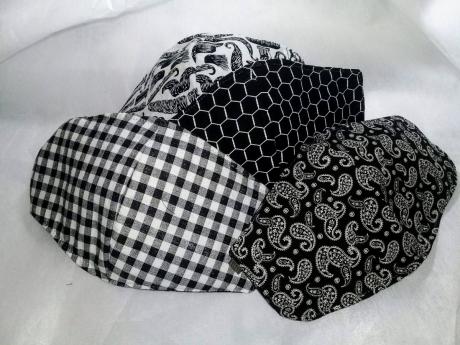
A cottage industry is developing around the production of masks as replacement for lost business during the coronavirus crisis or the chance to earn new income. And even established companies have turned to it as a lifeline.
The national COVID-19 mitigation measures have been stressful on all businesses, large and small, formal and informal, forcing many, especially micro ventures, to find different and creative ways to earn income.
Masks are in demand, and in short supply, opening up opportunity for mostly, but not exclusively, those enterprises that already have the equipment to churn them out.
Michelle McDonald-Williams started her hand-crafted bags and accessories company ChelleMac in 2017 and steadily saw improvements in local and international sales – that is, until last month when Jamaica had its first coronavirus case.
Bag sales have plummeted for the small business owner, but instead of using the cotton materials she had in stock to pre-make bags for when the market rebounds, McDonald-Williams last week made the switch to face masks.
“Instead of casting blame and have a pitiful attitude in a crisis, a true entrepreneur has to dig deep and pivot. And that’s exactly what I’m doing,” McDonald-Williams told the Financial Gleaner.
Last Monday, she revealed ChelleMac’s mask collection, which, she noted, are not medical grade, but nonetheless provides a level of protection at a cost of $500 each.
The release of ChelleMac’s line of masks followed on directives by the Minister of Health on Monday advising that persons who are ill, those recently discharged from the hospital for COVID-19, and the elderly should wear masks in public. It resulted in many more members of the public donning masks, including those who didn’t fall into any particular at-risk category.
The ministry also noted that members of the public are at highest risk of exposure to droplets emitted by infected persons in crowded situations, and where these situations cannot be avoided, wearing a mask would decrease the likelihood of exposure.
“I have been getting a number of requests for the product, so I thought if I have the talent, and the demand is there, why not go for it,” McDonald-Williams said.
But McDonald-Williams is not the only one who has gone back to the drawing board to supply the market with a product that the coronavirus has caused to become one of the most heavily demanded, not only in Jamaica, but also around the world.
Kingston-based garment manufacturer, Apparel Wearhouse was recently forced to lay off some of its workers, but as The Gleaner reported, that quickly changed when the establishment received orders for 800 reusable face fabric masks. Prior to the manufacture of face mask,s Apparel Wearhouse was known to produce shirts, pants, dresses, and corporate uniforms.
Even persons outside of the clothing and textile industries are looking to supply the market with the needed protective gear.
In a 20-second video clip on Instagram, Member of Parliament for North West Manchester Mikael Phillips detailed how his wife, Shelley Phillips, converted their dining room into a production area for face masks.
A separate video showed Shelley stitching the masks while Mikael assisted with cutting the materials. The Financial Gleaner understands that the couple was in the middle of completing an order for 1,000 masks.
One hundred and one interns at the HEART Trust/NTA Garmex facility on Marcus Garvey Drive have also shifted focus to the manufacture of fabric masks under the Housing, Opportunity, Production, and Employment Programme (HOPE) since the Ministry of Health revisited its policy on masks.
The programme, which started in 2017, was aimed at training the interns to make uniforms for all HOPE interns right across Jamaica. But today, face masks are being produced by the interns in thousands for two purposes: to supply corporate Jamaica as well as individuals at the highest risk of contracting COVID-19.
“Corporate Jamaica will be a part of this programme. When they buy a certain amount, a number will be given away to the police, bus and taxi drivers, and the regular individuals on the street who will not be able to afford it,” said Arden Grant, director principal of Heart Trust/NTA Garmex Academy.