How to steer your strategy towards real blue oceans
Loading article...
-
 Francis Wade
-
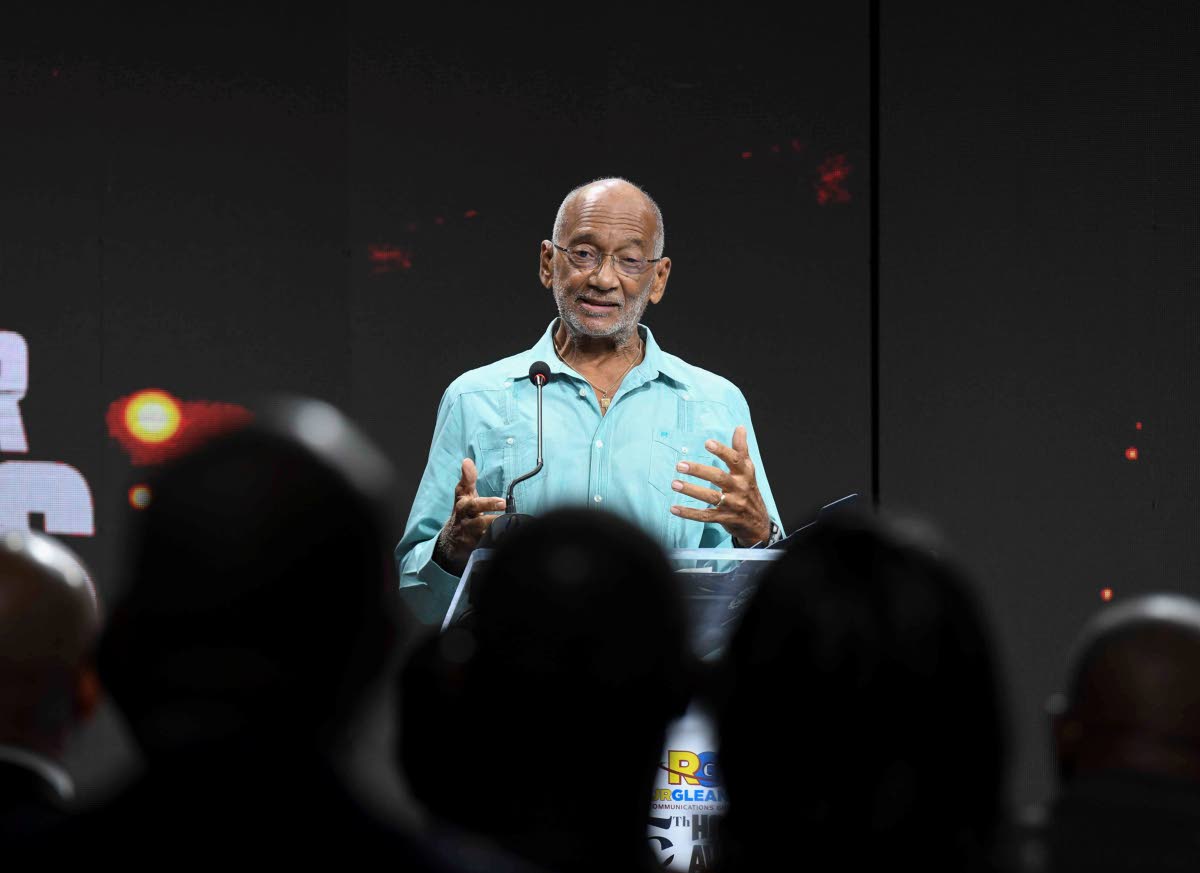 Douglas Orane, Director at RJR Gleaner Communications Group and former CEO of Grace Kennedy, on July 1, 2025 at TVJ Studios.
-
 A Netflix sign is displayed atop a building in Los Angeles, on December 18, 2025, with the Hollywood sign in the distance. (AP photo)
As an executive, you want to be part of a team that directs your company toward fresh, uncharted waters. But the directions given by the book Blue Ocean Strategy aren’t working.
One of the biggest mistakes in corporate strategy took place in a publisher’s office in 2004, when the authors of Blue Ocean added the word “strategy” to the title. The use of that single word has misled a generation of leaders.
The sad fact is that executives everywhere rightly believe in the idea.
The book contrasts Red Oceans, where there is a lot of competition for customers, resources, and attention, versus Blue Oceans which are virgin, untouched, and available. Everyone who has heard the comparison is sold: they want their corporate strategy to carve out uncharted waters.
However, the book fails to offer more than a great metaphor. It lacks an actual strategy. Plus, as most would tell you who have tried, the process details are lacking.
Furthermore, almost all companies held up as shining examples were only identified after they were successful. Cirque de Soleil was the most instructive.
Defining a New Kind of Circus
Cirque de Soleil is the book’s flagship case, cited in most Blue Ocean workshops.
In June 2020, the organisation filed for bankruptcy.
Some blame the pandemic, but it’s actually a story about seeing lifecycles. Even when an offering is wildly successful, as theirs was, it has a limited shelf-life.
Result: Cirque spent two decades defending its advantage instead of creating the next one.
But this is not an isolated case. The same pattern of short-term thinking appears across the book’s other celebrated examples, such as Netflix. The creator of streaming saw Disney, Amazon and Apple move in, turning their blue ocean red within a few years.
The companies that avoid this fate share one habit the book never prescribes: They look decades ahead before competitive pressure forces their hand.
Fujifilm saw digital photography coming and asked not “how do we defend film?” but “what will we be when film is gone?” The answer – cosmetics, pharmaceuticals, medical imaging, built from their existing chemical engineering capabilities – created entirely new categories.
Kodak faced the same threat and defended the present instead. Same industry. Same moment. Different time horizon. Different outcome.
That discipline – future-back thinking before the crisis arrives – is what connects long-horizon strategy to genuine blue ocean creation.
ASML, the Dutch semiconductor equipment company, spent decades investing in extreme ultraviolet lithography before any customer requested it. Working backwards from where physics would eventually force the industry, they built the capability before the need was visible.
Today they hold a near-monopoly on the machines that make advanced chips possible. The long horizon itself was the strategic act – it made visible what a shorter horizon would have hidden entirely.
The same discipline appeared closer to home. In Jamaica, GraceKennedy’s Douglas Orane committed to a 25-year strategic vision at a time when most Caribbean companies were planning in three-year cycles. That commitment forced questions that a short horizon makes impossible to even raise.
This is the insight the book misses entirely. Extending your time horizon is not just a planning exercise. It is a constraint-removal tool. Teams that have never looked twenty years ahead are stunned by what becomes thinkable the first time they try it.
Questions that would never survive a three-year planning horizon – about who the customer will be, what they will value, what problem will dominate their lives – suddenly become not just permissible but urgent. Assumptions that felt like fixed realities – the industry you belong to, the customers you serve, the competition you face, the technologies that prevail – loosen their grip.
What customers will need in two decades, not what they are asking for today, becomes the starting point. From that vista, the question is no longer how to compete better in your current category. It is what new category your customers’ evolving needs are quietly calling into existence – and whether you will be the organisation that brings it to life.
Across more than sixty strategy engagements in the Caribbean, one moment stands out as consistently the most generative: when a leadership team first stretches its horizon from three years to twenty.
Executives who attended defending familiar positions began asking unfamiliar questions. The blue ocean they could not see from the present becomes visible from the future. The book never prescribes this. It describes companies that arrived there. It does not explain how to make the journey.
That is the work the authors never equip you for. The Three Horizons model by Hodgson, Curry et al provides the foresight discipline. Category Design provides the naming and framing. Neither replaces Blue Ocean Strategy. All three together deliver something the book alone cannot: a complete system, not just a compelling aspiration.
Read it for the vision. Then go looking for the method it never provides.
Francis Wade is the author of Perfect Time-Based Productivity, a keynote speaker and a management consultant. To search his prior columns on productivity, strategy, engagement and business processes, send email to columns@fwconsulting.com.