
Basil Jarrett | That Holy Trinity experiment – and why we hope it works
Published:Thursday | February 20, 2025 | 12:09 AM

JAMAICA’S EDUCATION system has long been a tale of two realities. On one hand, we have our top-performing traditional high schools churning out Rhodes Scholars and Ivy League graduates. Stand up, Campion, Immaculate and St Andrew High. On the other, we have schools struggling with students who, through no fault of their own, are battling severe literacy and numeracy deficits. Stand up, everybody else. Obviously, I’m exaggerating but surely, no one will disagree with me that the disparities in the qualities of our schools is not just an issue of education, but one of national development.
So when I read earlier this week about the groundbreaking experiment at Holy Trinity High School, spearheaded by renowned educator Grace Baston and her team, I knew they were on to something.
BOLD BUT NECESSARY
I’m a big fan of Grace Baston. Her incredible work at Campion College stands as a shining example of what can happen when we make up our minds to set and maintain high standards in education. Years ago, during COVID, I once asked her about her ambitious plans to resume traditional teaching at Campion when the ills of online classes were becoming more evident. Her bold response was that she had no choice, as parents demanded it.
This experiment at Holy Trinity is as bold a concept as those words four years ago, and just as necessary. Essentially, Baston and former Ministry of Education official Faith Alexander have flipped the controversial Pathways Programme on its head, moving the intervention to the start of high school, instead of delaying it until students are about to age out of the system. The goal? To take a staggering 99.6 per cent of Holy Trinity’s grade-seven students who entered high school as non-readers or severely behind, and bring them up to grade level in just one year.
I did say ‘bold’, right? It’s an audacious mission. But if successful, it could transform how we tackle literacy and numeracy challenges in Jamaica for years to come.
WHY THIS PROJECT DESERVES APPLAUSE
For years, we have known that a significant number of students enter high school with reading and math skills far below their grade level. Our traditional education system then pushes them through a one-size-fits-all curriculum and expects them to somehow pass nine subjects in CSEC.
Baston’s team has taken a different approach, one that prioritises literacy, numeracy, and character formation over rote learning and standardised tests. It acknowledges the reality that if students can’t read, they can’t learn. The team has thrown out the rigid curriculum and created a customised, intensive intervention, backed by science and technology, to help these students catch up.
In terms of the latter, the use of Fast Forward software, a programme with a proven track record in the United States, is a bold stroke. Unlike traditional methods, this adaptive learning technology provides real-time assessments, individualised lesson plans, and daily tracking to ensure each student progresses at their own pace – you know, exactly the things that struggling students need.
And that’s why Baston’s approach has found favour with the Ministry of Education, the private sector, and even the Catholic Church, with all three throwing their weight behind the initiative. Clearly, this isn’t your weekend school project; rather, it’s a national effort.
THE CHALLENGES THAT MUST BE ADDRESSED
But despite my enthusiasm, I do have some doubts. For one, I worry that the one-year timeline might be a bit ambitious. Baston’s team has set a goal of getting 75 per cent of these students to at least grade-six reading level in one year. While we should always aim high, we must also be realistic. These students aren’t just a little behind. They are way behind. Some are barely reading at a pre-primary level, and catching them up in a single academic year is a monumental task.
Perhaps the programme should extend to two years, allowing students more time to develop foundational skills before transitioning to the traditional curriculum. After all, we don’t want to rush progress and risk discouraging those who need more time to succeed.
I also have questions about whether the Mississippi Model, on which the programme is heavily based, might not be best fit for Jamaica. While Mississippi is a US state with similar socio-economic challenges as our own, we don’t share many other commonalities. We have vastly different cultures, resources, and educational infrastructure. In particular, Mississippi’s success, I’m told, was not just about better teaching methods, but rather, it involved legal reforms, including mandatory retention for struggling third-graders. In Jamaica, I dare you to try holding back students who aren’t ready to move on. Already, our policymakers have rejected that aspect of the model, meaning we are not implementing it in full compliance with the US’s approach. Can we expect the same results without the full package? I don’t know.
A third worry that I have heard echoed by educators is that many of our students are carrying undiagnosed learning disabilities such as dyslexia, ADHD, and other learning challenges. Jamaica has very few trained special education teachers and limited screening tools for early diagnosis, and I wonder how this will impact the programme. Can the programme succeed if psychological interventions aren’t concomitant?
WHY WE MUST SUPPORT THIS INITIATIVE
But despite my Doubting ‘Thomas-ness’, I am still behind the programme. I will go even one step further and suggest that perhaps, before the experiment is complete, we should be looking to expand the programme to bring more schools on board.
After all, desperate times call for desperate measures, and perhaps no fight is more desperate and more worth fighting than for the future of our children. This initiative is a bold, creative, and necessary step, and Baston, Alexander and the rest of their team deserve our full support. We just need more funding, more technology, more teachers, and more schools to come on board.
Fixing our literacy and numeracy issues is, to my mind, the single most important challenge that will determine our future and long-term success. Because a Jamaica where every child can read, write, and succeed is a Jamaica that wins.
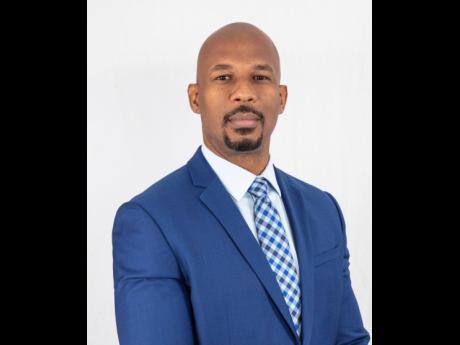
Major Basil Jarrett is the director of communications at the Major Organised Crime and Anti-Corruption Agency and a crisis communications consultant. Follow him on Twitter, Instagram, Threads @IamBasilJarrett and linkedin.com/in/basiljarrett. Send feedback to columns@gleanerjm.com.