
Editorial | Trial by innuendo
Published:Wednesday | April 16, 2025 | 12:06 AM
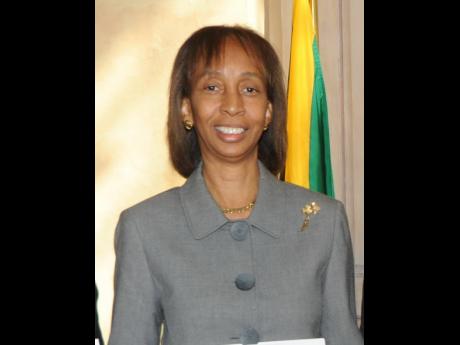
In this period of global uncertainty, as institutions of liberal governance fall under stress for the world’s most powerful leaders, Jamaicans should applaud the resistance by the new chairman of the island’s Integrity Commission, retired judge Carol Lawrence-Beswick, to facilitate the trial of the IC’s staff by allegations and innuendo.
Indeed, if the governing Jamaica Labour Party (JLP) has real evidence of conflicts of interest or specific acts of impropriety at the anti-corruption agency that demand investigation, it should present them to Justice Lawrence-Beswick and her fellow commissioners, rather than cast a wide net aimed, it appears, at catching what you may.
Further, in a small country like Jamaica, with a population of under three million people, a person’s past associations, or even friendships, cannot of itself be a bar to holding an office that may have to adjudicate on issues relating to that person’s associates or friends – present or past.
If that were the case, and taken to its logical conclusion, few critical posts in the island could ever be filled by nationals; it would presuppose a lack of integrity of almost anyone who offered themselves for service.
And it would suggest a widespread absence of appreciation or understanding of the concept of recusal when conflicts of interest arise, or are likely to occur. Or adherence thereto.
In any event, the powers of a director of corruption prosecution at the Integrity Commission is subordinate to the constitutional authority of the director of public prosecutions (DPP). So, if an IC prosecutor were to engage in the egregious prosecution of a public official, the DPP could step in and stop the proceedings at any point in the case.
DEMANDED INVESTIGATION
The proximate trigger of the latest disquiet between the JLP and the IC is the commission’s appointment of a former crown counsel, Roneiph Lawrence, as its acting director of corruption prosecution, succeeding Keisha Prince-Kameka, whose five-year term ended recently.
Last week, the JLP and the Government, through the leaders of the House and the Senate –Edmund Bartlett and Kamina Johnson Smith – wrote to Justice Lawrence- Beswick to complain that Dayton Campbell, the general secretary of the Opposition People’s National Party, had in January posted a photograph on social media in which he appeared with Mr Lawrence at the latter’s wedding. They have apparently known each other for over two decades, since their time at university.
While not questioning Mr Lawrence’s “professional qualification” or his right of association, Messrs Bartlett and Johnson Smith raised concerns about his appointment. They told Justice Lawrence-Beswick that “justice should not only be done, but should be seen to be manifestly and demonstrably done”.
“With respect to the Integrity Commission, the bar would undoubtedly be even higher,” they added.
The Cabinet ministers suggested, without providing evidence, that the previous director of corruption prosecution, Ms Prince-Kameka, did not seek a renewal of her contract partly because of internal, and supposedly partisan, pressures.
The JLP also demanded an investigation into a claim that an IC investigator resigned because a statement she provided during an investigation had been kept out of a report the commission submitted to Parliament. The implication is that this was an act of political partisanship. But again, the allegation was not supported with any specific information.
Justice Lawrence-Beswick responded: “In order for there to be a fair, impartial and transparent interrogation there not only needs to be specific questions, which you have in fact posed, but equally important, there must be specific, cogent information from which the interrogation can be commenced.”
With respect to the suggestion that the former director of corruption prosecution was pressured into leaving the job, Justice Lawrence-Beswick noted that she had no information of complaints by Ms Prince-Kameka. And on the question of a prosecutor’s statement being culled from a report, she said the allegation, as submitted by the JLP, was “bereft of sufficient detail to adequately inform an inquiry”.
“Justice should not be done only in the eyes of the parliamentarians, but also in the eyes of the persons against whom complaints or allegations are being made,” Justice Lawrence-Beswick noted.
REAFFIRMED COMMISSION’S INDEPENDENCE
The JLP has been antagonistic towards the Integrity Commission in recent years following investigative reports with adverse findings against some of its members of parliament, including Prime Minister Andrew Holness, whose income, assets and liabilities filings the commission has failed to verify for the past three years.
Dr Holness last year took the IC to court, contesting its conclusions in a report on his finances, and challenging the constitutionality of aspects of the anti-corruption law which the commission oversees.
This newspaper had hoped that Justice Lawrence-Beswick’s appointment last month as the commission’s chairman, and the departure of some key officials, would lead to a reset of the Government’s relations with the agency. The administration’s start has not been propitious.
Happily, Justice Lawrence-Beswick has reaffirmed the commission’s independence and demonstrated unwillingness, in keeping with the law, to bend to partisan pressures. That is good.
It is a bane of Jamaica that too many things are viewed through the coloured lenses of partisan politics.
Fighting corruption ought to be beyond partisanship or anyone’s familial or political lineage, or antecedents.