Norris R. McDonald |Jamaica’s ‘curry cow’ education system: a battle for cultural sovereignty
Loading article...
-
 Norris McDonald
-
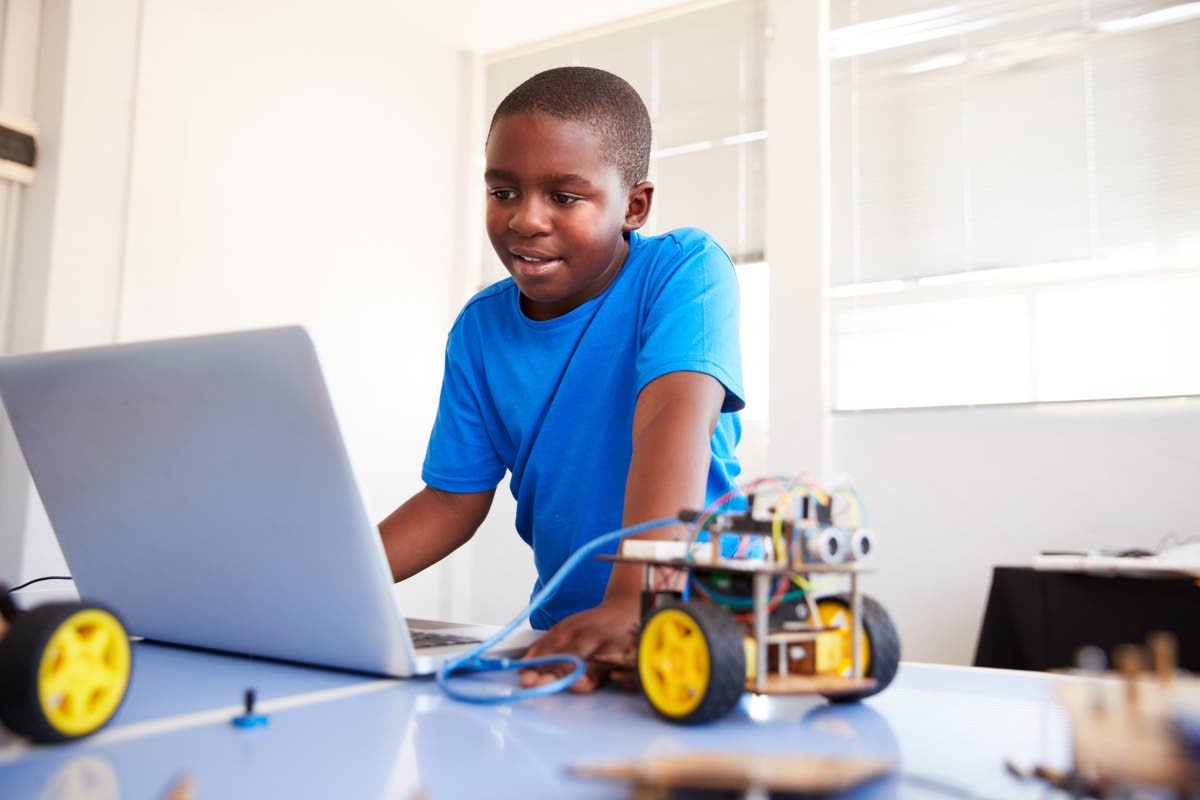 Our global cultural influence has not translated into broad-based empowerment because we have failed to integrate creativity, technology, and heritage into a coherent educational strategy.
There are few tragedies more enduring than an education system that systematically undermines the very people it claims to uplift. In Jamaica, where more than 11 per cent of the adult population remains functionally illiterate, the consequence is not merely academic failure but the slow burial of potential.
Generations of children are being consigned to low-wage labour, economic uncertainty, destroyed hopes and dreams.
This crisis is not the result of scarce resources; it is the outcome of deliberate mismanagement, corruption, and a colonial mind-set that continues to shape the Jamaican society.
ELITISM, CULTURAL AND SOCIAL STAGNATION
Let us be clear: this is not accidental. From its inception, Jamaica’s education system was designed to serve a narrow elite while disciplining the majority into obedience. As Professor Errol Miller and others have long demonstrated, decades of reform have failed to close the gap between the privileged and the working class.
Instead, schooling continues to socialise our children into submission – training them to fit neatly into a global capitalist order where their creativity is extracted, their labour exploited, and their aspirations contained.
My friends, the government’s endless parade of trust-deficit “solutions” has produced little beyond press releases and procurement contracts while fostering corruption.
Despite high enrollment, a United Nations study has found Jamaica’s learning outcomes to be dangerously weak. Only about 20 per cent of teachers are university graduates, and digital literacy remains an afterthought in a world increasingly defined by technology. Meanwhile, we continue to fund a system that reliably produces illiteracy, underemployment, and social stagnation.
A CORRUPTION-DRIVEN ‘CURRY COW’ EDUCATION SYSTEM
The crisis in education cannot be separated from Jamaica’s broader political economy. Government officials routinely cite budget constraints to justify chronic underinvestment, but this explanation collapses under scrutiny.
The problem is not scarcity; it is priority. Auditor General reports from 2012 to 2023 document billions of dollars lost to waste, fraud, and corruption across state agencies, including the Ministry of Education. Procurement scandals, inflated contracts, and vanity projects drain public funds while classrooms crumble and teachers struggle without basic resources.
This is a government that finds ample money for foreign travel, consultants and ceremonial excess, yet pleads poverty when asked to invest in children. Education has become a “curry cow” – a lucrative feeding trough for political insiders rather than a vehicle for national development.
Despite the rhetoric of reform, outcomes worsen, inequality deepens, and the gulf between elite institutions and underfunded public schools grows ever wider.
At its core, this dysfunction reflects the logic of capitalism itself. Jamaica’s education system is not designed to cultivate critical thinkers, innovators, or self-determining citizens. It is engineered to produce a compliant workforce for a global economy that thrives on cheap labour and limited horizons. Western capitalist nations preach meritocracy and opportunity, yet actively structure education to reproduce class hierarchies at home and dependency abroad. Minds are not developed; they are conditioned.
CUBA: A GOOD EXAMPLE AMERICA LOVES TO HATE
Contrast this with Cuba – a country relentlessly demonised and economically strangled by the United States and its allies for over six decades.
Despite an unforgiving blockade and material scarcity, Cuba has built one of the most successful education systems in the world, boasting near-universal literacy and strong outcomes across disciplines. This achievement is not rooted in excess wealth or cutting-edge technology but in political will.
Cuba consistently invests between 10 and 12 per cent of its GDP in education, prioritising human development over profit. Education is treated as a public good and a cornerstone of sovereignty, not a commodity to be rationed or privatised.
In doing so, Cuba exposes the lie at the heart of capitalist ideology: that poverty, rather than policy, explains educational failure.
While Jamaica squanders public funds and bends to the dictates of international financial institutions, Cuba has built an education system that equips its people to participate in – and challenge – the global knowledge economy. Its success is not incidental; it represents a direct challenge to Jamaica’s, British inspired, colonial education system.
CREATIVITY, CULTURE AND NATIONAL SOVEREIGNTY
Cuba’s educational philosophy extends beyond the classroom. Creativity, culture, and community are central pillars of national development. Jamaica, by contrast, commodifies its cultural output — reggae, dancehall, athletics – without embedding creative education or economic ownership into the school system.
Our global cultural influence has not translated into broad-based empowerment because we have failed to integrate creativity, technology, and heritage into a coherent educational strategy.
If Cuba can produce world-class doctors, engineers, scientists, and artists under siege, Jamaica has no excuse beyond political cowardice and ideological capture. Instead of cultivating national talent, our leaders defer to the IMF and their foreign masters. They therefore, wittingly or unwittingly, appear servile; pushing and implement policies that destroy the lives of black poor people and the middle class.
Loans replace vision, technical assistance substitutes for structural change.
My dear friends, what Jamaica requires is not more debt or donor-driven reform, but a fundamental reorientation of education toward cultural liberation rather than compliance.
EDUCATION MUST EMPOWER AND LIBERATE MINDS
Jamaica’s national hero Marcus Garvey warned that “a people without the knowledge of their past history, origin and culture is like a tree without roots.” He further reminded us that ‘we must emancipate ourselves from mental slaver to free our mind.’
Jamaica’s education system – shaped by colonial residue and enforced today through IMF and World Bank austerity – does precisely the opposite. It uproots African memory while institutionalising mental captivity, training children for dependency rather than sovereignty.
Until education restores historical consciousness and rejects imperial supervision, political independence remains hollow, and liberation deferred.
Breaking free from colonialism and imperialism demands an education system rooted in black consciousness, cultural confidence, and national pride. Knowledge must be understood not merely as a means of survival, but as a weapon of resistance.
We must abolish this education system that perpetuates ignorance, illiteracy and economic servitude and cultural enslavement.
Education must reflect the society it serves. If we desire a Jamaica that is just, sovereign, and self-determining, we must begin by transforming how and why we educate. Anything less is an endorsement of the cultural imperialist status quo.
That is the bitta truth.
Norris R. McDonald is an author, economic journalist, political analyst, and respiratory therapist. Send feed back to columns@gleanerjm.com and miaminorris@yahoo.com.