Mayank Joshi | India’s GST 2.0: For simpler tax, stronger growth
Loading article...
-
 Mayank Joshi, high commissioner of India to Jamaica. Photo - File
-
Mayank Joshi, high commissioner of India to Jamaica. Photo - File
-
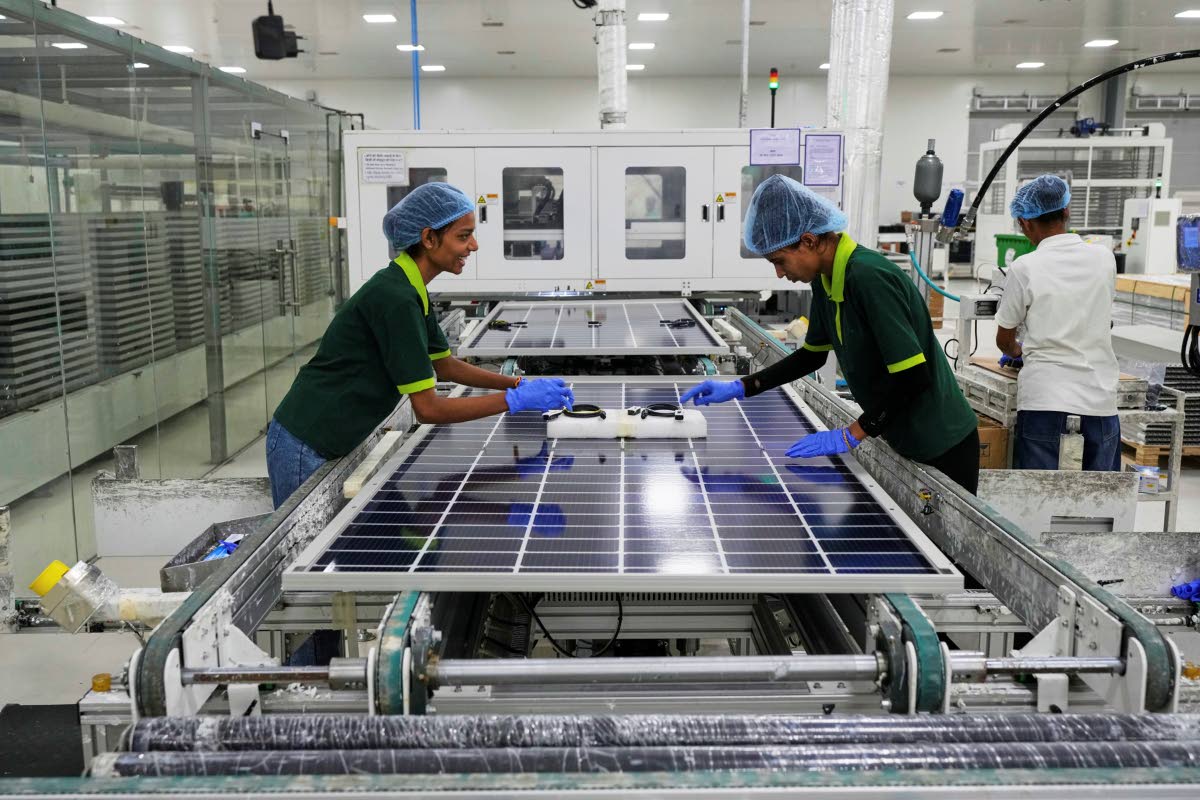 Workers put switches and connectors after they come out of automated framing at a ReNew solar panel manufacturing plant on the outskirts of Jaipur, India. Photo - AP
When India first rolled out the goods and services tax (GST) in July 2017, country’s biggest economic reform since liberalisation, it was hailed as a “path-breaking legislation for New India.” Eight years later in September, the Indian government has unveiled GST 2.0 – a bold reset with its most ambitious tax overhaul designed to make the tax system simpler, friendlier, and better at boosting growth.
The GST 1.0 of 2017 unified India’s tax system with “One Nation, One Tax” , expanded the taxpayer base and ensured stable revenues. But with four main tax slabs of 5, 12, 18 and 28 percent, plus a range of cesses, GST 1.0, businesses still struggled with classification disputes and compliance burdens, while consumers bore the brunt of distorted prices on many everyday items.
In his Independence Day address on August 15, Prime Minister Narendra Modi announced that the government will bring Next-Generation GST reforms, which will bring down tax burden on the common man. Calling it a “Diwali gift,” he said the changes would directly common people, benefit farmers, small businesses, women, youth and the middle class while strengthening India’s long-term growth prospects.
At its 56th meeting in September, the GST Council fulfilled that pledge by approving a sweeping reform package as GST 2.0-a recalibration that compresses the country’s complex multi-slab structure into a simpler two-tier regime: 5 percent on essentials and mass-consumption goods, and 18 percent on most other items. A special 40 percent rate will apply to luxury and “sin” goods such as large cars, aerated drinks and tobacco. The reform to be in effect from 22 September, is aimed at cutting through complexity, easing consumer prices, and building momentum for the economy.
GUIDING PILLARS
At the heart of the reforms are seven guiding pillars. The first is the continued consolidation of India’s tax system under the “One Nation, One Tax” model, now moving towards a streamlined two-tier structure centred on five and 18 per cent. This change promises fewer disputes over classification, quicker decisions, and a stable source of revenue for the government. The second pillar focuses on rationalising rates to ensure fairer taxation, while a third embraces technology to make compliance easier, with instant registration for small businesses, digital invoicing, and AI-based risk detection.
The fourth pillar puts consumers at the centre of reform with essentials such as milk and bread exempt from tax and common household goods like soap, shampoo, toothpaste and bicycles taxed at just five percent. Aspirational goods too have become more affordable: televisions, dishwashers and air conditioners have all dropped from 28 to 18 percent, while small cars and two-wheelers now fall into the lower bracket. The fifth pillar is focused on micro, small and medium enterprises, long seen as the backbone of India’s economy. Labour-intensive industries such as textiles and handicrafts are expected to benefit in particular, reinforcing the government’s “Make in India” agenda and giving local businesses a better chance to compete globally. With the sixth pillar, the reforms also strengthen fiscal federalism by providing all states with a more reliable revenue base, ensuring they have the resources to invest in development. The seventh pillar recognises lower indirect taxes mean higher household savings, which can in turn fuel consumption, strengthen industry and create a virtuous cycle of growth.
Several sectors stand to gain directly. Construction and housing are expected to get a boost from the reduction of GST on cement and building materials from 28 to 18 per cent, generating new momentum in real estate and employment. Agriculture has also been placed at the centre of reform, with tractors, tyres, irrigation equipment and biopesticides now taxed at just five percent, lowering input costs and supporting farmers. Healthcare has received special attention, with taxes eliminated on 33 life-saving drugs and diagnostic kits, while other medicines and devices now attract only five percent. Tourism and hospital services that have been hard hit by the pandemic, too, have seen relief, with hotel stays under J$15,000 per night, gyms, salons and even yoga sessions moved to the five percent slab.
IMPLICATIONS BEYOND INDIA
The GST 2.0 reset also has implications extend beyond India. For instance, Jamaica, one of India’s growing trade partners, this reform could mean cheaper imports and smoother supply chains. India is already a key supplier of affordable pharmaceuticals, and with compliance simplified, Jamaican importers may benefit from steadier supplies and more predictable pricing. Consumer goods such as small appliances, packaged foods and auto parts – already part of India-Jamaica trade – are expected to see reduced landed costs once freight and customs are added. Jamaica’s solar expansion could also benefit from India’s decision to cut GST on renewable energy devices from 12 to 5 percent, making panels, batteries and related components more affordable. Even textiles and decorative goods, where India has a strong presence, may gain demand in Caribbean markets with a clearer two-slab structure.
GST 2.0 marks a new phase in India’s tax journey and commitment to building a resilient and sustainable economy primed for long term growth. By lowering prices and simplifying compliance, it aims to boost household spending, spur industry, create jobs, and expand the revenue base. Effective from 22 September 2025, the reform is designed not just as a tax measure but as a growth strategy, promoting ease of living, ease of doing business, and long-term inclusive prosperity.
Mayank Joshi is the high commissioner of India to Jamaica. Send feedback to columns@gleanerjm.com and cons.kingston@mea.gov.in