Editorial | Melissa, reading and rebuilding
Loading article...
-
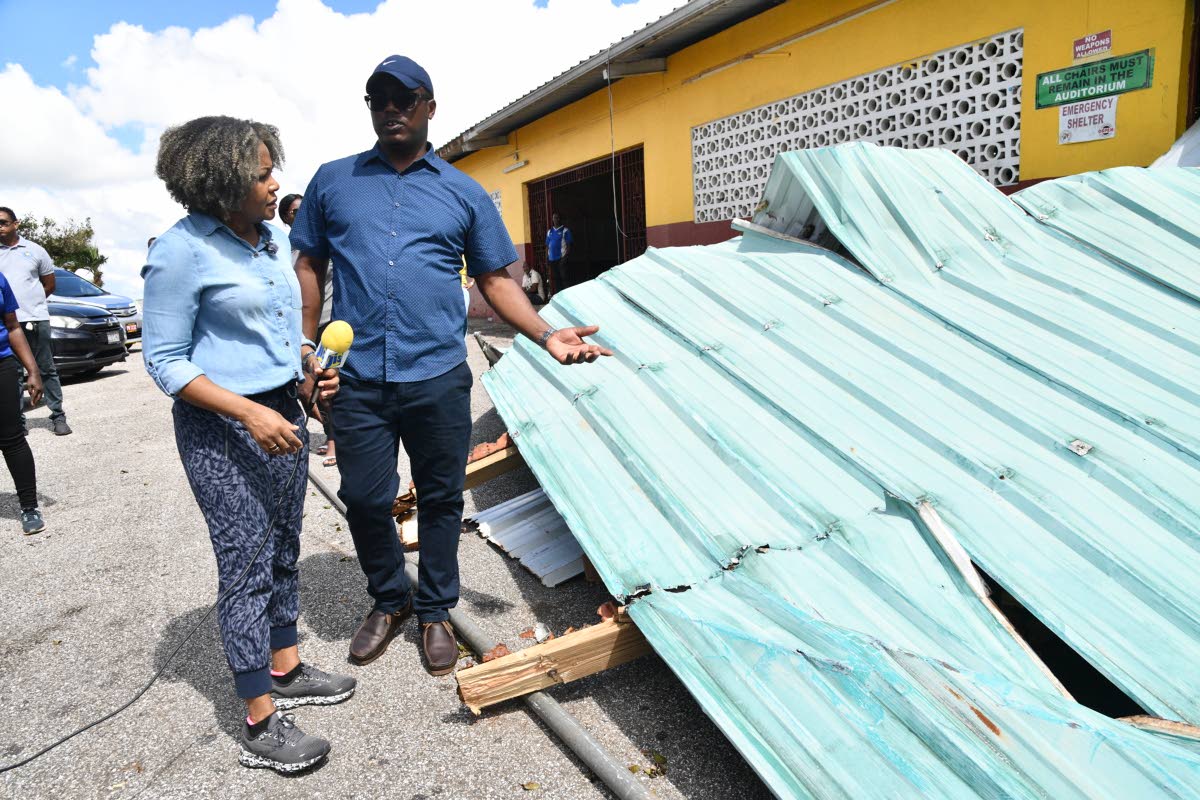 Minister of Education, Skills, Youth and Information, Senator Dr Dana Morris Dixon (left), listens to Hidran McKulsky, principal of Manchester-based Holmwood Technical High School, while on a visit to the institution on Sunday to see the extent of the hurricane damage.
-
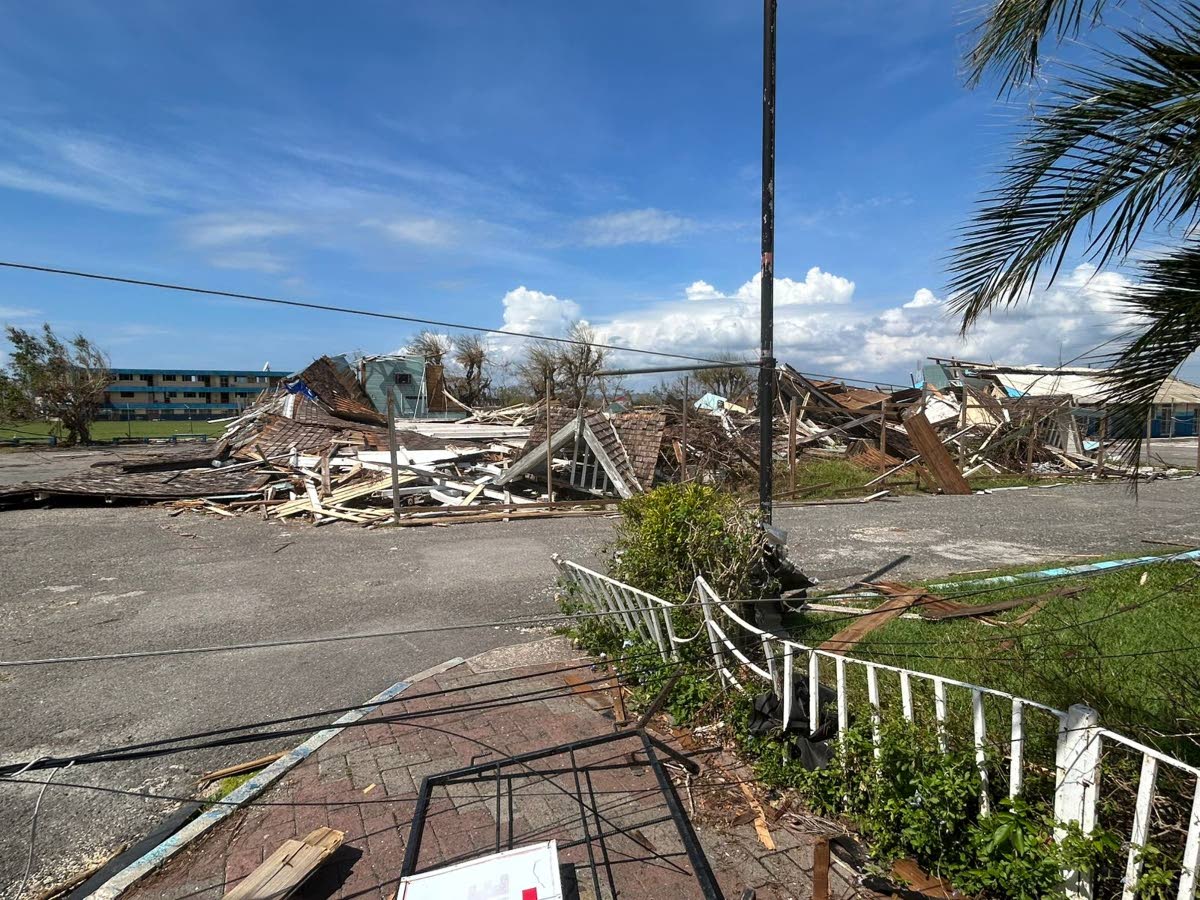 The Thomas Manning Building at The Manning’s School in Westmoreland was extensively damaged by Hurricane Melissa.
-
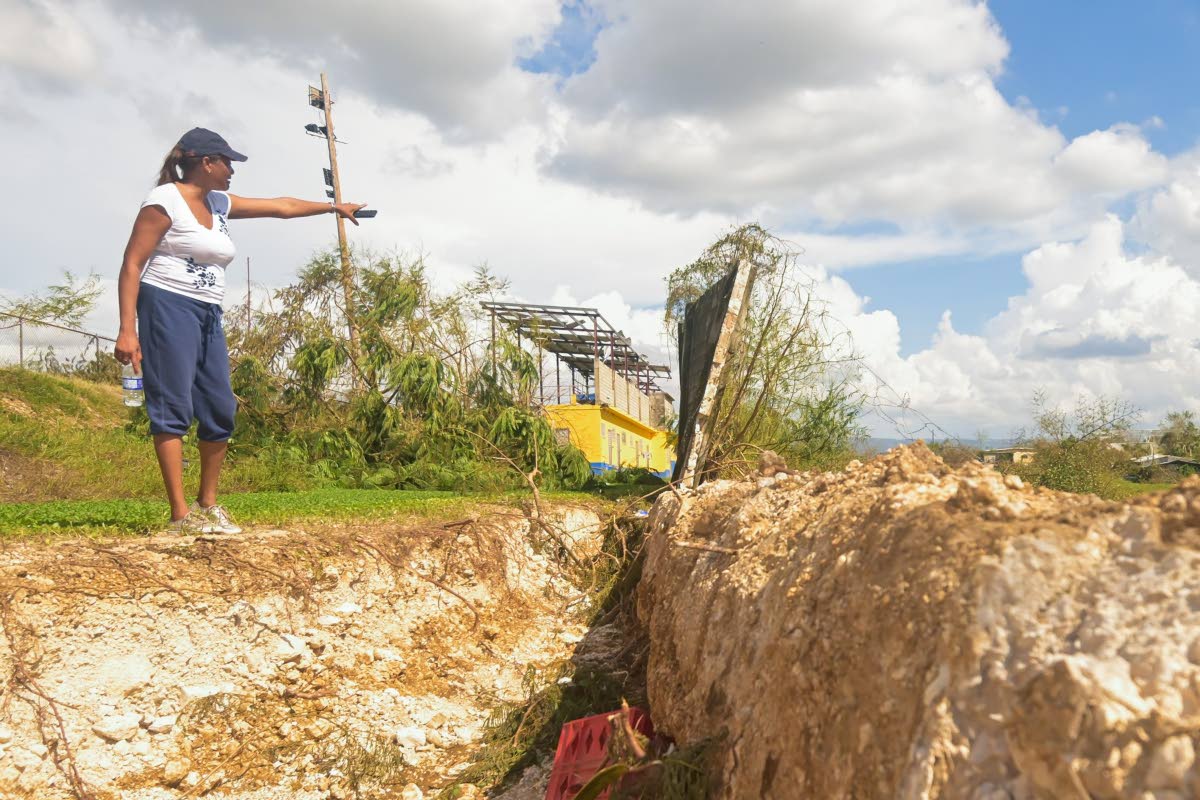 St Elizabeth Technical High School (STETHS) Acting Vice Principal, Patrine Daley-Chambers, points to the section of the perimeter wall that broke away during the passage of Hurricane Melissa.
-
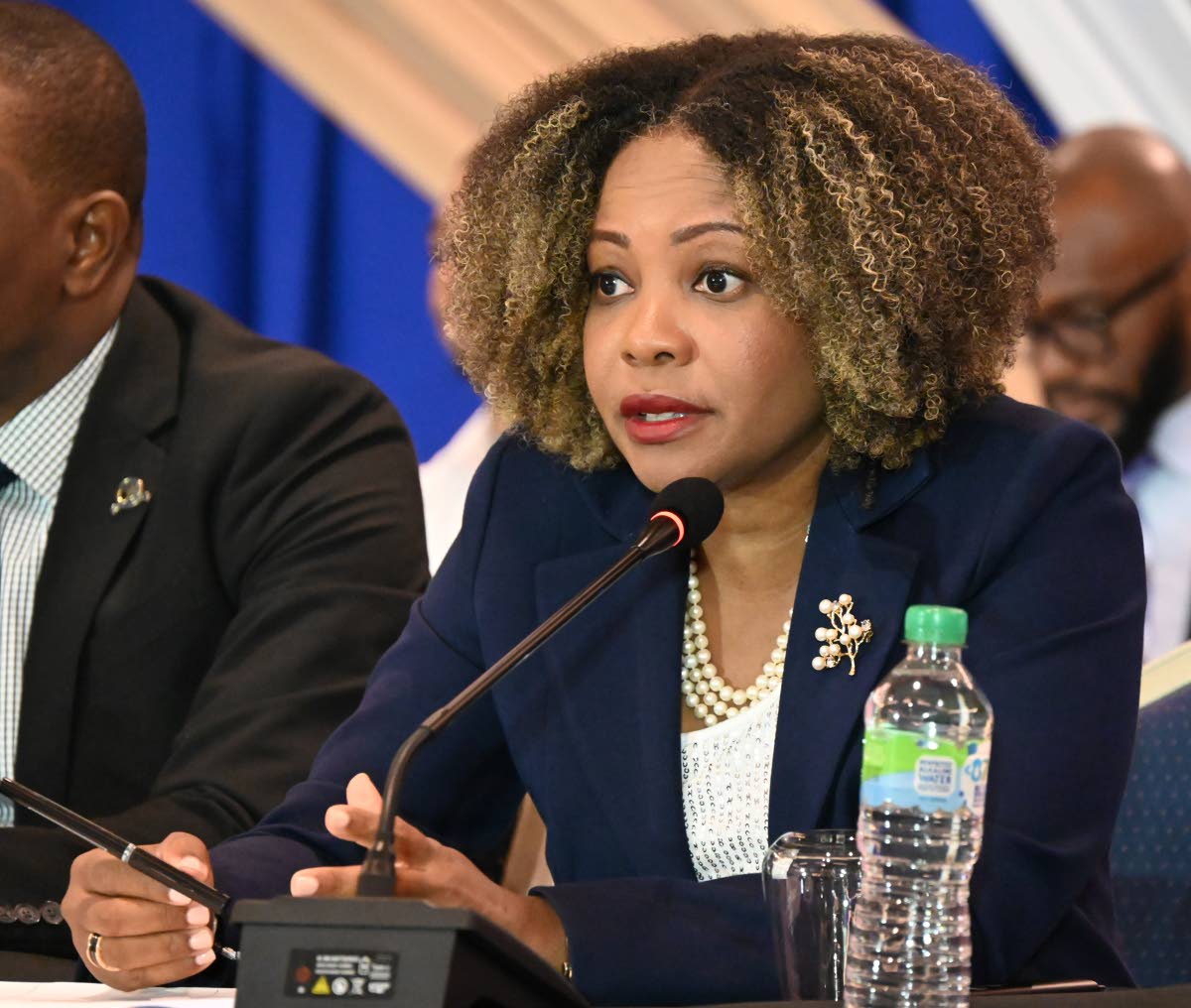 Education Minister Dr Dana Morris-Dixon
T he Gleaner welcomes the appreciation by Education Minister Dana Morris Dixon of the urgency of placing children back into a learning mode after last week’s destruction by Hurricane Melissa, especially in the western third of the island.
While that accords with the newspaper’s position on the matter, we hope that Dr Morris Dixon – and the Holness administration broadly – also embrace larger advocacy for a specific carve-out for the education sector as part of Jamaica’s recovery programme. In other words, Hurricane Melissa’s destruction should be translated into the opportunity to reset Jamaica’s long underperforming sector, which delivers too few students with the basics for functioning in a modern, globally competitive economy.
However, this does not mean that Minister Morris Dixon and her technocrats at the education ministry, should, as bureaucrats are wont to do, overcomplicate matters. The critical mission of primary schools, on which the education authorities should be laser-focused, must be to ensure that every child at the end of his or her primary education can read and comprehend in English, and do sums, at their grade level. That is the foundation upon which higher levels of education can be built.
Obviously, there has to be a physical and psychological environment in which teaching and learning can take place in the aftermath of last week’s hurricane, among the most powerful ever recorded, and certainly the most intense to have made landfall in Jamaica.
Not only have physical infrastructure – schools among them – been destroyed by Melissa’s winds, but people, including students and teachers, have been left severely traumatised. Tens of thousands of people – especially in the parishes of St Elizabeth, Westmoreland, St James and Hanover – are displaced and living rough.
There is a grave danger of the education of tens of thousands of children being put on hold, exacerbating the learning loss of the COVID-19 period, when face-to-face teaching and learning had a two-year hiatus, and vast numbers of students could not access online classes.
FAST-TRACK FINANCING WINDOW
Unlike with the COVID -19 pandemic, now entire education plants are destroyed or badly compromised – schoolhouses without roofs, libraries decimated, laboratories that no longer exist, and so on. Even in the face of the deep, national crisis facing Jamaica, fixing these things cannot be allowed to lag as secondary elements of the recovery process that can be addressed later. Indeed, as we argued previously, education is too important for Jamaica’s economic advancement and growth, long-term resilience and the creation of social equity (and, ultimately, stability) for its recovery, and improvement, to be slow.
It is in that context that The Gleaner repeats its proposal for the creation, within the framework of the national recovery mechanism, of a ring-fenced School and Education Recovery and Resilience Fund (SERRF). Specific proportions, say 30 per cent, of recovery finance inflows, including from insurance payouts, would go to the SERRF to open a fast-track financing window for resilient school and education repair, reconstruction and reform.
In the shortterm, the SERRF, which should operate with the robust oversight of a broad-based and transparent board, would focus on the things that can get students and teachers quickly back into classrooms: resiliently re-roofing schools, building temporary classrooms, providing sanitation facilities, including water and power.
The education ministry, and other government agencies, would support this back-to-the-classroom exercise by finding all unaccounted-for students and having them returned to the formal education programme. This effort should be backed by the mobilisation of an army of guidance counsellors, psychologists and psychiatrists (many of whom would have to be volunteers) to go into classrooms to help students and teachers work through the traumas and disorders that may linger from the COVID-19 pandemic and which are now exacerbated by Melissa.
URGENT, EXPANSIVE REMEDIATION PROGRAMMES
At the same time, Minister Morris Dixon must build on, and vastly expand, on her recent mandate to make reading a key element in the curriculum of the primary education system. It must become the principle element thereof.
It is a major stain on Jamaica’s education outcomes that up to a third (and even this number understates the crisis) of Jamaica’s children, at the end of their primary education at age 11 or 12, are essentially illiterate. They take this deficiency into high schools where, under the standard curriculum, it is almost impossible to catch up. Many students, trapped in this bind, exit secondary education at the end of five years with little to show for the time.
Recent remedial interventions in a handful of high schools have demonstrated the efficacy of a variety of teaching techniques to lift reading/literacy standards in relatively short periods. Teachers should, at scale, be trained in these techniques, which should be employed in urgent and expansive remediation programmes in high schools where there are literacy problems.
At the primary level, the current policy of advancing students, notwithstanding their proficiency in reading, comprehension and sums, must end. That conveyor belt of underperformance must be dismantled and replaced with a mission that insists on students being able to read and comprehend at the appropriate level for their specific grades. Having attained these competencies, students will be better positioned to handle more complex elements of education.
Hurricane Melissa caused a profound crisis. We should turn it into an opportunity.