Jamel Banton | Concrete deck or zinc – what’s the best option?
Loading article...
-
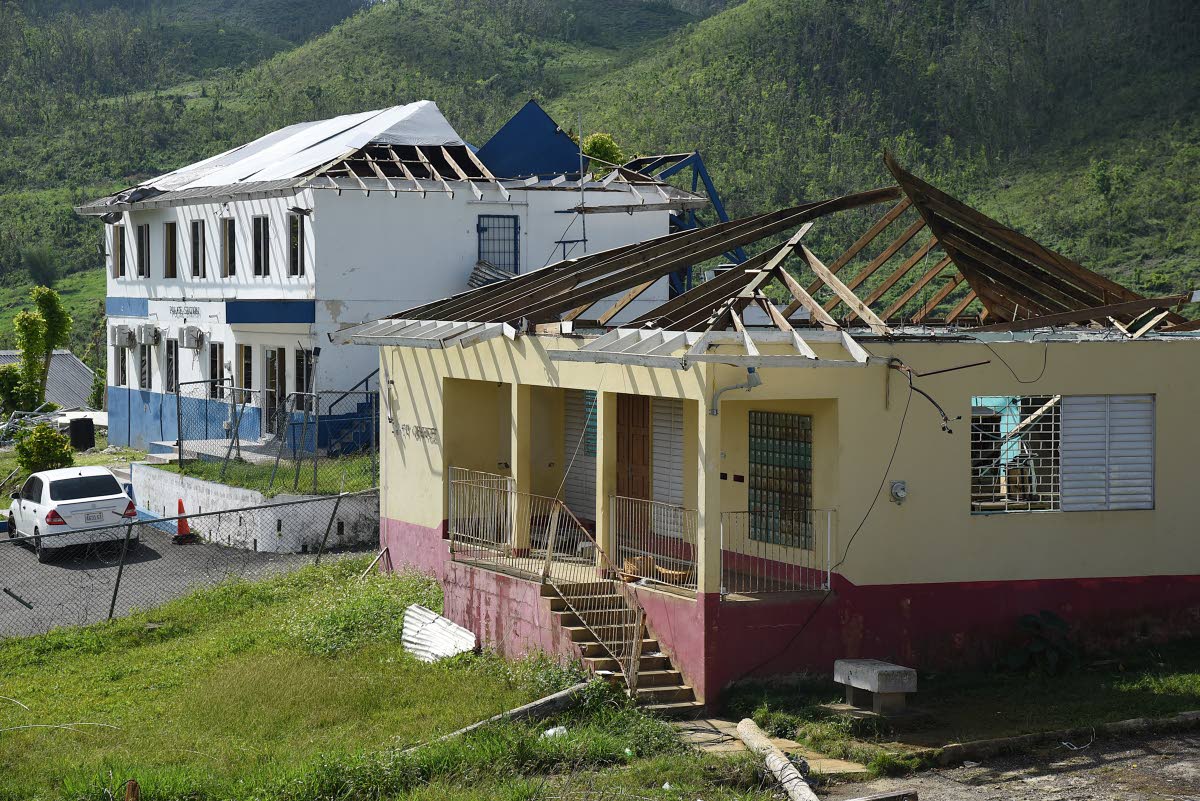 Damaged roofs of Lewisville Police Station and post office, blown away by Hurricane Melissa.
-
 Jamel Banton
When the prime minister recently cautioned Jamaicans not to rush into building concrete roofs after Hurricane Melissa, did he offer wise advice? His point was simple: do not trade one hazard for another. To understand this deeper, we must understand why so many of us are desperately running to concrete in the first place.
In Newton, St Elizabeth, a lady explained that fear plainly. During the hurricane, her zinc roof rattled violently and then the door flew off. In desperation, she grabbed it, but the winds lifted both her and the door into flight. She was barely saved by her brother clutching her heels. Shortly after, the roof of her one bedroom was gone with the wind, and her immediate thought was her neighbour’s house – the only place on the hillside with a concrete deck roof. That was where she eventually took shelter.
So when she asked: “Mr. Engineer, should I change to a concrete deck?” I understood the emotion behind the question. My people aren’t looking for concrete – they are looking for security. But concrete is not automatically safer, and zinc is not automatically weak. What truly matters is how the house is built, not just what sits on top of it.
To make sense of this, it helps to picture your home as a simple chain made of four parts: the foundation, the walls, the roof frame, and the roofing material. People who felt the pulsating pulling, and their ears popping as if on an aeroplane, will tell you Melissa pulled on the whole house, not just the roof. If one part is weak or badly connected to the next, the chain breaks.
FOUNDATION
The foundation is where everything begins. If it’s poorly made or too shallow, the house can shake apart long before the roof goes. Are you more stable when standing on your toes or grounded on your feet?
The walls are next in the chain and must be solid enough to stand firm when the wind pushes against them. On my tour of the west, I saw several unreinforced walls collapse under pressure – often more dangerous than the roof blowing off.
Then comes the roof frame, the skeleton of lumber that carries the roofing material. Our building codes tell us the quantity and size of “ribs” yet I saw many shortcuts: undersized, wide spacing, or nails where stronger fasteners were needed. Is your chest as sturdy with a few ribs missing from your rib cage? A good roof frame must also be anchored to the wall to keep the chain strong. Most of us have heard of hurricane straps this is where they matter – but so many failed houses were missing them. The frame also needs the right angle to help the winds glide away. I saw older homes with proper hip roofs still standing.
Finally, the roofing material – whether zinc or others – must be secured properly. It must be installed according to manufacturer’s guidance, not guesswork. Strong winds exploit even the smallest weakness. One missing screw can lift a single sheet, and that sheet can take the whole roof with it. To note, in the Cayman, well-installed “zinc” roofs survived Category 5 Ivan in 2004. “Zinc” is not the enemy.
Concrete roofs follow the same idea but with heavier parts. A safe concrete deck needs strong walls and, in many cases, beams and columns to support the slab. The deck cannot just “rest” on the old structure. It must be designed so that the entire house shares the load. This is where many underestimate the complexity. A concrete roof is not a stronger version of zinc; it is a different system altogether. Switching without proper technical advice may leave you jumping from the frying pan into the “fire” of an earthquake.
If we have building codes and parish councils, why are so many houses still built incorrectly? The core reason is simple: affordability. Nobody chooses to be vulnerable without reason. Families build in phases, using the little money they have. When hurricane straps cost extra, they get left out. When proper screws cost more, nails get used instead. When lumber is expensive, smaller sizes and fewer pieces are chosen. Over time, these shortcuts became normal practice – passed from misinformed carpenter Joe to his junior. And yes, sometimes greed, dishonesty, and weak enforcement of our codes also play their part.
PRACTICAL SOLUTIONS
To break this cycle, we need practical solutions. We must look seriously at costs – no GCT on all housing construction materials? Safe building must be affordable, not optional. Every tradesman, builder and anyone applying to build a house, must learn simple, clear disaster-resistant construction principles. Knowledge cannot remain a luxury item.
We must acknowledge that Jamaicans are not choosing zinc or concrete – they are choosing safety. We must educate that when the chain from the foundation to the roof is strong and properly connected, zinc can protect as well as concrete. When the chain is weak for either, both can fail – whether in a hurricane or an earthquake.
As we rebuild, let us also remember that climate change is also bringing hotter days and warmer nights. The way we build ventilation, shading, and cooling in our homes is just as important as how we design for hurricanes.
The PM is correct: don’t rush into concrete. But, let us also respond to the fears of families like the spirited woman in Newton. Give them the information and support they need. Make materials affordable. Educate our builders and homeowners. And let us finally commit to building homes that can withstand storms, earthquakes, and our warming climate. If we do that, whether a roof is zinc or concrete, it will have a far better chance of staying over our heads, keeping us safe, comfortable, and healthy.
Jamel D, Banton is a registered professional engineer, member of Jamaica Institution of Engineers, and managing director of Smith Warner International. Send feedback to columns@gleanerjm.com