Basil Jarrett | Pandora, AI and Jamaica’s wake-up call
Loading article...
-
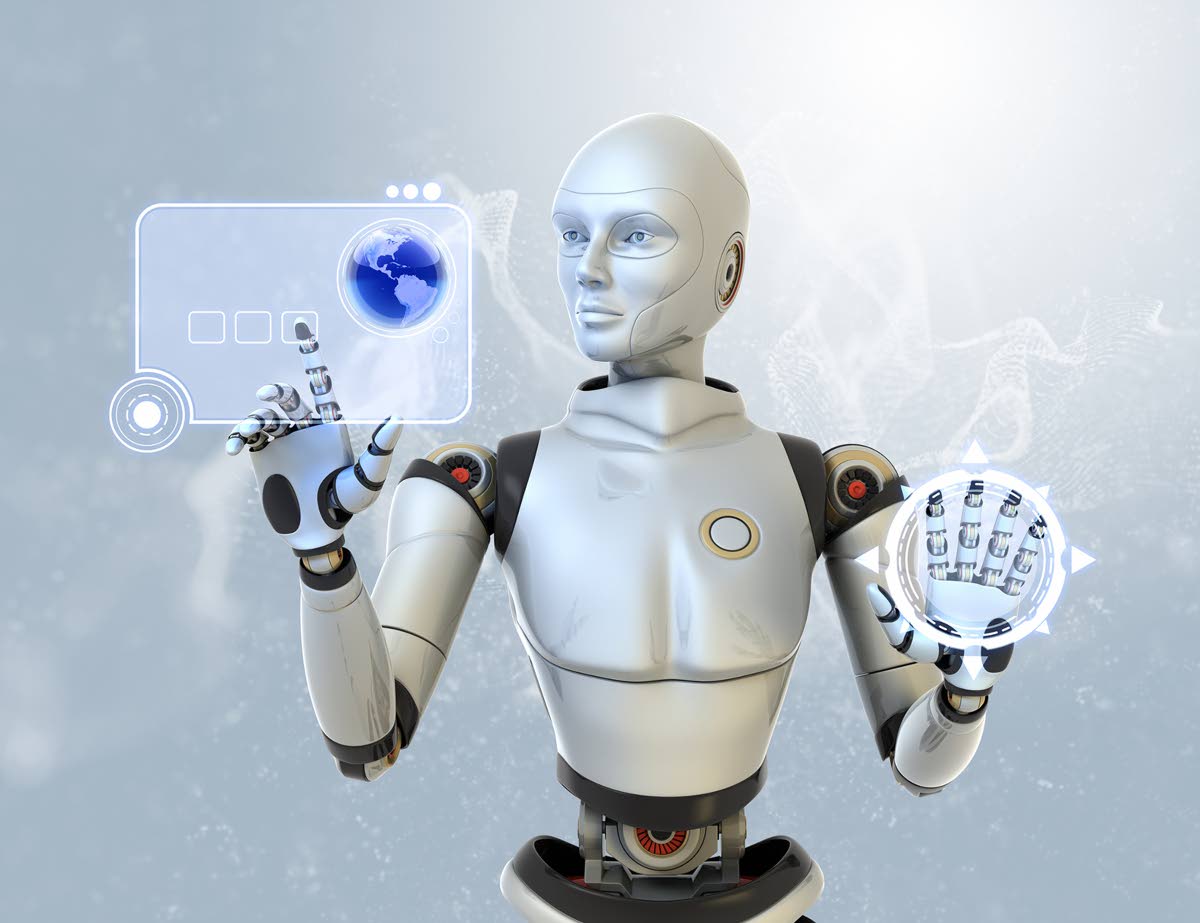 How do we protect workers whose jobs will be quietly automated without any retraining plan?
-

I’ve always loved Greek and Roman drama. From binge-watching Clash of the Titans on JBC every Easter as a child, to Gladiator, 300 and Troy, Hollywood has never struggled to separate me from my money as I line up for overpriced popcorn and not-so-hot hot dogs every time one of these movies is released. Even Wonder Woman stole my heart. Or was it Gal Gadot?
But for all that sword-swinging, slow-motion bloodshed, the women of Greek and Roman myth are mostly wallpaper. Helen of Troy caused one heck of a conflagration between the Greeks and the Trojans, then got upstaged by a large wooden horse. Medusa, one of the most feared figures in Greek myth, became famous for losing her head due to some novel Hollywood special effect.
And then there’s Pandora, suddenly back in style as the woman who unleashed every misery known to man.
OPENING THE BOX
Zeus had the gods create Pandora, the first woman, as punishment for humanity stealing fire from the heavens. The irony of that, with International Women’s Day just around the corner, is not lost on me. He then loads her up with every gift a woman could want: Beauty, charm, wit. But he also gives her a sealed box and says “don’t ever open it”. Well, if you’ve ever left your phone unlocked around your significant other, what do you think happens next? Yup, she opens it and out flies every imaginable horror known to man: Death, disease, grief, jealousy, famine, bad mind, the Reggae Boyz … everything.
But this column isn’t really about Pandora. And it’s definitely not about relationships that have been destroyed due to unlocked phones. It’s about a far more dangerous box we’ve already opened, and the very real monsters now slipping into our world.
Two years ago, Geoffrey Hinton, one of the “godfathers of AI”, openly warned that AI is “starting to look like a Pandora’s box that we have opened without fully understanding what might come out of it”. Hinton noted that AI could one day create systems that could become “smarter than us” in dangerous ways, and predicted that “there is a 10 to 20 per cent chance that AI will lead to human extinction in three decades”.
THE SIGNS ARE OMINOUS
The signs are that he may be right. Medical researchers are worrying that AI could be a Pandora’s box for fake but convincing scientific papers. Regulators are worried about deep fake scams. Law enforcement, banks and financial institutions are worried that AI-powered fraud will become untraceable. And ordinary people are beginning to feel it in their gut. This thing is so powerful that it makes you wonder who is actually in control of this world.
Now some governments are waking up and are trying to put guard rails around this thing. In 2023, US President Joe Biden signed a massive Executive Order on “safe, secure and trustworthy AI”, forcing developers of the most powerful systems to share safety test results with government. There was also a blueprint of sorts for an AI Bill of Rights, which basically outlines that AI cannot discriminate against persons whom the algorithm decided wasn’t “optimal”. Biden’s goal was to ensure that AI development took place in an ethical and moral context but just over a year later, Donald Trump walked in, grabbed Biden’s Pandora’s box and ripped it to shreds. Trump claimed that Biden’s order stifled innovation and was bad for business.
The UK, for its part, is talking global AI safety and has commissioned an International AI Safety Report that spells out the dangers: deepfakes, mass disinformation, election manipulation, and sexually explicit AI generated images that disproportionately target women and children.
WHAT ABOUT THOSE LEFT BEHIND
But here’s the bothersome part. Most of the policy and AI safety talk assumes that you are in the AI revolution, you have a smartphone, solid internet, digital skills, and maybe even a job where “learning AI tools” is part of your performance plan.
But what about the people who will never fine-tune a prompt, never host a Zoom call and never “leverage generative AI at scale”? What about the elderly pensioner whose bank quietly rolls out an AI fraud detection system that flags her legitimate transactions and locks her account. Or the inner-city youth whose job application gets auto-rejected by a screening bot trained on “ideal profiles” that don’t have a Waterhouse address. How do we protect workers whose jobs will be quietly automated without any retraining plan? How do we shield kids from abusive images and highly targeted manipulation that also destroys their attention span? How do we protect jobs and livelihoods for those who simply will never adapt to the AI world, and will persist in being human in a machine-optimised society?
Like Pandora’s box, the harms, the deepfake nudes, the scam calls, the disinformation campaigns, the algorithmic discrimination are all right here.
THE NEW WORLD ORDER
Yes, Jamaica must craft policies that improve competitiveness in a global environment, but it must also do so with a fair and ethical consideration for those who will be most vulnerable to or left behind completely in AI’s wake. To ignore them would be to treat our own people as collateral damage in somebody else’s tech experiment.
What we need now is not just an “AI policy”, but an AI conversation. In Parliament, yes, but also in churches, schools, unions, bar tables and WhatsApp groups. We need to decide, as a country, what we will and will not allow these systems to do to workers, to children, to voters, to the poor, before those decisions are quietly made for us in Silicon Valley, London and Washington.
Pandora’s box is already open; we’re not slamming it shut and going back to 1981. But we can at least decide what kind of country we want to be in the age of the algorithm. Will we sit back and let the market and the machines sort it out, or will we insist that even in this new upside-down world, human dignity, fairness and justice still have a say?
Major Basil Jarrett is the director of communications at the Major Organised Crime and Anti-Corruption Agency (MOCA) and crisis communications consultant. Follow him on Twitter, Instagram, Threads @IamBasilJarrett and linkedin.com/in/basiljarrett. Send feedback to columns@gleanerjm.com.