Norris R. McDonald | Mice, men, Cuban doctors, and our predatory world
Loading article...
-
 Norris McDonald File
-
Norris McDonald File
-
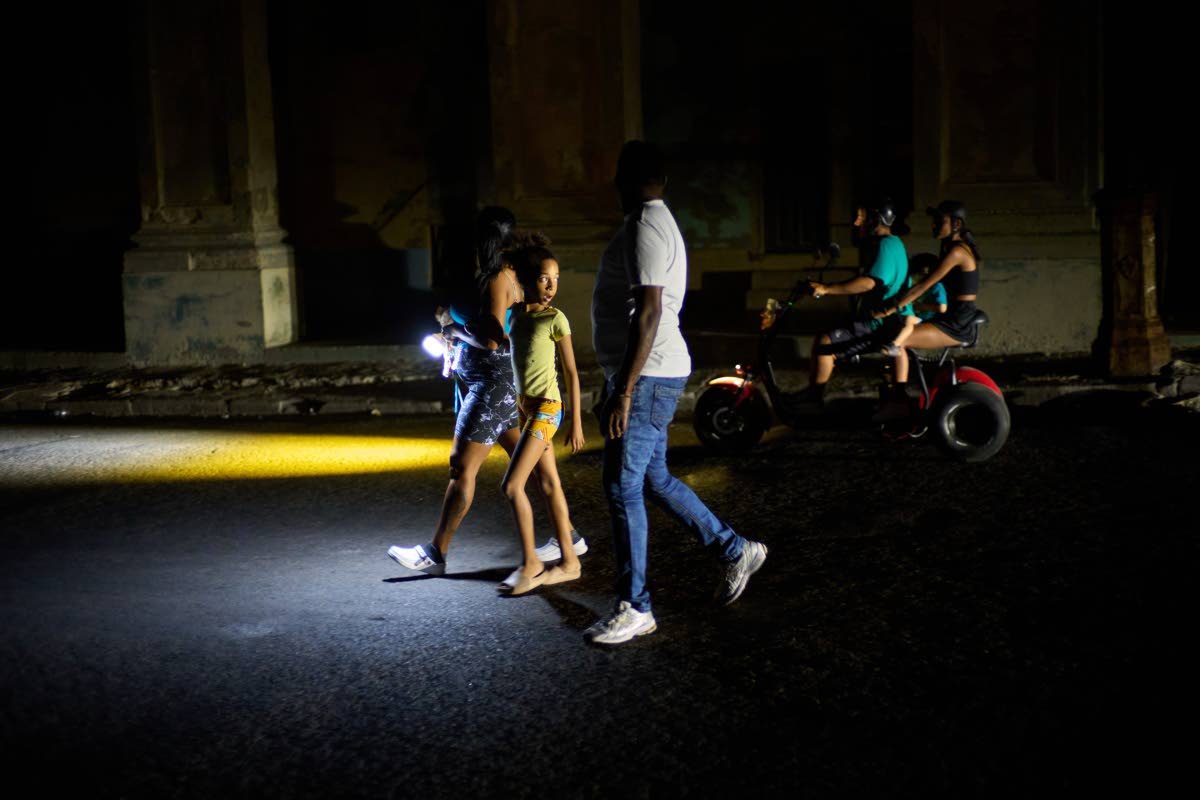 People walk on a street during a blackout in Havana, Monday, March 16, 2026. AP
-
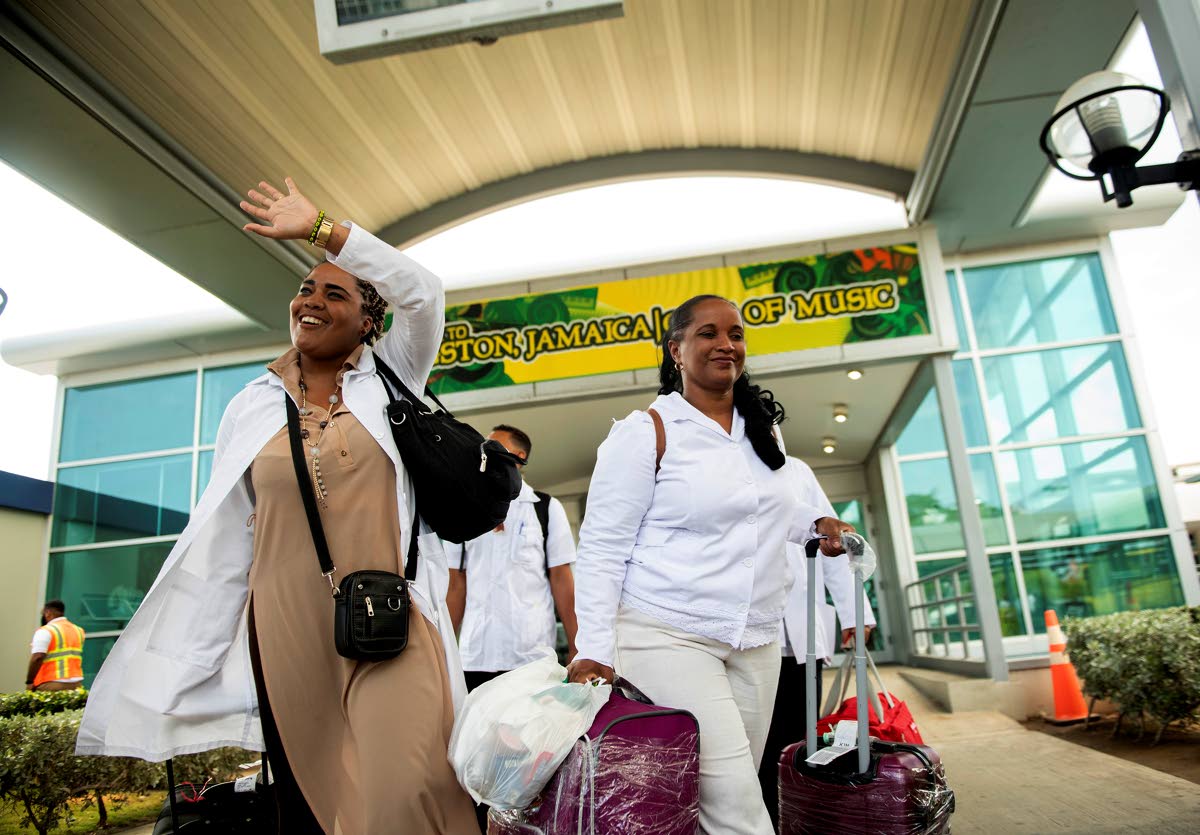 A contingent of 140 Cuban medical professionals exit the arrivals area at Norman Manley International Airport in Kingston. Gladstone Taylor
The daily struggles of poor Jamaicans – whether in rural districts or inner-city communities – rarely intersect with the grand narratives of global power. Their concerns are far more immediate: putting food on the table, caring for their children, and finding relief from the pain of an untreated toothache. For many, survival is a daily calculation, where even small health issues spiral into crises simply because timely care is out of reach.
It is within this reality that the presence of Cuban doctors once made a profound difference. They served Jamaica’s poor with distinction, transcending partisan divides. Even amid the political turbulence of the 1970s between the People’s National Party and Jamaica Labour Party, Prime Minister Edward Seaga acknowledged their value. And although relations with Cuba deteriorated in the 1980s, Seaga still sought to retain the doctors – a testament to how essential their work was. Cuba declined unless diplomatic ties were restored, underscoring just how entangled healthcare and geopolitics had become, even when the needs of ordinary Jamaicans remained unchanged.
OPERATION MIRACLE: A BEACON OF HOPE
For thousands of Jamaicans suffering from cataracts, Cuba’s Operation Miracle offered not just treatment, but dignity. The removal or reduction of Cuban doctors and other medical personnel stripped clinics and hospitals of critical support. Over 25,000 Jamaicans had their vision restored through this initiative – elderly people could read again, farmers returned to their fields, and children finally saw the blackboard clearly. This wasn’t merely healthcare; it was empowerment.
Today, as Jamaica faces mounting economic pressures and natural disasters, the loss of that support feels like yet another blow to those already struggling.
CUBA’S GLOBAL MEDICAL OUTREACH
Cuba’s healthcare outreach extends far beyond Jamaica. Through the Latin American School of Medicine (ELAM) in Havana, Cuba has provided full medical scholarships to students from more than 120 countries.
Low-income American students have also been given fully paid medical scholarships by Cuba. This includes free tuition, housing, meals, and stipends from a country that itself faces significant economic constraints.
Since 2001, nearly 1,000 American students drawn from 30 states got Cuban assistance. They all gave commitments to serve in local clinic and hospitals on return home.
This is very remarkable since the cost of education is very high in America and here, we have a country financially struggling to survive; facing widespread power cuts because of a severe US economic embargo, and yet – they continue, free of charge, to assist US students to become doctors.
A Predatory World of Geopolitics
We now inhabit a global landscape that is increasingly intolerant of independent decision-making by small states. Nations like Jamaica are often bullied into aligning with the interests of powerful countries. But perhaps the most troubling reality is this: sometimes governments do not even need to be pressured; they willingly act against national interests.
This is a predatory world – much like the one in John Steinbeck’s Of Mice and Men – where power dictates the boundaries within which the weak become casualties of a ‘dawg nyam dawg world.’ The issue of the Cuban doctors is therefore not just about healthcare. It is a test of Jamaica’s courage to act independently of American coercion. Are we willing to make decisions that put the welfare of our people first, even if those decisions diverge from the preferences of larger powers?
AMERICA’S GRAVALICIOUS ATTITUDE TO CHINA
True sovereignty is not only about confrontation; it is about the confidence to make decisions that prioritise the welfare of the people. Take the issue of our political economic relations with China. They have invested billions of dollars in Jamaica in major infrastructure development.
America has a very hostile, ‘gravalicious’ attitude to China. The US pressured Panama, Chile and Peru to cut ties with China.
What about Jamaica? Are we next?
What happens if America demands that Jamaica limit or cut ties with China? What would the Government do?
Given the billions of dollars China pours into Jamaica, do you think the government would ‘bow’ or beg for America to “give them a bly?”
Why was there no pushback then on the issue of healthcare for black Jamaican poor people?
The lesson is clear: it is just not about pragmatism; it is about who is more expendable to appease the gravalicious imperialist master. And judging from the Government’s actions it is clear, perhaps your votes have no meaning in the wider scheme of things in the appeasement of ‘backra massa.’
MICE, MEN, AND A SUBMISSIVE MENTALITY
Steinbeck’s metaphor is painfully relevant. In his novel, the weak – the elderly, the marginalised, the vulnerable – are discarded once deemed no longer useful. Is this the fate of Jamaica’s poor in the ongoing healthcare crisis?
Nations, like individuals, can choose dignity, sovereignty, and solidarity over subservience. Barbados’ Prime Minister Mia Mottley exemplifies what dignified Caribbean leadership can look like – firm, principled, and unafraid to challenge global inequities.
The Caribbean knows this history well. Emancipation was never just a legal act. Emancipation required political struggle: the physical and mental commitment of a conquered people to free themselves from bondage.
The real choice before Jamaica is therefore clear. We must work to break out of this self-imposed mental bondage.
When we look at how the negative actions of government lead to considerable harm to our people we cannot, in no way pass, it off as the need to be “cautious.”
What is tragic is that when Cuba needs friends the most, Jamaica has cut and run, and thrown them to the angry, howling, imperialist wolves.
That is the bitta truth.
Norris R. McDonald is an author, economic journalist, political analyst, and respiratory therapist. Send feedback to columns@gleanerjm.com | miaminorris@yahoo.com