Leroy Fearon | Happiness in the shadow of war: finding light in fractured times
Loading article...
-
-
 Leroy Fearon, lecturer, multi-disciplinary researcher, author, geography specialist and columnist
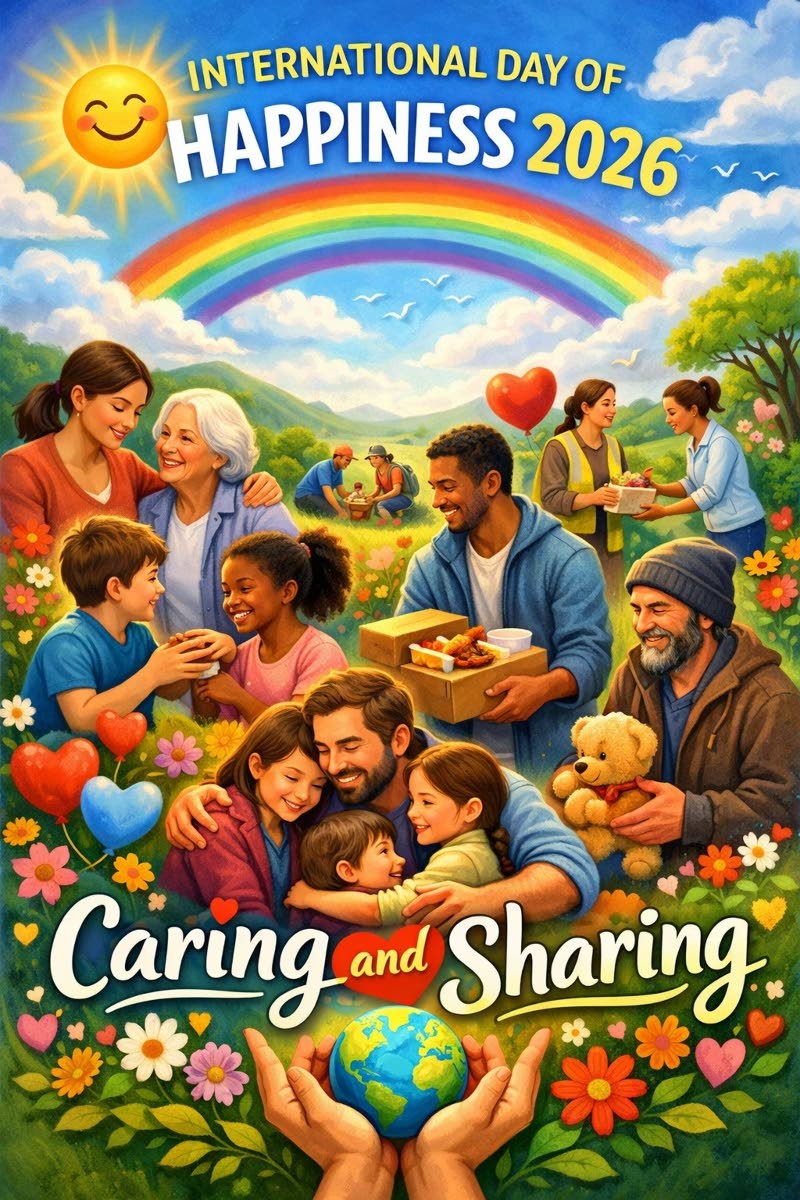
Today, as the world observes International Day of Happiness, the celebration feels, for many, both necessary and paradoxical. How do we speak of happiness when headlines are saturated with conflict, displacement, grief, and uncertainty? How do we invite joy into spaces where loss lingers and fear persists? These are not rhetorical questions, they are the defining tensions of our time.
Yet, perhaps this is precisely why the observance matters now more than ever. Happiness, in moments like these, must be reframed. It cannot be reduced to fleeting pleasure or superficial positivity. In a world marked by war, happiness becomes an act of resistance, a quiet but profound refusal to let despair have the final word. It is not the denial of pain, but the decision to coexist with it without surrendering our humanity.
Across war-torn regions, happiness does not disappear; it transforms. It is found in the resilience of a mother who continues to nurture hope in her children despite the echoes of gunfire. It lives in the laughter of children who, even in displacement camps, find ways to play, to imagine, to be. It is present in the humanitarian worker who shows up daily, not because the work is easy, but because it is necessary. These are not grand, cinematic moments; they are small, sacred acts of defiance against the erosion of the human spirit.
To find “nuggets of happiness” in such a context requires intentionality. It asks us to recalibrate our expectations and deepen our awareness. Happiness becomes less about abundance and more about presence. It is the warm meal shared, the safe night’s sleep secured, the message received from a loved one confirming they are still alive. In peaceful societies, these may seem ordinary; in conflict zones, they are extraordinary.
HAPPINESS IS NOT ONLY INDIVIDUAL; IT IS RELATIONAL
There is also a collective dimension to happiness that must not be overlooked. Amidst war, solidarity becomes a powerful source of meaning and, by extension, happiness. Communities rallying together, strangers offering shelter, nations extending aid, these acts remind us that even in division, there is an undercurrent of shared humanity. Happiness, then, is not only individual; it is relational. It emerges in connection, in empathy, in the recognition that another’s survival is bound up with our own.
For those observing from afar, those not directly in the line of fire, the question becomes more introspective: What does it mean to pursue happiness in a world where others are suffering so deeply? The answer is not guilt, nor is it indifference. Rather, it is responsibility. To be happy, in this context, is to remain awake to the world, to channel gratitude into action, and to ensure that our joy does not exist in isolation but contributes to a broader ethic of care.
This might mean supporting relief efforts, amplifying marginalised voices, advocating for peace, or simply cultivating kindness in our immediate environments. Happiness, when aligned with purpose, becomes transformative. It ceases to be self-serving and instead becomes a force that uplifts others.
Importantly, we must also acknowledge that happiness is not constant. In times of war, it comes in waves: brief, sometimes unexpected, often fragile. And that is acceptable. The pursuit of happiness does not demand permanence; it invites recognition. It is enough to notice the moment, to hold it gently, to allow it to exist alongside grief without diminishing either.
Philosophically, this aligns with the understanding that human experience is inherently dualistic. Joy and sorrow are not opposites; they are companions. In fact, it is often through suffering that our capacity for joy is deepened. The contrast sharpens our awareness, making even the smallest moments of light feel significant.
On this International Day of Happiness, then, the call is not to ignore the darkness, but to look for the light within it. It is to affirm that happiness is still possible, not as an escape from reality, but as a way of engaging with it more fully.
In a world at war, happiness becomes quieter, humbler, more intentional. It is found in gratitude rather than excess, in connection rather than consumption, in hope rather than certainty. It is not always loud, but it is enduring. And perhaps that is its most powerful form.
- Leroy Fearon Jr, J.P, M.Sc., is a lecturer, multi-disciplinary researcher, author, geography specialist, columnist, Governor General's Achievement Awardee '24 and Governor General I Believe Initiative (IBI) Ambassador '24. Email feedback to columns@gleanerjm.com and leroyfearon85@gmail.com