Lloyd Barnett | Selecting Jamaica’s final court of appeal
Loading article...
-
 The Caribbean Court of Justice in Port-of-Spain.
-
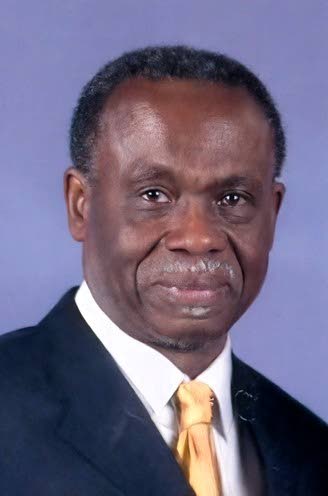 Lloyd Barnett
In the discussions respecting constitutional reform, the question of selecting Jamaica’s final appellate court has probably been the most contentious. In fact, it has threatened to frustrate the entire constitutional reform programme.
There are four options. These are (1) dispense with a third-tier court so that our present Court of Appeal assumes the position of a final court, (2) establish a separate Jamaican final appellate court, (3) retain the UK Judicial Committee of the Privy Council as our final appellate court, or (4) adopt the Caribbean Court of Appeal as our final appellate court. There has been little or no support for the dispensing with the third-tier court and making the present Court of Appeal our final court, so I will not devote any attention to that option.
There has been a substantial and expanding body of public opinion which is opposed to the retention of the Privy Council as our final court of appeal. Over a century ago, The Gleaner called for the establishment of a regional court of appeal in place of the Judicial Committee of the Privy Council. In the early stages of the discussions, some liberal advocates joined those who were in favour of the retention of the Privy Council mainly because of a fear that politicians would try to influence the composition of any new court, especially with the aim of ensuring that the death penalty is fully preserved. Secondly, it was also feared that the efficiency of such a court would be compromised by insufficiency of the financial resources provided to it. Thirdly, it was feared that an adequate number of eminent jurists would not be attracted to accept appointment to such a court.
DOUBTS AND DILEMMA
The doubts and dilemma which resulted from these factors were solved mainly by the intervention of the Caribbean legal profession which advocated the establishment of systems which ensured the quality, stability and independence of the Caribbean Court of Justice (CCJ). The Regional Judicial and Legal Services Commission (RJLSC) was established and given the responsibility for the appointment of the judges and staff of the court and its administration. This was further strengthened by an agreement between the commission and the prime ministers that in respect of the president of the court, although the Regional Agreement provided that his or her selection by the commission would have to be ratified by the prime ministers, the prime ministers would nevertheless ratify any nomination which was made by the commission.
Second, a scheme for the financial sustainability of the court was devised which involved the establishment of a trust fund with a substantial initial capital administered by independent persons. Thirdly, the commission adopted a policy of inviting widespread applications to fill the vacancies in the court and specified objective standards for selection of the appointees. These arrangements became the most progressive in the Commonwealth and have been universally admired.
I had the privilege to have been appointed as one of the nominees of the Caribbean Bar on the RJLSC at the inception. I then proposed to the commissioners that the commission should adopt the following ideals and objectives: (1) the court must be secure and independent and to that end the RJLSC must itself be independent and free from political pressure or influence, (2) the court must command the respect and admiration of the legal profession and be able to win the confidence and respect of the peoples of the Caribbean, (3) the court must be robust in the protection of the fundamental rights and freedoms of the Caribbean people, and (4) the court must be efficient and effective, giving its judgments with reasonable expedition and must by its reasoning and adjudication facilitate the achievement of social justice and the furtherance of sustainable development. These ideals and objectives were endorsed by the RJLSC.
DID NOT SATISFY
Nevertheless, these excellent arrangements did not satisfy everyone. The Most Hon Edward Seaga had taken the position that Jamaica should not adhere to the CCJ’s jurisdiction until we had had at least five years’ evidence of its satisfactory performance. Yet at the end of the ten years when it was pointed out to him that the objective assessments were all favourable, the JLP did not commit itself to supporting the adoption of the CCJ as our final court.
In the case of Prime Minister Bruce Golding, his concern was as to the stability of the court as he feared that some Caribbean states would accept its jurisdiction and then subsequently reject it. He nevertheless stated that the JLP would vote in favour of the CCJ if the proposals were put to the people in a referendum. The PNP government led by the Most Honourable PJ Patterson imprudently proceeded to introduce ordinary legislation for the adoption of the CCJ as our final court of appeal without the agreement of the Opposition. This legislation would have exposed the CCJ to disastrous instability since when the JLP came to power they may then reverse the position and inflict immeasurable damage on the reputation and stability of the CCJ. Several persons who favoured the CCJ opposed this move by the PNP government and eventually the Judicial Committee of the Privy Council in the IJCHR v. Marshall-Burnett case struck down the legislation.
It appears that the present prime minister, Dr Andrew Holness, is in favour of Jamaica establishing a local final court of appeal. However, no indication has been given as to the feasibility of such a plan. It does not appear that such a move has much national support and the Opposition Party is opposed to it.
We are now back at square one with our proposals for changing the Constitution because the PNP has made a strong statement that they will not support any constitutional amendment legislation unless it includes the adoption of the CCJ as our final court of appeal. Although both the prime minister and leader of the opposition, Mr Mark Golding, have declared their willingness to cooperate in the solution of the problem, since the general election on September 3, 2025, the public has not been advised of the taking of any initiative to solve the problem.
Dr Lloyd Barnett is an attorney-at-law and author. Send feedback to columns@gleanerjm.com