Michael Abrahams | Trying to make sense out of nonsense
Loading article...
-
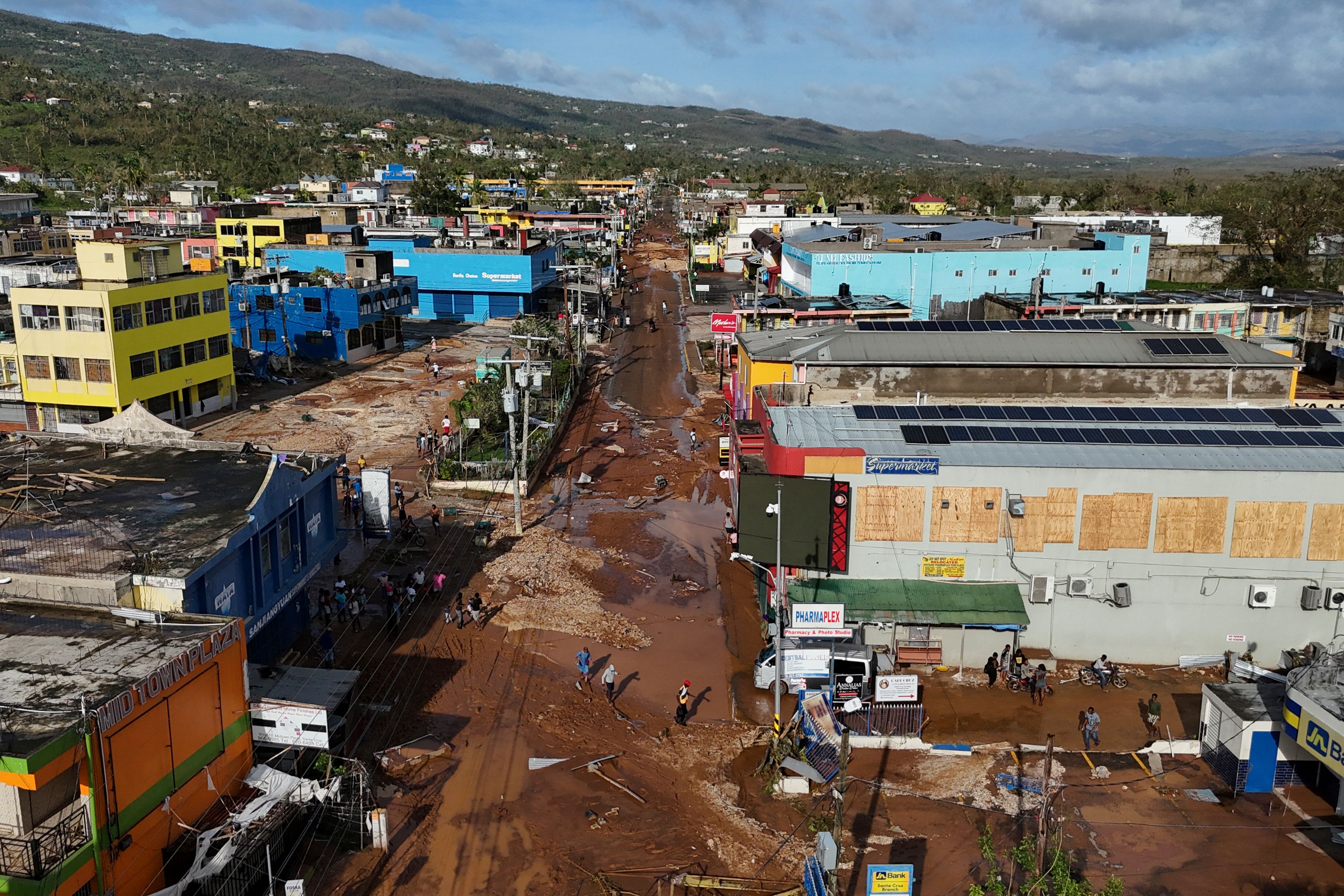 Residents walk through Santa Cruz, Jamaica, October 29, 2025, after Hurricane Melissa passed. (AP Photo)
-
Residents walk through Santa Cruz, Jamaica, October 29, 2025, after Hurricane Melissa passed. (AP Photo)
-
 Michael Abrahams
Make it make sense.
A real-time audit conducted by Auditor General Pamela Monroe Ellis, published on May 12, revealed that up to April 2, over five months after Hurricane Melissa, the Office of Disaster Preparedness and Emergency Management (ODPEM) had disbursed only $26.2 million, or 1.8 per cent, of the $1.44 billion in cash donations for hurricane victims. It was also disclosed that the balances included over $154 million in unspent donations collected in response to Hurricane Beryl, which primarily impacted the southern belt of the island on July 3, 2024.
The revelation has sparked widespread concern and indignation among Jamaicans. To many, the meagre share of funds allocated to hurricane victims is indefensible. Nevertheless, during Labour Day remarks at the Lewis Town Early Childhood Institution in St Elizabeth last week, Prime Minister Andrew Holness defended the unspent funds and rubbished criticism, asserting that “sometimes you have things that are common sense and things that are common nonsense”.
I find the prime minister’s comments to be dismissive, lacking in empathy, disingenuous, and insulting to Jamaicans. He asserted that the audit did not say the materials were stolen, but that there was “an administrative accounting failure”, and maintained that the Government “wasn’t being inefficient”, but was being “very strategic and very efficient”. However, the audit revealed that the issues were way more serious than ‘accounting failures’ and that the Government was far from being ‘efficient’ or ‘strategic’. It unearthed a slew of deficiencies, improprieties and irregularities, including weaknesses in financial management, governance, programme accountability, transparency and oversight. Inadequate controls over donations processed through a financial services institution, including the absence of a formal agreement for retained funds and incomplete reconciliation, were also highlighted. Regarding the ROOFS Programme, the audit identified gaps in supplier due diligence, delivery verification, payment support and completion documentation. Non-compliance with the Disaster Risk Management Act was also mentioned. The report found that ODPEM did not present information on the total amounts collected or the planned expenditure strategy for Hurricane Beryl, while stating that donation funds collected for disaster response are expected to be used promptly and transparently, in accordance with established expenditure plans and donor intent. So much for efficiency and strategy.
The prime minister argued that “the problem was the logistics and the process to identify people to make sure that it’s the needy that get it and not the greedy”. However, it should not take over five months to identify people in genuine need. Such a delay indicates incompetence, ineptitude or indifference, none of which is acceptable. Investigators need only visit the affected communities to determine, as a starting point, who has been rendered homeless. Many are living under tarpaulins and in makeshift shelters, exposed to the elements and vulnerable to theft, as well as physical and sexual assault. While tarpaulins come in various colours, they are most commonly bright blue and are almost impossible to overlook. Anyone sleeping beneath a tarpaulin is clearly in need and should be readily identifiable as a priority recipient of assistance.
The delay is scandalous. When the Government is determined to fast-track a matter, it does. For instance, at the same event, Dr Holness referenced the Jamaica Public Service (JPS) loan, which was approved by the Cabinet in November 2025 and signed off the following month, and boasted that it enabled Jamaicans to “have got back electricity faster than ever before in the history of restoration after any disaster in Jamaica”. More recently, the NaRRA Act (National Reconstruction and Resilience Authority Act) moved from initial tabling to royal assent in just over two months.
The prime minister also announced that a portion of the Hurricane Melissa donations will be used to restock the Jamaica Defence Force (JDF) and ODPEM, both entities operating under the Office of the Prime Minister (OPM), with building materials. But why? Donors contributed those funds in good faith to assist hurricane victims in the immediate aftermath of the disaster, not to restock government inventories.
It gets worse. Last week, it was revealed that of the $1 billion allocated to the Government’s Solidarity Programme, the majority, 53 per cent or $533,000, was not disbursed but instead ‘returned for debt reduction’ to the Consolidated Fund because the financial year expired before it could be spent. The programme was launched in June 2025 to provide a one-time grant of $20,000 to 50,000 needy individuals, including the elderly, disabled, and other vulnerable persons. After Hurricane Melissa, the number of needy and vulnerable Jamaicans would have increased significantly. Why, then, was less than half of the money used?
In the wake of Hurricane Melissa, calls for broader oversight of hurricane relief committees and real-time disclosure of donation receipts were ignored. When more oversight is requested for the NaRRA Bill, the prime minister dismisses those asking for it. Now, an auditor general’s report reveals multiple irregularities in the management of relief funds. These developments raise serious concerns about transparency, stewardship and accountability. They also reinforce scepticism towards the Government and risk discouraging future charitable giving to victims of natural disasters in Jamaica.
At least 45 deaths were attributed to Hurricane Melissa. In addition, 1.5-1.6 million people, more than half the national population, were affected, and approximately 279,000 Jamaicans, representing over 90,000 households, were displaced from their homes. More than 100,000 housing structures were reportedly damaged, with approximately 24,000 homes completely destroyed. Today there are many who remain homeless and are suffering, destitute and in need. However, despite the plight of these people, between the unspent donations from Hurricanes Beryl and Melissa and the unused Solidarity Programme funds, close to $2 billion intended for vulnerable Jamaicans remains under government control as another hurricane season begins.
You cannot make it make sense, because it is nonsense.
Michael Abrahams is an obstetrician and gynaecologist, social commentator, and human-rights advocate. Send feedback to columns@gleanerjm.com and michabe_1999@hotmail.com, or follow him on X @mikeyabrahams.