Christopher Burgess | No more rickety-tickety repairs to schools
Loading article...

Resilience is more than cash-based repairs. It is the ability of schools, hospitals, hotels, and communities to survive, recover quickly, and continue functioning after a disaster, thereby strengthening productivity and protecting lives.
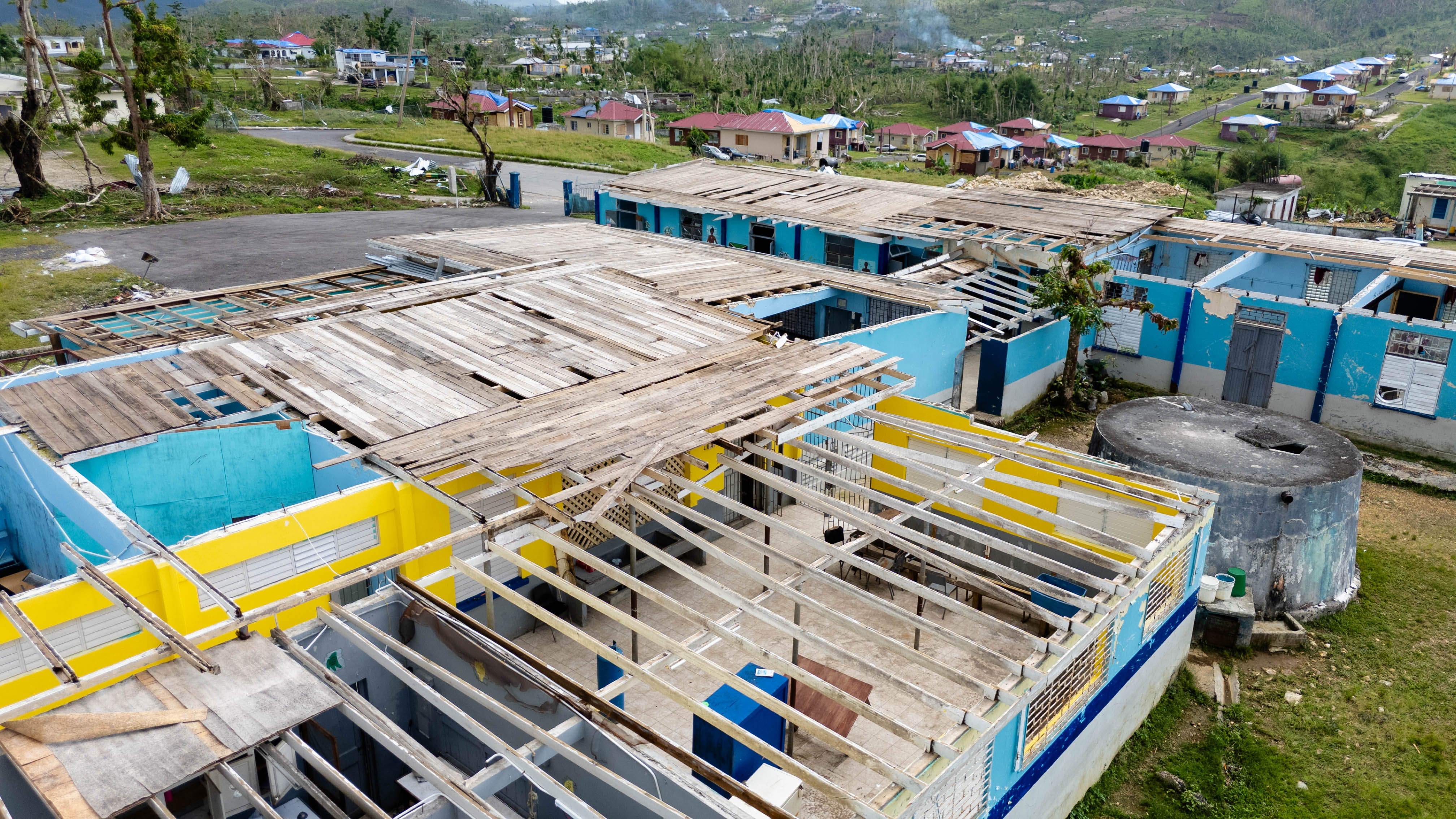
Jamaica’s building code has served the tourism sector well but has not been consistently applied to schools and health facilities, which remain fragile. Thirty-seven years after Hurricane Gilbert, many lessons remain unimplemented. It is now critical that the Ministry of Education urgently rebuild schools to resilient standards.
International reconstruction evidence shows that investing in resilience and redundancy generates greater long-term economic returns than simply replacing what was lost. The NaRRA should ensure that every school and hospital is rebuilt to higher standards, to avoid repeated disruptions to learning and healthcare and to protect the country’s long-term human capital.
BREADWINNING SCHOOLBOYS
Rebuilding schools must be treated as a resilience priority. With 792 of 1,022 public schools impacted and damages exceeding J$32 billion, the system is too fragile to rely on patch repairs. The reality is that many schools were built and repaired over time with substandard materials. Some schools, including Manning’s High School and Munro College, continue to operate from historic structures that require special resilience investments. The most heavily affected parishes – Westmoreland, St James, Hanover, Manchester, and St Elizabeth – accounted for over 380 priority schools requiring urgent repair or reconstruction. The lesson is not simply to conduct repairs, but to rebuild with stronger standards and better materials, under professional supervision.
Resilience also requires speed. Some will argue that schools should await the NaRRA, which still appears months away from serious initiation. But the lives of young boys cannot wait another year. We are already hearing reports from St Elizabeth that some schools are missing up to 20 per cent of their students because roofs remain off homes and schools and boys are helping to support their families. Restoring schools and homes quickly can pull vulnerable students back into classroom routines before construction work, scamming, or other distractions become entrenched alternatives. That danger has been raised by Newell High School Vice-Principal Errol Bennett and New Forest High School Principal Arnaldo Allen. Roofless homes and damaged schools are pushing boys to become “the man at the yard” instead of staying in the classroom.
Delayed reconstruction increases long-term social, human capital and economic losses. Each month of disruption compounds learning loss, reduces lifetime earnings, and weakens national productivity. The faster schools and homes are restored, the faster communities return to routines, employment, and education.
Schools and community centres should also be hardened as emergency shelters and built to the appropriate risk category. Facilities that cannot withstand hurricanes fail their core purpose. Furthermore, this would make better use of scarce resources and strengthen social appreciation of school buildings. Schools already serve as polling stations: they should also be designed to save lives.
STRONG HOTELS, HIGHER PRODUCTIVITY
Hotels outperformed schools and hospitals during Hurricane Melissa because of stronger code compliance, better supervision during construction, and more robust roofing systems. Tourism resilience begins in the design stage through appropriate risk classifications, wind-loading criteria, flood elevations, and roof connections. Good windows, coastal engineering guidance, and better roofing – especially standing seam roofs – performed far better. In summary, good design and construction supervision were the first line of tourism resilience.
Resilience and productivity are also measured by how quickly a sector can reopen and resume earning. This is where several hotels still struggled. Many tourism losses resulted not from major structural failures, but from inadequate backup power, insufficient potable water supplies, and damaged back-of-house facilities. The tourism sector’s resilience must be designed not only to survive storms, but to minimise downtime.
High-value economic clusters – urban centres and tourism corridors – where education, health, and tourism assets drive productivity, should be prioritised by the NaRRA. These sectors generate the strongest long-term multipliers, reaching up to 12 times the initial investment, by protecting human capital, labour output, and foreign exchange. Prioritising them accelerates national recovery and economic growth.
REDUNDANCIES REQUIRED
There is also an urgent need to harden critical redundancy systems in the education, health and tourism sectors. Damage to operating theatres, accident and emergency units, and failures in backup power left major hospitals and hotels partially incapacitated after the storm. Similarly, many schools dependent on roof catchment systems were left without potable water. Critical facilities should therefore be designed with hardened backup power, water, fuel, and communications systems capable of operating during and immediately after major events.
Maintenance of redundancy systems is costly, but essential. Across the tourism and health sectors, weak backup power, water, fuel, and communications slowed recovery processes, while poor maintenance made these failures worse. Dr Christopher Tufton has highlighted Jamaica’s weak maintenance culture, where minor deficiencies are often allowed to become major failures. Jamaica must treat maintenance as part of resilience, and expand training through HEART/ NSTA Trust, UTech, and the UCC, to build the workforce needed to sustain these systems.
Things done by experts often appear simple. Good engineering may look ordinary only because the hard thinking was done beforehand. A roof that stays on, a functioning hospital, a hotel that reopens quickly, or a school that can also serve as a shelter, may seem unremarkable to the public. But, behind that performance are design choices, construction supervision, redundancy, and maintenance by teams of professionals. Jamaica still undervalues expertise.
Jamaica should not rebuild what already failed. The NaRRA’s goal must be to increase national productivity through resilient reconstruction and smarter investment decisions, while leaving behind stronger schools, hospitals, and hotels. Repairs alone do not improve long-term productivity. Resilience protects lives and strengthens economic performance.
Dr Christopher Burgess is a registered civil engineer, VP of engineering for the Jamaica Institution of Engineers, climate scientist, land developer, and managing director of CEAC Solutions. Send feedback to columns@gleanerjm.com