Elizabeth Morgan | Is food security further at risk in Jamaica?
Loading article...
-
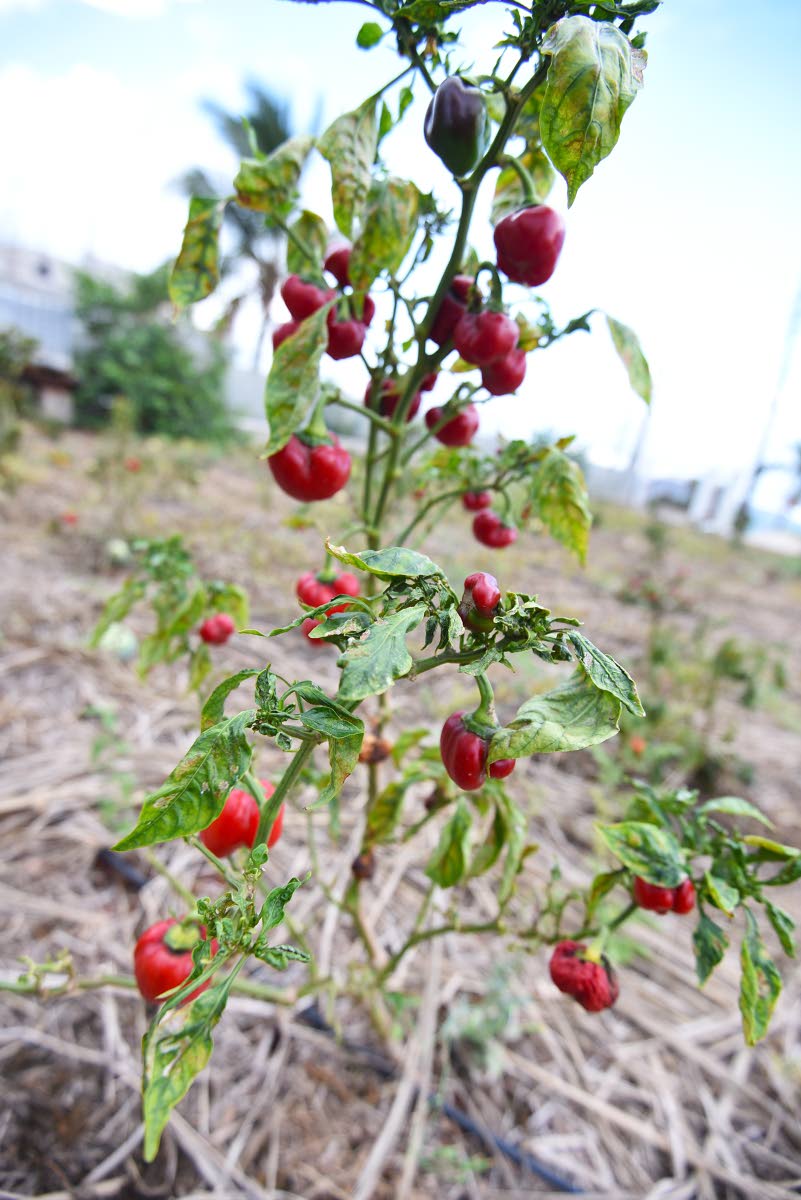 Sweet pepper blighted by drought and extreme heat on a farm in Bull Savannah, St Elizabeth. Photo - Ian Allen
-
Sweet pepper blighted by drought and extreme heat on a farm in Bull Savannah, St Elizabeth. Photo - Ian Allen
-
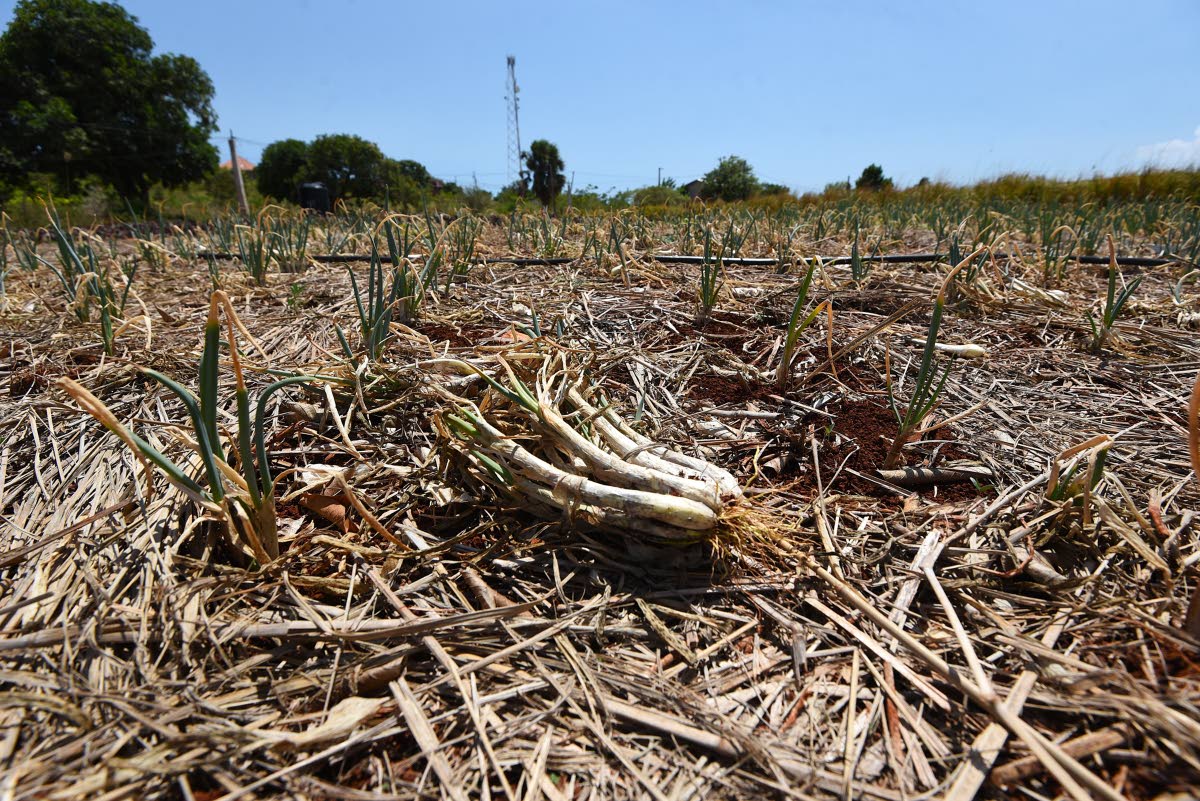 Crops damaged from drought and extreme heat in Flagaman district, St Elizabeth. Photo - Ian Allen
Last week, this column looked at Jamaica’s declining goods exports which included agricultural products. This week, the food import bill and the costs of agricultural produce are cause for concern. This led to reviewing the column written in November 2023 on ‘Agriculture: Is Jamaica accelerating towards CARICOM’s vision of 25 by 2025’. It does not appear that much has changed in Jamaica’s food import bills, and agriculture has faced many challenges since 2023.
Climate impacts
In 2023, Jamaica was experiencing very high temperatures, severe drought conditions, and water restrictions. Agriculture was affected. In July 2024, Jamaica was impacted by Category 4 Hurricane Beryl. Agriculture was affected. In October 2025, Jamaica was impacted by Category 5 Hurricane Melissa. Agriculture was again affected. Now in 2026, Jamaica is experiencing extremely high temperatures, drought conditions in seven parishes, and water restrictions. Again, agriculture is affected. Agriculture production has fluctuated.
Food import bill
Jamaica’s food import bills since 2021 were estimated as follows:
2021 – US$ 1.12 billion
2022 – US$1.13 billion
2023 – US$1.39 billion
2024 – US$1.40 billion
2025 - US$1.46 billion.
So, Jamaica’s food import bill has been increasing, even marginally. About 40 per cent of the food imported comes from the USA. Much of the imported food is consumed in the tourist industry. With the climate impacts, Jamaica is not increasing local food production consistently, while food imports are increasing. Jamaica, obviously, has not been succeeding in decreasing its food import bill and in meeting its CARICOM food security, now 2025+ 5, targets.
Local agriculture production
The reports from the Ministry of Agriculture are that domestic agricultural production had a record increase in 2023, producing 779,254 tonnes of domestic crops. In 2024, growth in domestic production fluctuated because of the impact of Hurricane Beryl. It is reported that, in 2025, Jamaica’s domestic crop sector recorded an increase in total production of 811,244 tonnes. This was an increase of 5.7 per cent over 2024, despite Hurricane Melissa in October. The Ministry of Agriculture reported a swift recovery in the sector. The first quarter of 2026 showed good growth, but weather, with extreme heat and drought conditions, is again impacting production.
Increasing prices
Nearly all of us have to go to the supermarkets, markets, or local vendors to buy our supplies of ground provisions, vegetables, fruits, seasonings, spices, meats and fish. Most of us are now looking very closely at the food bills.
As prices go, it was noted that the situation was bad when a bag of pak choy was seen recently in a supermarket priced at about J$900. This would normally be about J$200. Cabbage, perhaps the cheapest vegetable along with pak choy and callaloo, is now ascending to J$500-J$600 for a small one. Romaine and iceberg lettuces can range from J$600 – J$1,800 per bag or pack.
After Melissa, bananas and plantains were in short supply. Prices skyrocketed. Bananas and plantains are now back in fairly good supply. Local fruits are limited to some citrus, papayas, pineapples, and ripe bananas. Some citrus products, limes, grapefruits, are now quite scarce. In next year’s season, mangoes could be in short supply in Kingston and St Andrew, not because of inclement weather, but because trees in large numbers have been cleared for construction.
Ground provisions, such as yams, are now extremely expensive, with a pound of yam costing nearly J$1,000 (1kg = J$2,000) in the supermarkets.
It is quite evident that a number of agricultural produce are imported, such as the supersize carrots, cabbage, and onions.
On the local meats, the prices are now ridiculous for goat, beef, pork, and even poultry. On fish, it may be that many of us are now buying mainly imported varieties.
Do many of you now have to compare prices, shop in more than one supermarket, or find your way into the markets?
Meeting sanitary and phytosanitary standards
This column will again raise this matter. Ground provisions being sold in supermarkets are not meeting sanitary and phytosanitary standards, as they are often covered in soil. Local cauliflower seems to have mildew and worms. A dead lizard was recently found in a bag of Romaine lettuce. Jamaica could not export these produce in this condition, but they are being sold locally in supermarkets.
Food security
The Ministry of Agriculture has reported on increasing domestic crop production and resilience in the face of unpredictable weather conditions. It does appear, though, that growth in domestic crop production has not been consistent. The farmers still face poor road conditions, water shortage, high temperatures, high cost of inputs, such as fertiliser and fuel, especially with the global economic problems, e.g. the wars. They are also facing a labour shortage.
Although reported in agricultural plans, it is not clear that more land is actually being put into agriculture production, as sugar lands seem to be going into housing, and that the water problems are being effectively addressed. As consumers, it is evident that products are in short supply and prices are quite high. Some products are being imported. Thus, the food import bill is not decreasing.
Food security remains a problem for this country.
Elizabeth Morgan is a specialist in international trade policy and international politics. Send feedback to columns@gleanerjm.com.