Elizabeth Morgan | Climate Change COP31: Will further action be agreed?
Loading article...
-
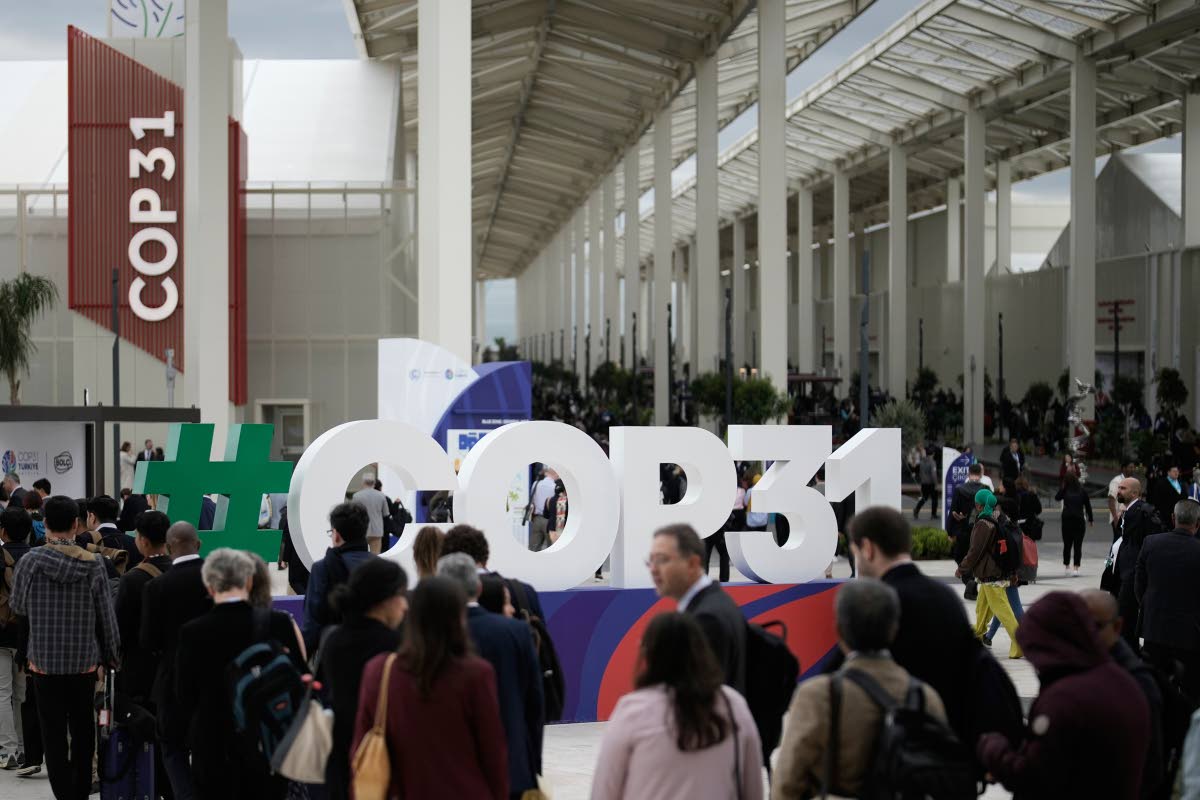 People waiting in line at the COP31 UN Climate Summit on November 12 in Antalya, Turkey. Photo - AP
-
People waiting in line at the COP31 UN Climate Summit on November 12 in Antalya, Turkey. Photo - AP
-
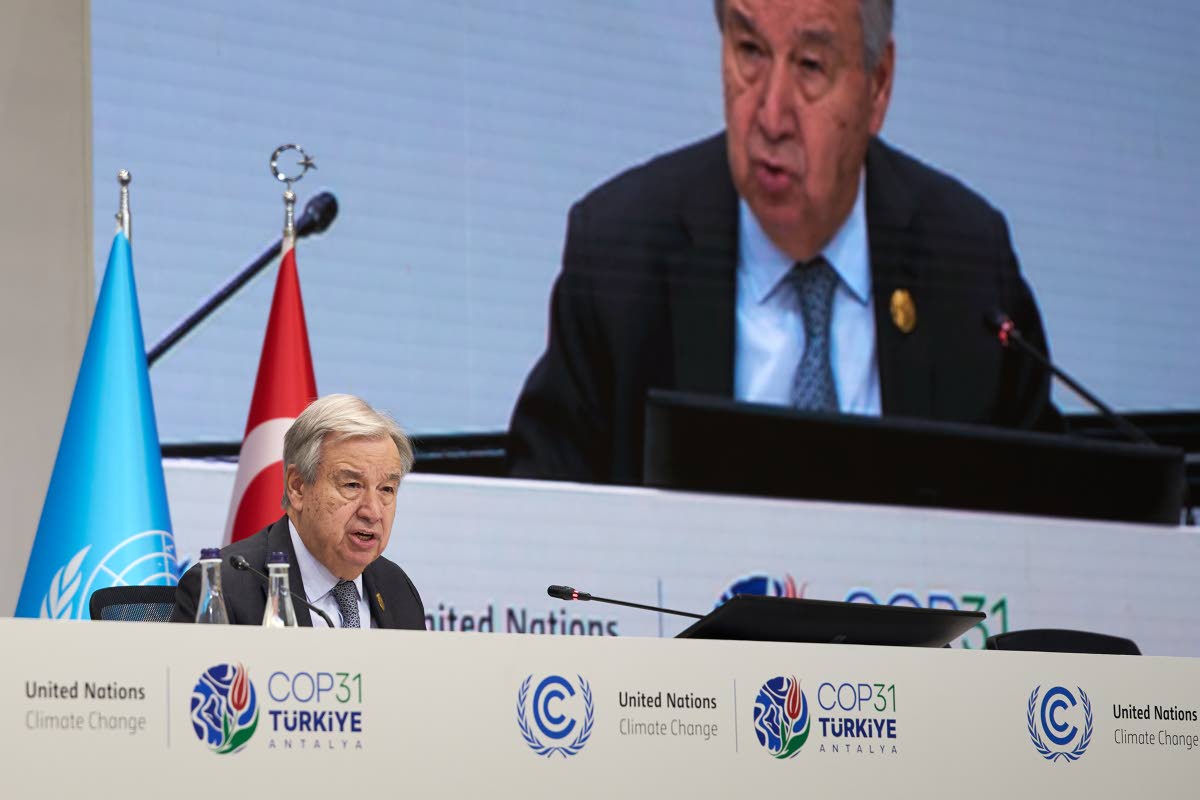 Antonio Guterres, UN secretary general, speaks during a news conference at the COP31 UN Climate Summit, on Friday, November 13, in Antalya, Turkey. Photo - AP
“The brutal truth is that the climate crisis is outrunning us ...
Together, let’s keep telling the truth about the climate crisis.
Let’s keep demanding the action that truth requires.
And let’s keep fighting for the sustainable future we know is in our hands ...”.
– António Guterres, UN secretary general
For the 30th session of the UN Climate Change Conference (COP30) last year in Belém, Brazil, Jamaica was recovering from the damage wrought by the super Category 5 Hurricane Melissa. This year, in the lead-up to COP31, being held in Antalya, Türkiye, November 9-20, we have been enduring the effects of El Niño, which have been intensified by climate change, making it a super El Niño. This has brought intense heat in the summer and severe drought conditions, impacting agriculture and food security. This column looked at the shortage of water as the dam levels in St Andrew fell with the lack of rainfall, and the impact on food security. We finally started getting rain in Kingston and St Andrew towards the end of October. A very unusual hurricane/wet season.
While there was little hurricane activity in the Atlantic/Caribbean, the level of activity in the Pacific was breaking records, with about 25 named storms and 11 major hurricanes/cyclones. The summer heat was intense all over the globe and with the dryness, caused catastrophic wildfires. Scientists have also said that climate change contributed to the deadly floods in Nepal in August caused by a melting glacier. So, the impact of climate change is real and we are facing it every year. That’s the truth.
Jamaica’s COP31 delegation
Jamaica’s delegation to COP31 is led by Matthew Samuda, minister of water, environment and climate change, and includes Prof Dale Webber, special envoy and ambassador for climate change, environment, oceans and the blue economy.
As is customary, CARICOM has coordinated to cover this conference and issue a declaration.
CARICOM’s Areas of interest
CARICOM has identified its areas of interest as limiting global warming to 1.5°C; strengthening adaptation and resilience; addressing loss and damage; delivering climate finance and other means of implementation; protecting oceans and coastal communities; advancing a just transition for small island developing states (SIDS), and strengthening multilateralism and international cooperation.
CARICOM committed to “unity, cooperation, and active engagement through the Alliance of Small Island States, the Group of 77 and China, and all other relevant partnerships to secure ambitious outcomes at COP31 that advance climate resilience, sustainable development, and the wellbeing of present and future generations”.
Government delegations from all UN member states, except the USA, are attending COP31. You will recall that the USA, under this Trump administration, again withdrew from the UN Framework Convention on Climate Change and the Paris Accords. Nevertheless, US businesses and NGOs are present.
The theme for this COP is ‘Dialogue. Consensus. Action’. People are clamouring for action. As customary at these events, thousands of people have joined protest marches in Antalya. Except for the voices of the usual environmental advocates, we really do not see civil society in Jamaica raising concerns about environmental issues, such as deforestation, including cutting down mature trees in urban areas, and pollution generally. We don’t have climate activists.
Transitioning to cleaner energy
You may recall that at COP30, it was not possible to get the commitment to phase out fossil fuels. Countries are also failing to meet the targets for reducing fossil fuel emissions. The fossil fuel producers have lobbied against such actions. In reality, fossil fuels have to be gradually phased out.
It does appear, however, that people in countries are transitioning to greener energy. It seems that more countries are also looking to increase the use of solar energy. The small islands of Tokelau are now powered almost exclusively by solar energy.
More countries are also using wind energy. Others are looking at developing hydroelectricity and geothermal energy. Dominica is now developing and using geothermal energy.
What has happened to Cuba with the US embargo on fuel supplies is sending a message to countries that they need to look at alternative and domestic sources of energy. The high costs of petroleum and diesel due to wars, note Iran and Ukraine, are also signalling the need to diversify into alternative sources of energy.
The production and sale of electric vehicles have been increasing significantly. China is a major producer. In fact, producing renewable energy is a priority for China and shows that she is forward-thinking.
Türkiye, the host, wants to increase electricity’s share of global energy consumption from just over 20 per cent now to 35 per cent by 2035.
Brazil is also working on a plan for transitioning to cleaner energy, in preparing for the phasing out of fossil fuels.
Jamaica should be doing more to develop renewable sources of energy, not just hoping for an oil find.
Climate finance
It is reported that pledges for climate finance have fallen by 70 per cent this year. The USA, the major donor, is no longer pledging. Of the five major donors, it is reported that only the United Kingdom, so far, has made a pledge for this period. The five major climate donors are Japan, the USA, Germany, France, and the United Kingdom. The European Union, collectively, is also a major donor.
Canada announced CDN$116 million in new climate finance under its goal of providing CDN$13 billion in climate-related support to developing countries over the next five years.
Experts have said that global conflicts, fiscal constraints, low economic growth, and the rise of the far right are discouraging developed countries from pledging new funds. In fact, countries have been reducing development aid.
Negotiating phase
COP31 is now in its negotiating phase to determine whether consensus can be reached on various proposals before the conference ends. The absence of the USA from this meeting will continue to be a concern. The USA is a major polluter and donor. It should also be a major innovator. Let’s see whether there will be any meaningful action from this COP, as the climate crisis deepens.
Elizabeth Morgan is a specialist in international trade policy and international politics. Send feedback to columns@gleanerjm.com.