Michael Abrahams | Good leadership requires taking responsibility
Loading article...
-
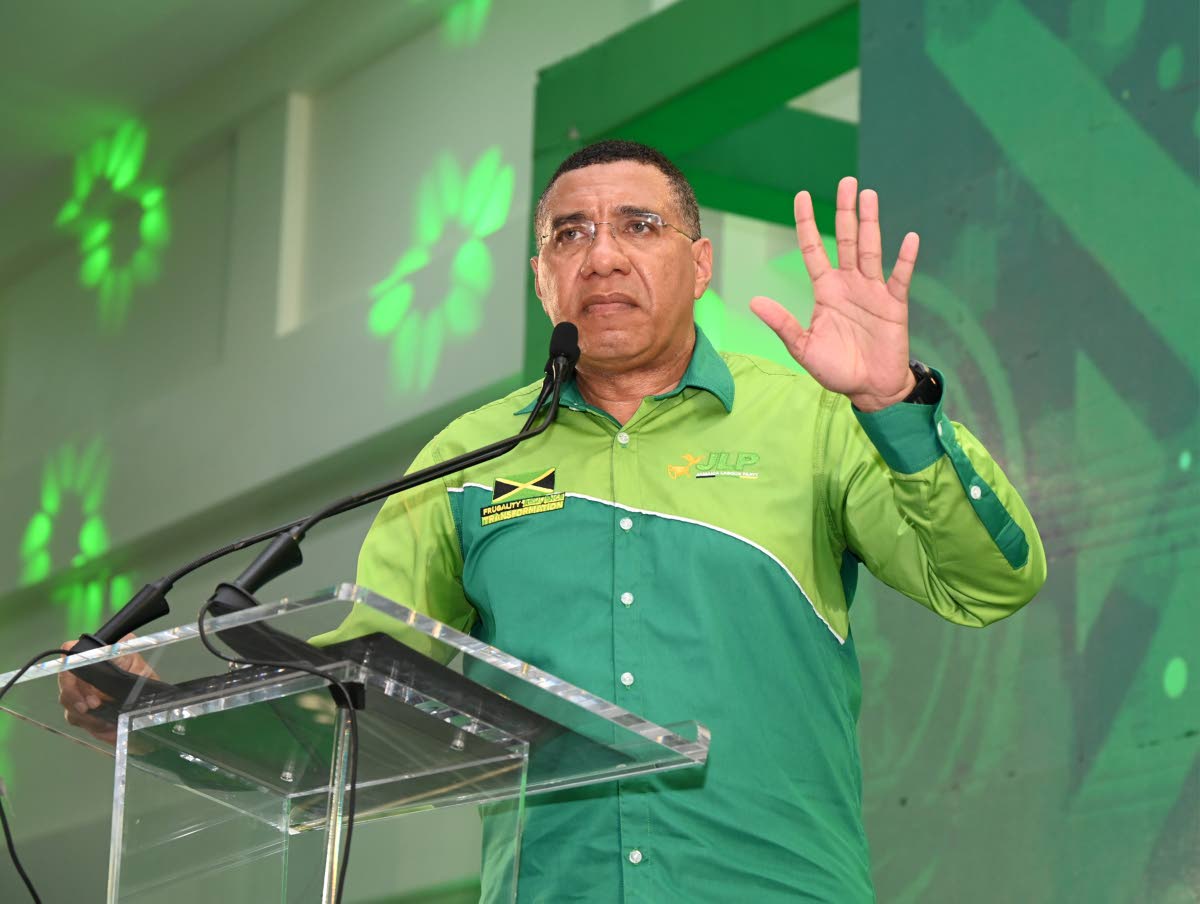 Prime Minister Dr Andrew Holness addresses delegates at the 83rd Annual Conference at the Montego Bay Convention Centre. Photo - Ashley Anguin
-
Prime Minister Dr Andrew Holness addresses delegates at the 83rd Annual Conference at the Montego Bay Convention Centre. Photo - Ashley Anguin
-
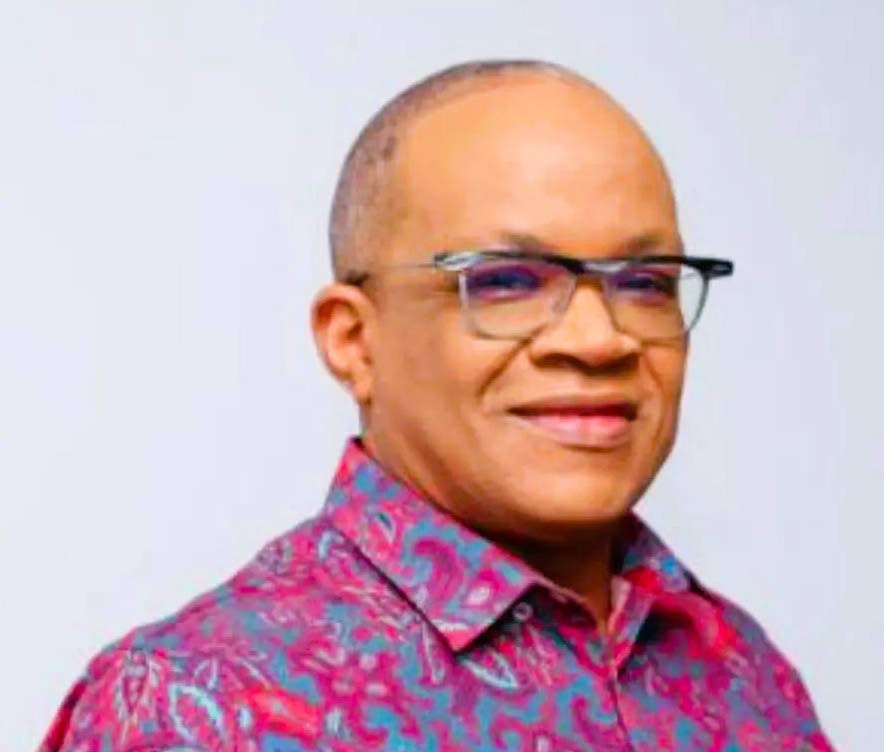 Michael Abrahams. Photo - Contributed
“A good leader takes a little more than his share of the blame, a little less than his share of the credit.” – Arnold Glasow
On October 28, 2025, Hurricane Melissa, the most powerful hurricane to make direct landfall in Jamaica, slammed into the country as a Category 5 storm, killing at least 45 people, leaving tens of thousands of households displaced, and causing more than US$8 billion in infrastructure damage.
On November 4, 2025, the Office of Disaster Preparedness and Emergency Management (ODPEM) was reassigned from the Ministry of Local Government and Community Development to the Office of the Prime Minister (OPM). In a statement on the reassignment, published on the Jamaica Information Service (JIS) website, Prime Minister Dr Andrew Holness said, “The new arrangement will accelerate the distribution of relief supplies in the aftermath of Hurricane Melissa, better serve the most affected communities, and restore normalcy as quickly as possible.” The prime minister also said, “The best place to achieve that, given the nature of the crisis and the speed with which we want the recovery, is for it to be centrally positioned in the Office of the Prime Minister, which is what the Office of the Prime Minister does; it coordinates all the entities.”
However, a real-time audit conducted by the Auditor General and tabled in May, Hurricane Melissa Relief Initiative Audit – Financial Management, revealed that, by February 23, ODPEM had spent just $26.2 million, or 1.8 per cent, of the $1.44 billion in donations it had received. The audit also found that J$138.8 million and US$101,974 in Hurricane Beryl relief cash donations from 2024 remained unspent.
A subsequent Auditor General’s report tabled in November uncovered significant financial irregularities, documentation gaps, inventory failures and diversion of funds intended for Hurricane Melissa recovery. The report also documented several unopened containers, spoilt and insect-infested food in warehouses, and that billions of dollars in donations were not properly accounted for.
However, when complaints were registered about the inefficiency of the hurricane relief process, Prime Minister Holness was dismissive in his responses. When concerns were raised regarding the findings in the report in May, the prime minister responded by dismissing concerns as “common nonsense”. He said the report unearthed “an administrative accounting failure” but maintained that the Government “wasn’t being inefficient” but was being “very strategic and very efficient”. Interestingly, in September he expressed dissatisfaction with “the inefficiency and lack of productivity” and the slow pace of the relief efforts, contradicting his earlier comments praising the process’ efficiency.
On October 27, British television channel ITV broadcast an interview with dancehall artiste Beenie Man, who said, among other things, that “Government get the money”, “Government distribute the money the wrong way”, and “The money come in and yuh nuh see where it guh”. Holness dismissed the claims as a “lie” told by someone who benefits from “Brand Jamaica” and urged critics not to “tear down” the country. He later told critics of his administration’s hurricane relief management to “go make a song of it”, apparently taking a swipe at Beenie Man, who made a song expressing dissatisfaction with the situation. Yet, the auditor general’s report, tabled three weeks after the interview, appeared to substantiate Beenie Man’s comments.
Responding to the report, Holness described its findings as “concerning” but “not surprising”, adding, “I knew this was going to happen”, a curious admission from someone who assured us that placing ODPEM under his office would improve the delivery of relief. The report identified several instances of donated funds being used for purposes other than those intended. In one case, $33 million earmarked for a roofing programme was used to pay fees for third-party imported goods in the aftermath of the storm. Holness distanced his administration from the decision, insisting it was made by ODPEM management. Speaking last Thursday at the opening of the Trelawny Infirmary, he said, “That’s not my decision. That decision has nothing to do with the executive level of the Government.”
ODPEM clearly failed to execute its duties as expeditiously and efficiently as the prime minister assured us it would. But, what should a good leader do when an agency under his authority fails? I posed that question to Gemini AI, ChatGPT, and Claude AI, and the first response from all three sites was the same: take responsibility.
A few years ago, one of my children became seriously ill and was admitted to the University Hospital of the West Indies (UHWI). One night, he was not given a very important drug that was prescribed for him, because the doctors taking care of him neglected to write it on his medication chart. I travelled to the hospital after 11 pm, found the resident doctor on duty and watched them administer the drug intravenously. While I was there, the consultant in charge arrived and apologised to me. He told me that it was his fault. I told him it was not, because the residents were told what to do, and it was their duty to do so, not his. He told me that he is the one in charge, so ultimately, it is his responsibility. That is what a leader does.
Good leadership involves taking responsibility, not dismissing or insulting those who are concerned, absolving oneself of accountability, or shifting blame. Holness has done all of these while refusing to take responsibility. Hurricane Melissa upended the lives of hundreds of thousands of Jamaicans, compromising their physical, mental, emotional, social and financial well-being. The system established to assist them failed many. The prime minister placed ODPEM under his direct authority, promising faster and more effective relief. Its failures occurred under his watch. He must therefore accept responsibility. As Holness said during an interview with the late Michael Sharpe, when he was opposition leader, “The prime minister is ultimately responsible”.
Michael Abrahams is an obstetrician and gynaecologist, social commentator, and human-rights advocate. Send feedback to columns@gleanerjm.com and michabe_1999@hotmail.com, or follow him on X @mikeyabrahams.