Gussie Clarke’s legacy goes beyond the music
Loading article...
-
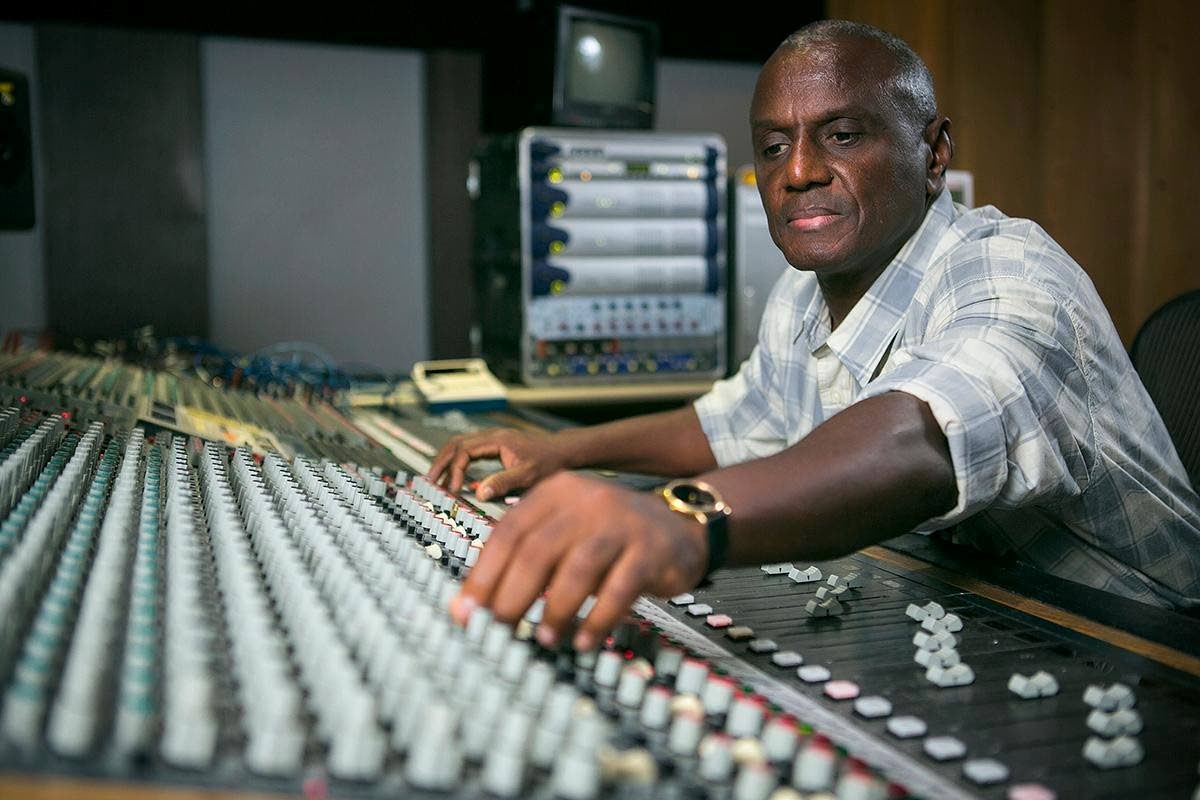 Gussie Clarke has spent more than five decades shaping Jamaican music, from producing hit records to helping build structures for music creators. Photo - Contributed
-
Gussie Clarke has spent more than five decades shaping Jamaican music, from producing hit records to helping build structures for music creators. Photo - Contributed
-
 Veteran producer Augustus ‘Gussie’ Clarke. Photo - Contributed
Augustus ‘Gussie’ Clarke has spent more than five decades shaping Jamaican music, but his contribution extends beyond the recording studio. The veteran producer has also worked to strengthen the business behind the music, advocating for greater accountability in royalty payments and helping local producers take greater control of their publishing. That wider contribution will be recognised by the Edna Manley College of the Visual and Performing Arts, which has named Clarke among five recipients of its Lifetime Achievement Award as part of its 50th anniversary celebrations.
“It is always great to be honoured by your country, by your people, by your peers, but now being honoured by an academic institution is actually carrying it a step further,” he told The Gleaner.
Clarke’s route into music began with importing and exporting Jamaican records, which brought him into contact with sound systems and record stores overseas. He later operated a sound system and cut dub plates, but he recognised that his interests extended to both the creative and commercial sides of the industry.
“I recognise myself [as] having creative and business skills, and I just pursued the only job I think I loved, which was business and music,” he shared.
Since making his production debut in 1972 with U-Roy’s The Higher The Mountain, Clarke has worked with some of Jamaican music’s most recognised artistes, including Dennis Brown, Gregory Isaacs, Augustus Pablo and The Mighty Diamonds. His catalogue includes J.C. Lodge’s Telephone Love, Maxi Priest’s Just A Little Bit Longer and Shabba Ranks and Krystal’s Twice My Age. His work has also extended to international collaborations, including co-producing Rihanna’s Crazy Little Thing Called Love in 2006.
As the industry evolved, Clarke continued to explore new sounds and approaches to production. His 1987 release Gang War reflected the transition towards digital production, while the opening of Music Works studio in 1988 provided another base for his work. Across roots reggae, lovers rock and dancehall, his productions have accompanied several shifts in Jamaican music.
For Clarke, the satisfaction of producing comes from developing an idea and seeing it become a successful record. Once a project is complete, however, his attention shifts to what comes next.
BEYOND PRODUCING
His concerns about the local industry went beyond the production of records. Clarke said he had seen Jamaican producers and talent developers investing in and developing artistes who went on to work with overseas record companies, questioning why those making the investment were not ultimately benefiting financially.
“I came into the industry and realised that we lacked structure and we were so competitive amongst each other and the business itself was not progressing at the rate of how it could or should,” he added.
Clarke became a founding member of the Jamaica Association of Composers, Authors and Publishers (JACAP), the Jamaica Music Society (JAMMS) and the Jamaica Anti-Piracy Alliance (JAPA). He also developed software, established contracts for music publishing, artistes and producers, and helped producers set up their own publishing companies, providing administration services for some.
Explaining what prompted him to learn more about music publishing and copyright, Clarke pointed to The Mighty Diamonds’ Pass the Kouchie, which he said involved millions of dollars and multiple people who had not been involved in its creation.
“I said, you know, this doesn’t make any sense. If I planted the corn, I should raid the barn.”
Clarke studied music publishing and copyright, drawing on the models of organisations such as PRS in the United Kingdom and ASCAP in the United States, which administered copyright. He wanted similar structures established in Jamaica, with the benefits going towards music creators.
“I got a [group] of persons together and we all sat down and decided, here’s what we are going to do. I funded it solely in the beginning, and the rest is history. JAMS and JACAP are success stories right now, so it was about giving back. It was about giving structure, it was about accountability, and it was about being as honest as you could be,” he said, adding, “I just believe that we could be the masters of our own destiny.”
That belief in creating opportunities for Jamaican music makers also informs Clarke’s latest investment at Edna Manley College. In 2025, he committed US$100,000 of his personal funds towards establishing the institution’s first professional-grade recording studio, while also mobilising industry support for the project.
“Actually, it’s not just giving the Edna Manley College a studio; for me, it is giving something to the culture, giving something back.”
The facility is designed to include a main recording studio with analogue and digital technology, a smaller space for podcasting and demo production, equipment and instruments for students, and solar-powered systems. Clarke has also pledged to donate equipment and provide two years of free training, with further support for up to two years after the studio’s completion. Industry professionals are expected to contribute to mentorship and apprenticeship opportunities, giving students practical exposure to the demands of the music business.
The project builds on Clarke’s earlier efforts to give young musicians access to professional recording facilities. In 2023, he opened Anchor Recording Studio to students of the Alpha School of Music.
The Edna Manley College project is intended to create a lasting facility within the institution, where students can develop their skills and gain practical experience as part of their training. For Clarke, the investment is about ensuring that the next generation has access to opportunities that can help them participate more fully in the industry.
The project has also received financial support from Minister of Culture, Gender, Entertainment and Sport Olivia ‘Babsy’ Grange, VP Records and the Vincent and Patricia Chin Foundation.
For Clarke, making the investment was never dependent on whether others joined him on the project.
“It feels like it’s a duty. It was a must-do. Regardless of the cost and whether anybody had joined us on this journey, I still would have done what I am doing now and do it the same way that it would have been done by not just building a studio, but giving them a state-of-the-art recording studio and a podcast room. I humbly, gladly, willingly contributed that to my culture, to my country, to my industry. Not just simply to the Edna Manley College.”
The Lifetime Achievement Awards will be presented at the college’s November 28 graduation ceremony. Clarke will be among the honourees, alongside Minister Olivia Grange, Marlon D. Simms, artistic director of the National Dance Theatre Company of Jamaica, visual artist Ebony G. Patterson and playwright Basil Dawkins.
entertainment@gleanerjm.com