A.J. Nicholson | Case to answer bravely, Minister Chuck
Loading article...
-
 Minister of Justice, Delroy Chuck
-
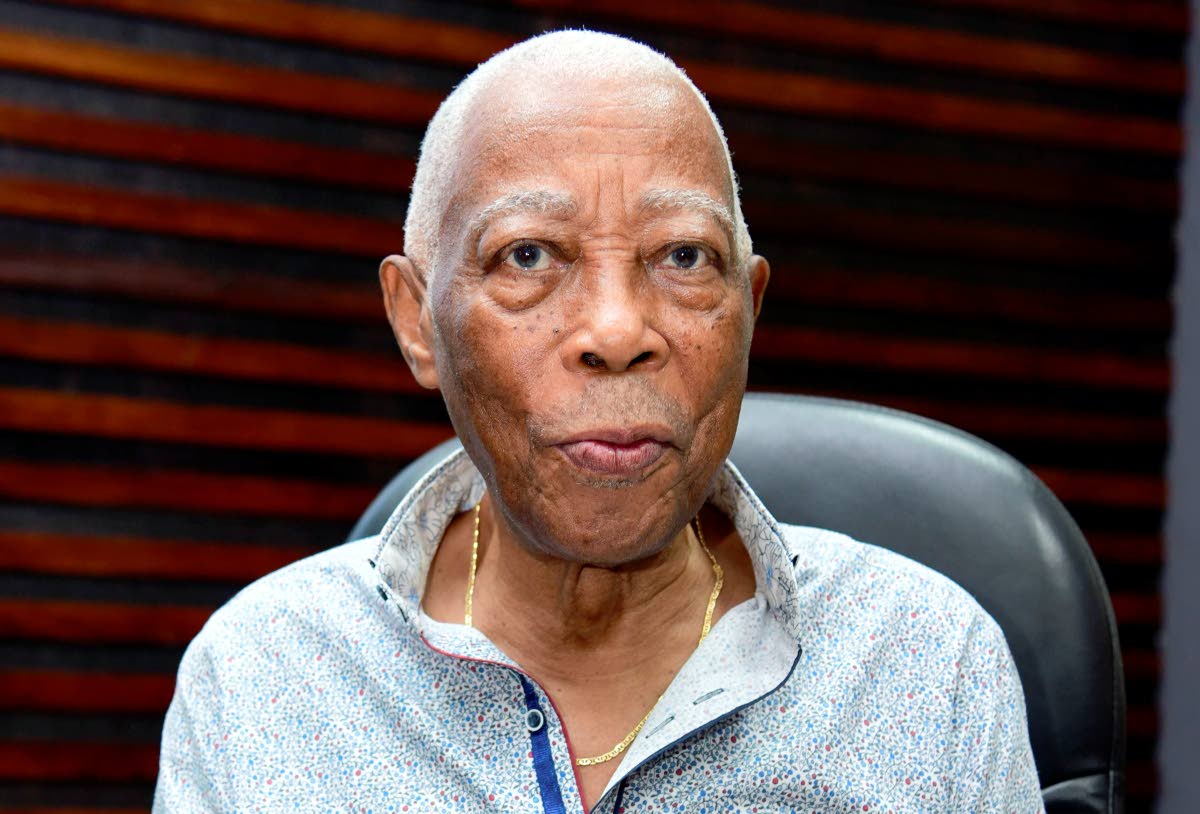 A.J. Nicholson
Before a new constitutional reform committee comes to be established, the justice minister has a case to answer. A ten-page-long paper titled Against The CARICOM Court of Appeal by Delroy Chuck has resurfaced.
Early reliance on the “broad ground” of political considerations provides powerful evidence that the undated paper was written when death penalty abolition was atop the agenda of the global human rights lobby.
“It is at least arguable,” he wrote, “that one of the reasons for eagerly pushing for a (regional court) now is the audacity of the JCPC to rule in the case of PRATT and MORGAN that hanging can only be allowed if justice was expeditiously pursued by the state. It is quite plain that Caribbean governments were, and are, not happy with that decision”.
‘Creation of a hanging court in the Caribbean’ was raised as far afield as Australia at a Commonwealth Law Conference in April 2003 by Sir Geoffrey Robertson, a sterling human rights advocate and lead counsel in the PRATT petition before the Privy Council.
His remarks drew an on-the-spot stern rebuke from Sir David Simmonds, then Barbados chief justice, as being “offensive, cheap and an affront to those involved in setting up the court”.
Memorably, proposals for a regional university, for a regional court, and for free movement throughout the region were conceptualised during the 1940s, several decades before any concerted death penalty abolition push arose.
The much-lauded delivery of the established regional Court over the two decades of its existence have served to debunk that and other ‘misgivings’ about appointment of the judges, sustainability of the court, and comparative quality of its judgments.
Writer Chuck’s “clear and distinctive position” was that: “I want a final appellate Jamaican court sitting and hearing cases here”, with a bench which, “(i)n the beginning would consist of five judges, chosen from judges who now sit in the JCPC, Canadian Supreme Court, outstanding Caribbean judges and our own Jamaican judges”.
Over the years, Attorney Delroy Chuck publicly declared his preference for a local final appellate court, a position now also advanced by the prime minister, repeating his referendum call on the transition issue.
Beyond debate, however, creation of a preferred local final court within any imaginable future timeframe would unquestionably be derailed by prohibitive cost and requirements to meet international competition and acceptance.
CCJ BECKONS
Meanwhile, the Caribbean Court of Justice beckons!
Principles of good governance and transparency therefore place upon Chuck, now as minister responsible for constitutional reform, the burden of an unavoidable case to answer on two intertwined counts.
Based upon what is publicly known and unassailable, as demonstrated below:
A. What meaningful advice can he provide to the government to prolong the hindrance to Jamaica transitioning to the regional court?
B. To what end ought that issue to form part of the terms of reference for deliberation by another reform committee?
ONE: Is there a requirement for access to final justice to be provided for the majority of Jamaicans?
Answer: Yes.
a). Only the wealthy have ever been privileged to enjoy unimpeded access to the Judicial Committee of the Privy Council.
b). Surely, the authorities could not choose to organise an immensely costly referendum exercise to pose to the public, the vast majority of whom, for generations, have never had the privilege of access, a question of whether they wish for their deprivation to continue.
TWO: Is there any alternative to the Privy Council?
Answer: Yes.
a). The internationally acclaimed, accessible Caribbean Court of Justice (CCJ) for whose operation Jamaica has made its financial contribution.
b). Five of the 10 states which are treaty bound to accede fully to the CCJ have fulfilled that obligation, and there has been no complaint concerning the quality of the court’s delivery. On the contrary!
THREE: Is there any other alternative?
Answer: No.
a). Suggestions of a local final appellate court are invariably met with the inarguable conclusion that such a venture is unattainable in the imaginable future.
b). Could the authorities really move to saddle the voting public, their employers, with a question concerning a local-final-court dream in a national referendum exercise?
FOUR: Is the constitutional route for transitioning from the Privy Council to the regional court settled?
Answer: Yes.
Over two decades ago, upon a petition of the Jamaica Labour Party and others, the highest court issued a decision that the correct path was by a two-thirds majority vote in each House of Parliament.
MYSTIFYING CONCLUSION
Chuck’s mystifying conclusion was: “It seems to me that until the JCPC makes it clear that it will not entertain us we should ... prepare for the right time when we will have to operate our own final court”.
Should that perception become attached to a justice minister, it would be regarded by the long-deprived majority – descended overwhelmingly from the enslaved - as unforgivably insensitive and uncaring, and a focused rethink by the minister would, no doubt, elicit an appropriate withdrawal.
To reach the readied new frontier, the accessible Caribbean Court of Justice beckons!
That course is unavoidable. Indeed, it was foreshadowed by the purposeful reflection in the Agreement Establishing the itinerant Court of Chuck’s prescient “clear and distinctive position for (our) final appellate ... court”.
The judges will be “sitting and hearing cases here”, with a bench which “consists ... of judges who are chosen from (the wider Commonwealth), outstanding Caribbean judges, and our own Jamaican judges” one of whom is now its president.
With his own perceptive framework having been essentially adopted and actualised, what could now impel Minister Chuck, with portfolio responsibility for constitutional reform, to advise otherwise than that the too-long-overdue transition be urgently effectuated?
He therefore has this pivotal case to answer, to be dutifully brave and not to fall prey or yield to any partisan scheming!
We are watching you, Minister!
A.J. Nicholson is former minister of justice and attorney general of Jamaica. Send feedback to columns@gleanerjm.com