Danielle Archer | The cost of courage in Caribbean leadership
Loading article...
-
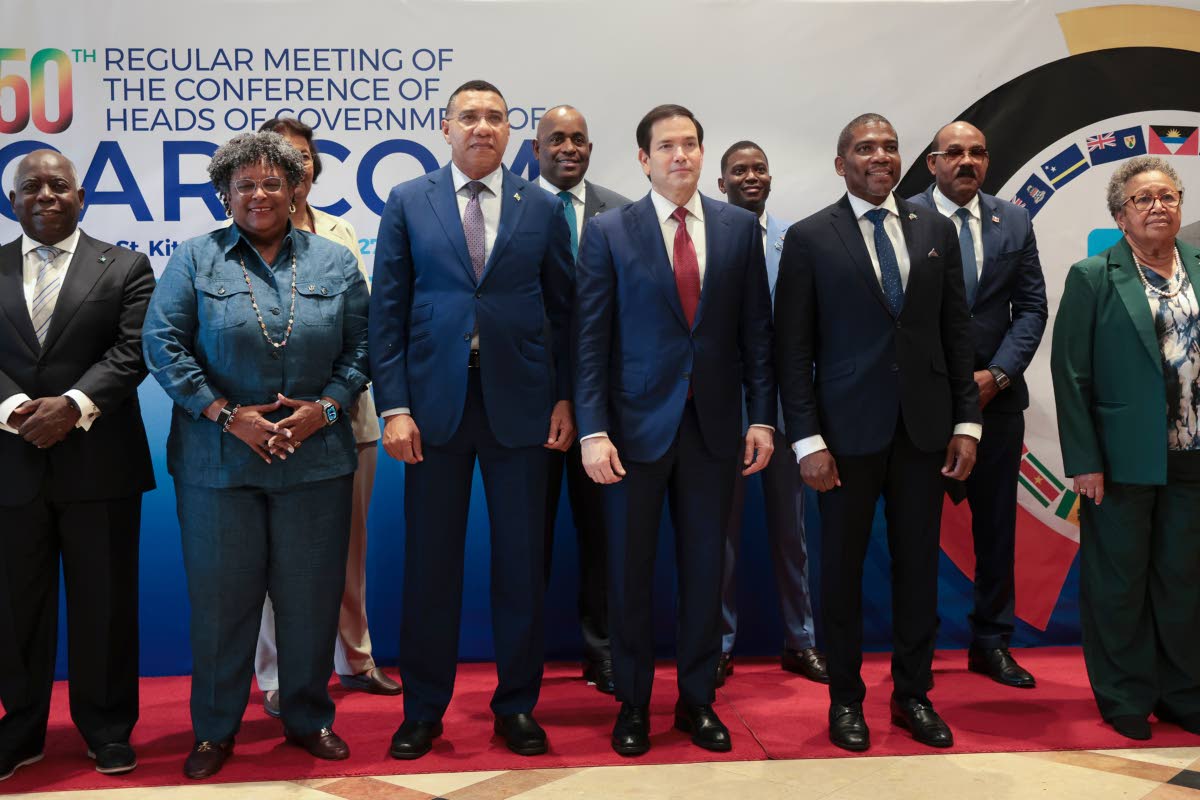 US Secretary of State Marco Rubio, centre front in red tie, poses for a group photo with other government officials attending CARICOM meeting in Basseterre, Saint Kitts and Nevis, in February. Pictured are, Bahamas’ Prime Minister Philip Edward Davis, left; Grenada’s Prime Minister Dickon Mitchell, fourth from right; Antigua and Barbuda’s Prime Minister Gaston Browne, second from right; Barbados’ Prime Minister Mia Amor Mottley, second from left; Jamaica’s Prime Minister Andrew Holness, front row third from left; and St. Kitts and Nevis Prime Minister Terrance Drew, third from right. Photo - AP
-
US Secretary of State Marco Rubio, centre front in red tie, poses for a group photo with other government officials attending CARICOM meeting in Basseterre, Saint Kitts and Nevis, in February. Pictured are, Bahamas’ Prime Minister Philip Edward Davis, left; Grenada’s Prime Minister Dickon Mitchell, fourth from right; Antigua and Barbuda’s Prime Minister Gaston Browne, second from right; Barbados’ Prime Minister Mia Amor Mottley, second from left; Jamaica’s Prime Minister Andrew Holness, front row third from left; and St. Kitts and Nevis Prime Minister Terrance Drew, third from right. Photo - AP
-
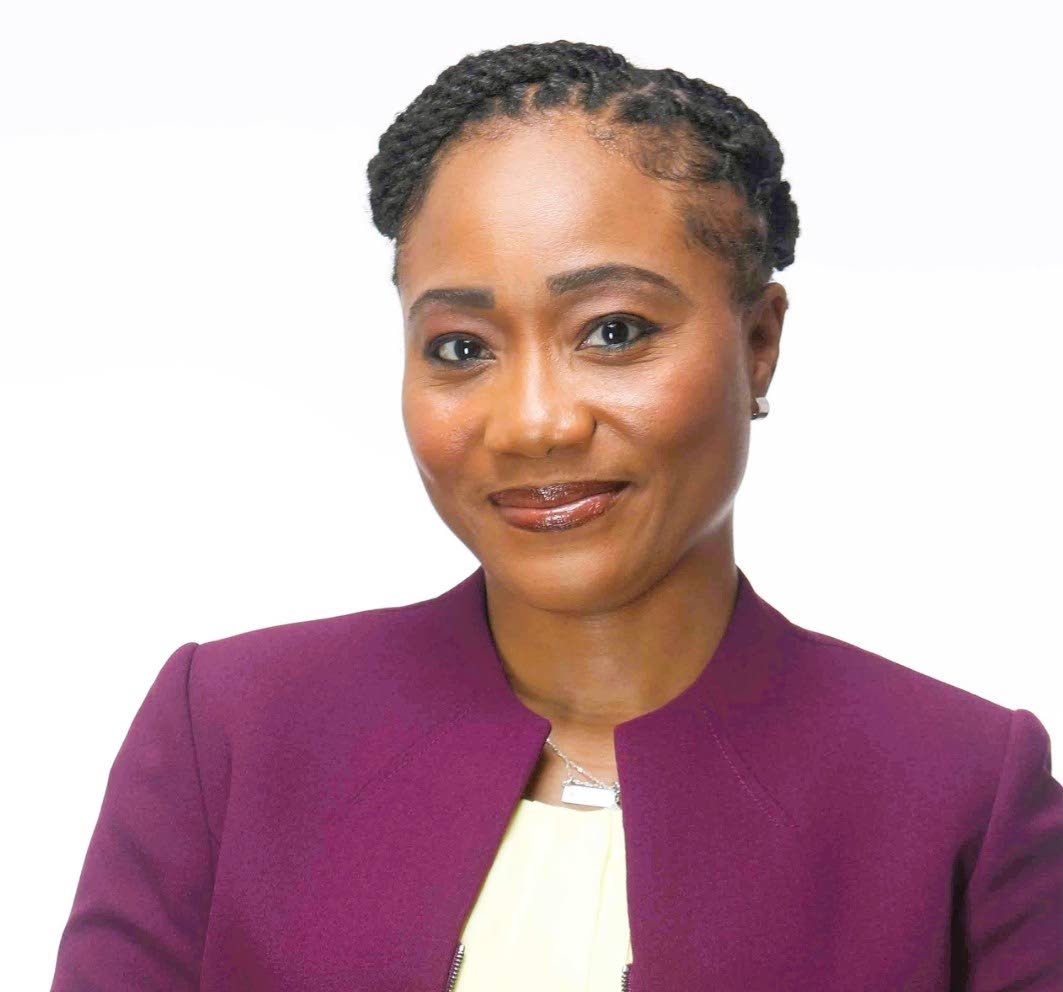 Danielle Archer. Photo - File
In Hans Christian Andersen’s The Emperor’s New Clothes, an entire kingdom watches a leader walk naked through the streets. Everyone sees the truth. No one speaks. Not the ministers. Not the advisors. Not the public. Not the institutions. The fear of consequence becomes more powerful than the clarity of truth.
The Caribbean knows this story well.
In small societies, silence is often safer than honesty, and the cost of courage is felt immediately and personally. Leaders pay for it in relationships, opportunities, and reputation. And because the cost is high, many choose applause over integrity, performance over principle, and convenience over consequence.
Yet leadership outlives applause. That is the doctrine we avoid because it demands something from us, the willingness to confront the price of courage in islands where everyone knows everyone, and where truth often carries a social cost.
When the United States announced its hardened posture toward Nicolás Maduro’s government, the Caribbean’s response was not a response at all. It was a pause, a collective holding of breath. Whether CARICOM supports or opposes the US position is not the central issue. The deeper concern is that the region did not speak with clarity, conviction, or coherence.
We did not articulate a stance rooted in our own values, history, or geopolitical interests. We waited to see where the applause would fall. Like the emperor’s courtiers, we watched the procession and said nothing.
We forget easily.
For decades, Cuba – despite its own internal challenges – has been one of the Caribbean’s most consistent partners. Cuban doctors and nurses staffed our hospitals when no one else would or could. Cuban teachers filled our classrooms when we lacked capacity. Cuban disaster teams arrived when storms tore through our islands.
And what has Cuba received in return?
Not applause.
Not protection.
Not reciprocity.
Often, not even acknowledgement.
CHOSEN CAUTION
At a moment when moral clarity is required, many regional leaders have chosen caution over courage, silence over solidarity. It is easier to stand with power than to stand with principle, and CARICOM’s posture reflects that uncomfortable truth. Cuba’s story exposes how rarely leaders are willing to risk anything for the values they claim to defend.
The cost of courage is not only visible in our leaders. It is visible in our people. Civil society – once the region’s conscience – is thinning. Not because Caribbean people do not care, but because the architecture that once supported civic courage has eroded.
Civil society organisations struggle for funding, legitimacy, and protection. Many operate on volunteer labour. Others face quiet political pressure. Some have been absorbed into state structures. Others have been sidelined by private interests. And many citizens, exhausted by unresponsive systems, have withdrawn from public engagement altogether.
This weakening is structural.
When institutions do not respond to public input, civic participation becomes symbolic rather than substantive. When policies are shaped without consultation – whether on land use, beach access, environmental protection, or major development approvals – people learn that their voice is ornamental, not influential.
And so they retreat.
They vote less.
They protest less.
They participate less.
They trust less.
Low voter turnout is not apathy.
It is the quiet verdict of a public that no longer believes its courage will matter.
A region that does not protect civic courage cannot produce political courage.
CARICOM’s silence on the US–Venezuela issue is not an isolated moment. It reflects a deeper architectural challenge, the region has not yet built the systems that support unified courage.
We saw this in the fragmented responses to Haiti’s crisis.
In the inability to articulate a coherent stance on migration.
In the quietness around regional security.
In the reluctance to confront governance failures within member states.
This is not a question of intelligence or intent.
It is a question of design.
SELF PROTECTION
In small societies, courage is punished quickly and remembered long. Without systems that distribute the weight of principled decisions, leaders default to caution. Silence becomes a form of self-protection.
But leadership outlives applause.
And silence is a stance.
The Caribbean has been here before.
The West Indies Federation collapsed not because the idea was flawed, but because the courage required to sustain it was too costly. National interests overshadowed regional vision. Fear overshadowed unity. Political applause overshadowed long-term architecture. The psychological residue of that collapse remains with us. It shows up in our hesitations, our caution, and our instinct to wait rather than lead. Every moment of regional quietness is a reminder that the Federation did not simply fail in 1962; it continues to fail whenever we choose applause over alignment.
We are entering a world where small states will be forced to choose:
• between alignment and autonomy
• between silence and sovereignty
• between convenience and consequence
• between applause and architecture
The geopolitical landscape is shifting.
The global order is recalibrating.
The Caribbean cannot afford to be a spectator.
We need a courage that is structural, not reactive.
Architectural, not emotional.
Anchored in principle, not applause.
Courage cannot depend on personality; it depends on design. If the Caribbean is to serve its people in this new world regime, we must build:
• leaders who can speak when silence is safer
• institutions that can act when applause is uncertain
• systems that protect courage instead of punishing it
• regional mechanisms that outlive political cycles
• a doctrine of leadership that is not performative, but principled
The emperor walked alone, but the silence was shared. So is ours.
Leadership outlives applause. And the Caribbean must decide whether it wants leadership that lasts, or leadership that pleases. The cost of courage will always be high.
But the cost of cowardice is higher.
Danielle S. Archer is the former principal director of National Integrity Action and host of The Ethos Dispatch—the Caribbean’s summons to disciplined, values-anchored leadership, which can be accessed via Apple Podcasts, Spotify, or https://www.buzzsprout.com/2595995.