Gordon Robinson | CCJ: Crisis, conundrum or calumny?
Loading article...
-
 The Caribbean Court of Justice in Port of Spain.
-
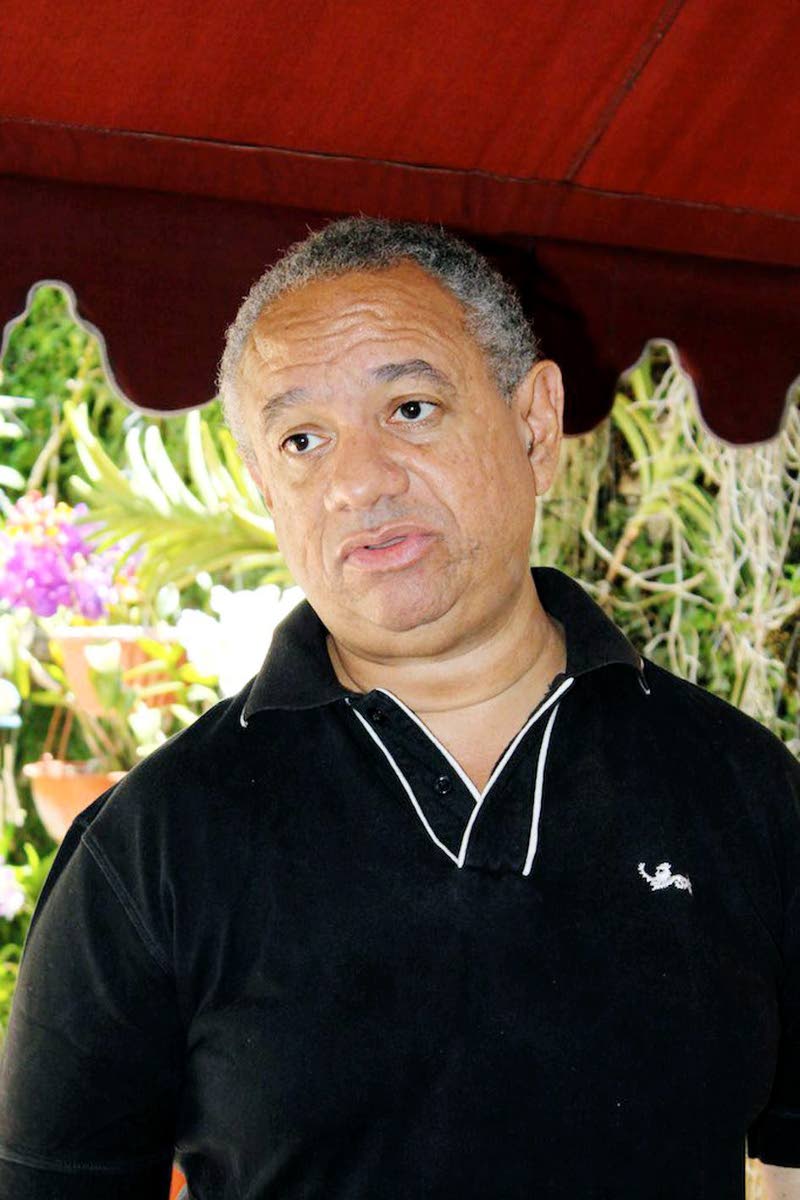 Gordon Robinson
So, leaked internal e-mails revealing CCJ Judges’ complaints about the President’s administrative leadership style created a regional ruckus.
If Trinidad Express reports are accurate, he’s accused by five of six sitting Justices of being dictatorial, anti-democratic and guilty of “panel fixing” whatever that is. One Justice described the working environment as “toxic” and detailed what he characterized as unprecedented attempts to influence fellow judges’ opinions during case deliberations.
I thought “case deliberations” were all about judges trying to influence each other. I’ve repeatedly advised young Counsel that they may think they’re appearing before a panel of three but the entire court is available to discuss the case. Where’s the grouse?
Privately owned Guyanese daily newspaper Kaieteur News immediately over-reacted: “The revelations have sparked alarm in Guyana, particularly over allegations that the court’s internal tensions spilled into the politically sensitive Mohamed v MOHA extradition matter involving Opposition Leader and Member of Parliament Azruddin Mohamed.”
That case involved a USA extradition request against Guyana’s Opposition Leader and his father. They were indicted in Florida on gold smuggling and money laundering charges but sued to block extradition. CCJ decided against them in July.
In Jamaica the anti-CCJ band was struck up. All the old favourites were played. We can’t trust CCJ. Look at what THEIR Judges say. This isn’t trivial. This is serious. This would NEVER happen in the Privy Council.
Yawn.
Let’s begin at the beginning. The complaints are administrative not judicial. CCJ issued a statement responding to the report. It reaffirmed its commitment to judicial independence, integrity and public confidence in the administration of justice. CCJ also wrote:
“The Court is mindful that questions and allegations presented without the benefit of context, background, or an appreciation of the nature of judicial deliberations, collegial discussions, and institutional governance may lend themselves to misunderstanding or mischaracterization.”
For me one of the most important contextual matters is that this dispute was completely internal and private. If someone hadn’t leaked the e-mails we’d never know there was an issue of any kind.
Are spats among judges, including in Apex Courts, a trigger for distrust of judicial competence or integrity? Let’s start with the Supreme Court of India.
In 2018, in arguably the most famous modern apex court spat, the four most senior judges below the Chief Justice held an unprecedented public press conference. They openly rebelled against CJ Dipak Misra alleging lack of transparency and biased assignment of sensitive, high-profile cases to selective junior benches.
Sounds familiar? Well, except that this was deliberately blown up in public.
According to UK Guardian: “The revolt against CJ, Dipak Misra, has been months in the making. It broke into the open in November when he was accused of mishandling a matter relating to a former judge alleged to have offered to bribe members of the Supreme Court in a case Misra himself was presiding over.
Misra has not been accused of taking bribes but was fiercely criticised, including by senior lawyers, for repeatedly intervening to ensure only judges of his choice could hear the matter.”
The judges didn’t accuse Misra of any misconduct so the public critique didn’t result in formal impeachment or immediate punitive action. The very public spat did lead to long-term administrative reforms in case allocation, increased transparency in the Court’s roster system, and set a precedent for judicial accountability. It didn’t affect the court’s reputation. There are 31 judges in India’s Supreme Court with a mandatory retirement age of 65. Rotation is guaranteed. There are 7 CCJ judges including the President.
What about Kenya’s Supreme Court?
Before his retirement at 70, Chief Justice David Maraga famously had several public spats with Government and Legislature holding solo press briefings to accuse them of intentionally strangling the judiciary’s budget and defying court orders. According to Kenyan Daily newspaper People Daily (PD) he once issued an advisory to the President to dissolve Parliament as punishment for failing to pass legislation implementing the two-thirds gender rule required by the Constitution. His court created history by overturning a Presidential election.
As reported by PD his upcoming retirement sparked “a deep split in the Judicial Services Commission (JSC) over Maraga’s impending exit. One can only guess that the division could be fuelled by forces keen to influence Maraga’s succession.” Kenya’s JSC includes Judges of the Apex Court as influential members.
In Barbados, retired Supreme Court Justice Sonia Richards actually sued the Attorney-General and a former Chief Justice complaining of what she termed a “toxic work environment” as well as several breaches of employment and constitutional rights including discrimination in work assignments as well as defamation and negligence. A recent judgment (July 31; Civil Suit No 327 of 2025) dealt with certain procedural issues. Some of her substantive claims are to be tried later.
But, after all, according to the good ol’ U.S of A, these are only “s*ithole countries”. What happens in the world’s most perfect court system?
Well, USA Supreme Court Judges, directly appointed by politicians for life, indulge in public spats on a regular basis. Speaking at Yale recently Justice Katanji Brown-Jackson said “The justices need to return to acting like the final court of review….” She slammed “Conservative” justices claiming they used Emergency Orders to benefit the Trump Administration.
She didn’t stop there: “The Court’s state decisions can at times come across utterly irrational”.
This wasn’t a private allegation of administrative default. It was a direct, public accusation of judicial dishonesty.
Brown-Jackson expressed the view that the Supreme Court was too often acting in matters that could easily be dealt with by lower courts (e.g. transgender persons in the military and protected immigrant groups):
“There’s value in avoiding having the court continually touching the third rail of every divisive policy issue in American life.”
Justice Sonia Sotomayor was publicly acerbic about fellow Justice Brett Kavanaugh’s decision in an immigration matter. She said “This is from a man whose parents were professionals and probably doesn’t really know any person who works by the hour.” She subsequently apologized calling her remarks “inappropriate” but didn’t retreat from their substance.
Nobody has suggested US Supreme Court is judicially incapable because of wrangling (public and private) among Judges.
In a lengthy media release issued on Friday, CCJ President wrote “I reject entirely the suggestion that panels of this Court have been constituted or altered to secure predetermined outcomes.” He connected the dots with the “dictatorial” allegation to a case where he removed a Judge from a panel because the Judge decided, contrary to judicial practice, to wear his “traditional national dress” which the President felt was inappropriate. Justice Anderson concedes his approach might’ve been “strong” and agreed to consult the region’s courts regarding future judicial attire.
Lookie here! Internal strife, disaffection, disillusionment and disappointment happen in every organization not staffed by robots. It happens in governments, corporations and courts. Every court! The true scandal here is someone felt it appropriate to leak internal e-mails having nothing to do with judicial decisions. So stop the unnecessary, convenient frothing at the mouth.
Systems are in place to deal with allegations of impropriety in every court except US Supreme Court where tenured-for-life judges can only be removed by impeachment in the House and conviction by 2/3rds majority in the Senate. CCJ Judges are appointed for seven years (or until they are 72 whichever is earlier) and can be removed for inability to perform or misbehaviour by Caribbean Heads of State on a Regional Judicial Services Commission’s recommendation after due process following a complaint.
This agreement by all Caribbean Governments is a clear, complete protection of CCJ’s independence and integrity regardless of internal spats whether leaked or not. But we prefer to condemn our own as incapable as soon as we hear a human might’ve erred. Administratively! Or might’ve decided, as Captain of the ship, who should or shouldn’t sit, based on judicial attire.
Although these internal spats happen everywhere we’re so colonially brainwashed that we rush to denounce our regional apex court as soon as we hear anything negative. The mental enslavement is embarrassing. The anxiety to be told what our laws say by former colonial rulers is just plain sad. Will we ever grow up and take responsibility for our own legal processes, warts and all? Will we ever believe we are truly independent and can fix whatever might go wrong with a Caribbean institution without running to Colonial Papa whining about how incompetent we are and begging for guidance? Sheesh!
Peace and Love.
Gordon Robinson is an attorney-at-law. Send feedback to columns@gleanerjm.com