Ansord Hewitt | Reflections on utilities restoration post-Hurricane Melissa
Loading article...
-
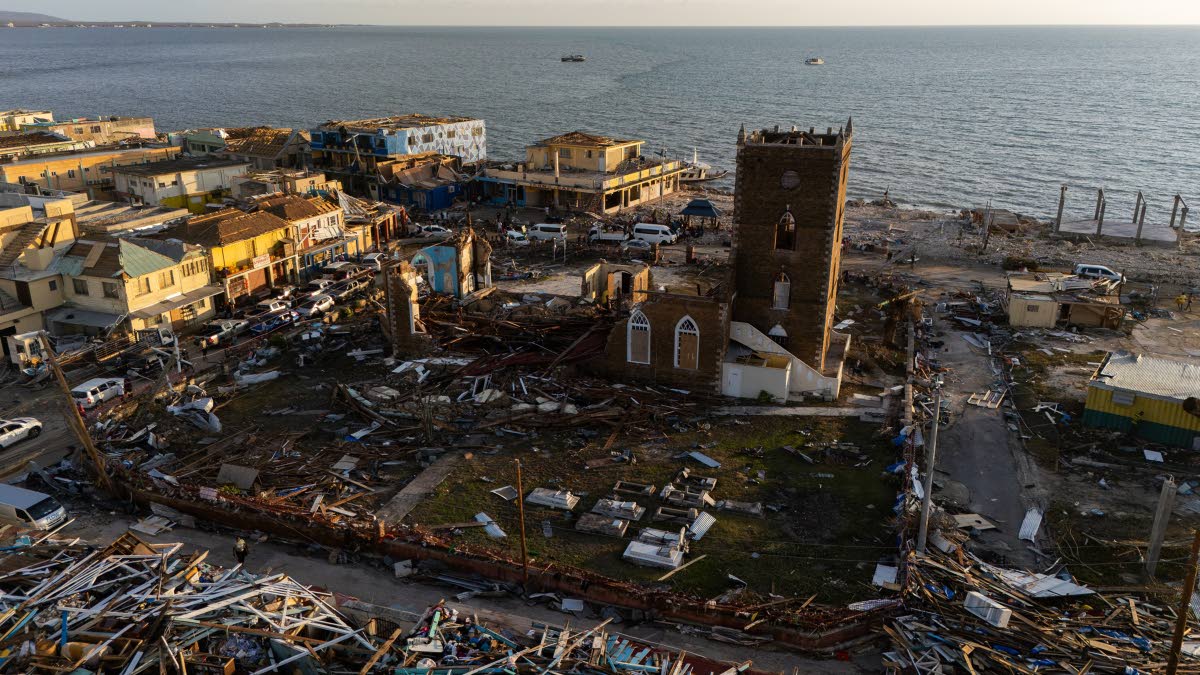 Hurricane Melissa left the St. John Anglican Parish Church in Black River, St Elizabeth in ruin. Photo - Gladstone Taylor
-
Hurricane Melissa left the St. John Anglican Parish Church in Black River, St Elizabeth in ruin. Photo - Gladstone Taylor
-
 Ansord Hewitt. Photo - Contributed
October 28 marked the anniversary of Hurricane Melissa’s passage across western Jamaica, leaving unprecedented destruction and hardship in its wake. Less than two weeks later, I joined an OUR team to assess first-hand the damage to utility infrastructure. We travelled along the north coast through St. Catherine, St. Ann, Trelawny, St. James, Hanover and Westmoreland, returning via the south coast through St. Elizabeth, Manchester and Clarendon.
As we moved from the less-affected parishes into the hardest-hit areas, the scale of the devastation became clear. Trees were uprooted, utility poles broken or dangerously tilted, and electrical and telecommunications infrastructure twisted and mangled. Broken and exposed water and sewer mains were commonplace. Along the way, we stopped repeatedly to inspect damaged infrastructure and hear residents’ accounts of loss, survival and resilience.
By the time we returned to Kingston that evening, the team was exhausted, not so much by the torturous journey as by the magnitude of the destruction and the reconstruction effort that would be required. The aftermath of Hurricane Beryl was still fresh in our minds, and there were understandable concerns about the pace of recovery and how effectively utilities and regulators would respond.
Fast-forward one year, and the transformation is remarkable. During a recent drive to Westmoreland, I was struck by the progress achieved through the efforts of utilities, government agencies and other stakeholders. Challenges remain. Communication service is still spotty in some places; customers of Jamaica Public Service Company Limited (JPS) are still reporting residual power instability; and the National Water Commission (NWC) still has much work to do, but one can hardly deny that the restoration of utility services across the board has been nothing short of a marvel. At the same time, Melissa reinforced valuable lessons about what worked well, what requires improvement, and how Jamaica must prepare for a future in which severe weather events are likely to become more frequent.
For utility customers, Melissa’s impact extended far beyond damaged infrastructure. Interruptions to electricity, water and telecommunications disrupted daily life, making it difficult for households to meet basic needs, communicate and plan their recovery. Throughout this period, the OUR sought to keep customers at the centre of its efforts by visiting affected communities, listening to concerns, monitoring restoration activities and maintaining dialogue with utility providers. These actions reflected our commitment to ensuring that recovery efforts remained focused on those most affected.
One of the clearest lessons from Melissa was the importance of preparedness. Recognising the interdependence of utility services and the need to avoid single points of failure, the major utility providers, including JPS, Digicel, Flow and the NWC, joined the OUR and other stakeholders in a national simulation exercise before the 2025 hurricane season. In many respects, that exercise served as a rehearsal for the coordinated response that followed Hurricane Melissa. The collaboration, information-sharing and alignment of restoration priorities that emerged afterwards were the result of deliberate planning rather than chance. The OUR remains committed to strengthening this coordinated approach to enhance future recovery efforts.
The utilities’ disaster-preparedness plans also proved invaluable. Submitted annually to the OUR, these plans provided for the build-up of critical inventory, established key contingency arrangements and supported the strategic positioning of equipment and resources. As a result, utilities were able to mobilise more quickly and accelerate restoration efforts once conditions allowed.
It is a trite observation that leadership matters in restoration efforts, but I sense that it is equally, if not more, vital that leadership is visible. The active presence of the Minister of Energy, Transport and Telecommunications, Daryl Vaz, senior executives from JPS, Flow, Digicel and the NWC, as well as representatives of the OUR, sent a strong message that recovery efforts were receiving the highest priority. Equally reassuring was the visible deployment of linemen, technicians and restoration equipment across affected communities. For many customers who were frustrated and without services, these signs of activity helped sustain confidence that progress was being made.
The approach to financing hurricane recovery also deserves attention. The experience has been that, in the wake of a disaster, such as Hurricane Melissa, local insurance companies and their reinsurers have become even more gun-shy about underwriting insurance for utilities’ outside plant. Traditional insurance remains important, but international lenders and multilateral agencies are increasingly supporting parametric insurance solutions that provide faster post-disaster payouts.
These mechanisms can play a valuable role in strengthening recovery efforts. However, no single funding mechanism is sufficient. The experience demonstrated the value of complementary arrangement, such as the Electricity Disaster Fund (EDF), which the OUR approves for JPS. Although the combined impact of hurricanes Beryl and Melissa exceeded the fund’s remaining balance, the EDF nevertheless provided an immediate source of liquidity that enabled restoration work to begin without delay, coupled with a Government of Jamaica (GoJ) loan of US$150 million after Melissa. The NWC also benefited from government funding and regulatory measures that enabled the redirection of resources to urgent recovery activities. These experiences underscore the need for deliberate and structured arrangements to address immediate post-disaster financing needs. The OUR remains focused on supporting and strengthening such mechanisms.
Finally, it is impossible to overstate the importance of communication. Timely and reliable information helps customers manage expectations, make informed decisions and retain confidence during difficult circumstances.
Thankfully, the worst effects of Melissa are now receding into the past. Yet we must not forget the vulnerabilities it exposed, the lessons it taught, and the partnerships forged during recovery. By applying these lessons and continuing to strengthen collaboration among regulators, utilities, government agencies and communities, we can build a more resilient utility sector and a stronger Jamaica for the future.
Ansord Hewitt is the director-general of Office of Utilities Regulation