A. J. Nicholson | Jamaica’s disastrous journey: How are the mighty fallen
Loading article...
-
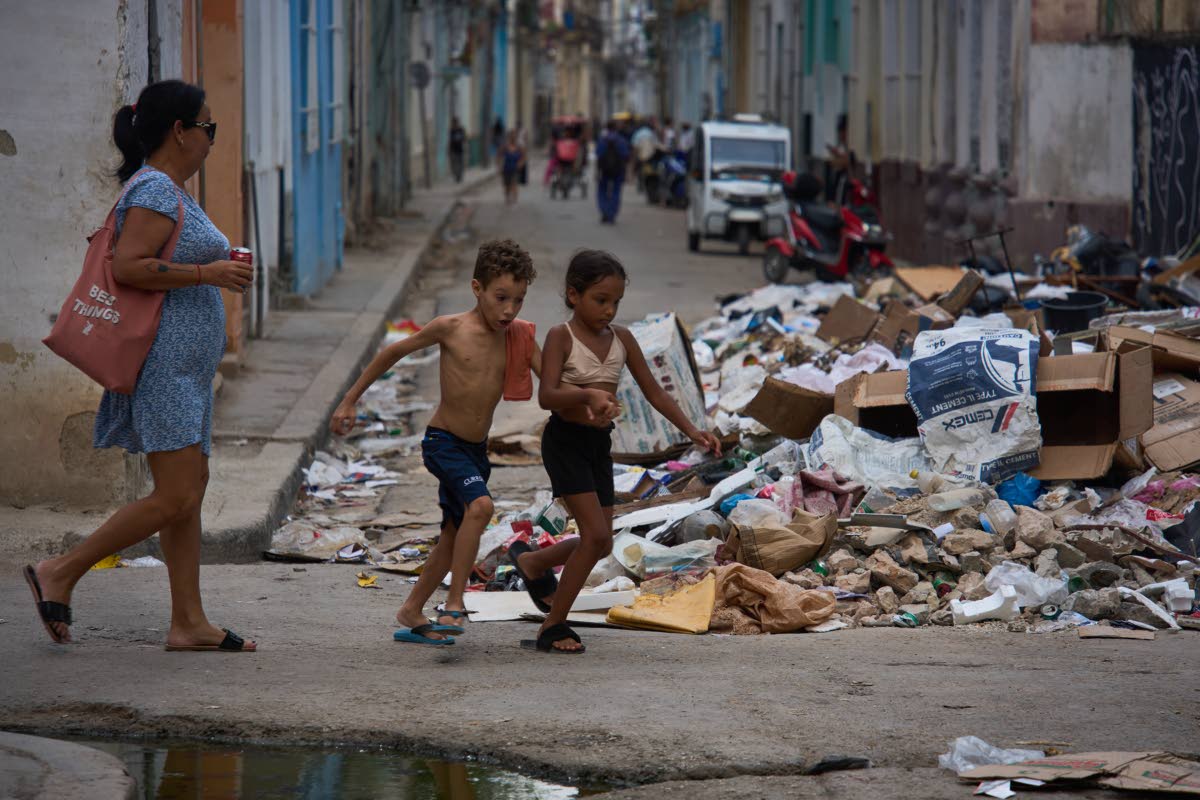 Children run past a pile of trash accumulated on a street during a blackout in Havana, Cuba. Photo - AP
-
Children run past a pile of trash accumulated on a street during a blackout in Havana, Cuba. Photo - AP
-
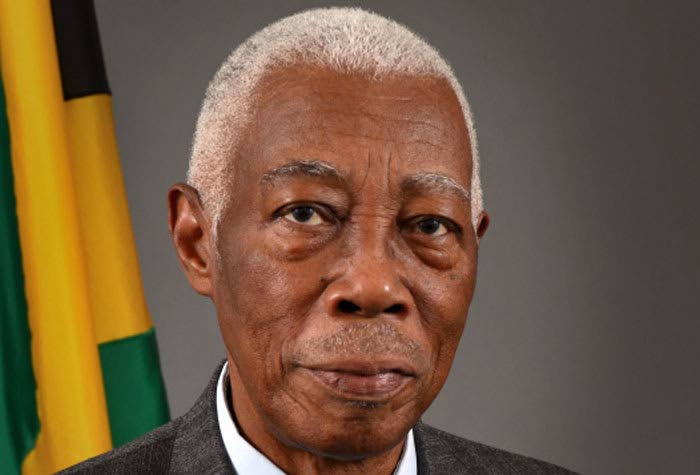 A.J. Nicholson. Photo - AG Guest Guest
All kidding aside, viewed from an emotional, even more so from an objective, standpoint, doesn’t it boggle the imagination how our government leaders could conclude that voting against threatened starvation of Cuba’s population would be incompatible with their quest for US-Cuba dialogue or for Cuba adopting a different form of government?
Jamaica’s horribly incurable display at the United Nations concerning our doorstep neighbour placed our country’s image within the compass of: ‘How are the mighty fallen’!
For mightily, during colonial times, Jamaica, punching way above its weight internationally, was first out of the blocks under the Norman Manley-led PNP government to condemn apartheid atrocities in South Africa.
Since our Independence, the Cubans have taken second place to none in generosity toward our people, and refusal to condemn their threatened starvation represents the culmination of a disastrous downhill journey pursued by Jamaica’s government over the last decade.
To traverse that journey, we remind ourselves of the image of Jamaica that the present regime inherited in early 2016.
The Simpson Miller-led administration witnessed Jamaica’s image gratifyingly come to glow to the extent of the largest number of heads of state and government visiting our shores, making for a record among all regimes since independence.
Even before the change of government, however, there were worrying warning signs coming from the Opposition leadership.
For months in 2015, Edmund Bartlett, then Opposition spokesman on foreign affairs, along with others in leadership, struggled to show how Jamaica, through its foreign ministry, was ‘wickedly mistreating one of its citizens wrongfully incarcerated in Qatar’.
The records of the foreign ministry would show that assertion to be wickedly false!
The Jamaican citizen, convicted for sexually assaulting a minor, deported after serving his five-year sentence, had the red carpet laid out by Opposition Leader Andrew Holness and Bartlett in welcome in the Jamaica Government VIP Lounge, no less, at the Norman Manley International Airport.
Later, when asked on public radio why he had embarked upon such a misguided project, Bartlett’s reply was “it is politics”.
Disturbingly, instead of the proven ‘principled’ approach to international relations, that irrational ‘politics’ method took root, occasioning a downward spiralling of Jamaica’s image.
Heart-rendingly, it has led to the cataclysmic Cuba non-vote, preceded by a ministerial declaration that “we are not a walking out country”, peremptorily dismissive of a walkout in the UN by almost 100 countries protesting against the horror of genocide.
The downward trajectory gathered momentum in 2017. The Dominican Republic authorities had taken to deporting Black people of Haitian heritage with ties only to the DR, rendering thousands stateless, thereby attracting global condemnation for acting shockingly in contravention of international human rights law.
Of all countries across the globe, Jamaica’s government inexplicably invited the Dominican Republic president to our shores to regale him with Jamaica’s highest honour for a foreigner, the Order of Excellence.
Jamaica’s image regionally was surely approaching its nadir in 2020 with its ugly treatment towards Venezuela.
Under the leadership of Presidents Chávez and Maduro, Venezuela’s life-saving energy assistance to our country across regimes has been priceless.
A shameless display of ingratitude proceeded with our head of government joining US Secretary of State Mike Pompeo on Jamaican soil in condemnation of “the illegitimate, destabilizing Maduro dictatorship”.
Moreover, there was no escape from Jamaica’s image being irreparably damaged within the Commonwealth of Nations.
In 2022, with no vacancy in the seat of Commonwealth Secretary General, of the 56 independent countries within the association, Jamaica was goaded into an unprecedented challenge to displace then Secretary General Baroness Scotland, the success of which would disrespectfully deprive an African sister state of its due place to occupy the chair.
Days before the prime minister announced the challenge, Jamaica’s delegation at a CARICOM meeting in Belize gave no indication of Jamaica’s intention of disturbing the current situation.
The out-of-line step elicited a stinging rebuke from Antigua and Barbuda Prime Minister Gaston Browne that: “I think Jamaica’s proposed candidature for Commonwealth Secretary General is a monumental error...”
In the wider international arena, there has been a series of awkward displays of monumental errors, exemplified in stark fashion concerning the complicated Israel-Palestine issue.
Jamaica’s United Nations delegations consistently tied themselves up in knots in an unexplained, ridiculous pattern of non-voting, to the annoying extent of refusing to vote in favour of allowing a Palestinian leader to deliver his address at the New York venue.
Memorably, a compelling admonition to resist careening downhill had earlier come from Citizen of the Caribbean, David Commissiong, with his widely disseminated December 2017 open letter to the government:
“Any Jamaican government that is so lacking in racial pride and respect for humanity and civilized values that it would confer a national honour on President Medina of the Dominican Republic - a political leader who is currently presiding over a racist genocidal mass deportation of hundreds of thousands of Black Dominicans of Haitian ancestry - has done Jamaica and Jamaicans a grave disservice
“Prime Minister Andrew Holness and his administration are guilty of an act of infamy, and have seriously undermined the historic and sacred mission of the Jamaican and Caribbean people to be champions of Black dignity and human rights”.
With this government’s ears selectively deafened, that prophetic warning went unheeded, leading to the mindless, revolting Cuba non-vote!
When President Obama visited in April 2015, he jovially enquired of the audience at the University of the West Indies: “Wat a gwaan, Jamaica?”
Were that question posed today, the answer, tragically, would be: For Jamaica’s image in international relations, our government has chosen a political and transactional path instead of the tried and proven principled approach adopted by all who went before.
A rough, disastrous downhill journey! How, indeed, are the mighty fallen!”
AJ Nicholson is the former foreign affairs minister, and former attorney general of Jamaica