
2029 completion date targeted for redeveloped Nat’l Stadium
Published:Thursday | July 17, 2025 | 12:11 AM
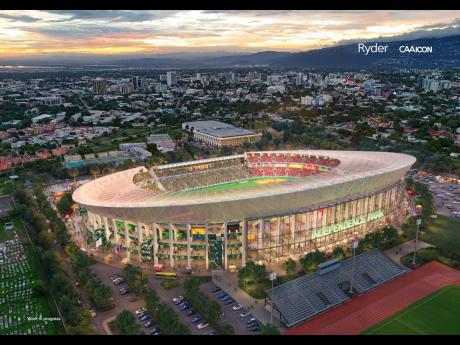
Construction of a redesigned National Stadium in Kingston is slated to get under way next year for completion in 2029.
The redeveloped stadium, which will include seating for 37,500 patrons (an increase over the current 35,000), 90 per cent roof coverage, tiered parking for 4,500 vehicles, including 1,000 VIP parking spots, upgraded health and safety standards, modern anti-doping and media facilities, a sports museum, more green spaces, and enhanced amenities, conference and meeting rooms, premium suites and lounges, 30 boxes, two VIP Zones, and two VIP lounges.
Addressing a press conference yesterday, Olivia Grange, minister of culture, gender, entertainment and sport, said the redevelopment of the stadium was not only a critical investment in the nation’s athletes but a powerful symbol of international collaboration, notably the longstanding and fruitful partnership between Jamaica and the United Kingdom.
“We must ensure that our facilities are in the best state for our athletes to train and perform. We are world leaders in track and field especially, and so must have in place the infrastructure and resources that will ensure us perpetuity.”
She noted that meeting international standards was essential if Jamaica is to continue hosting regional and global events sanctioned by international governing bodies.
“The renovative work we are doing to the National Stadium is designed to see us through another 30 years without the need for major upgrades. It will put us in a position to bid for international single-sport events,” she stated.
During the phased renovations, the stadium will remain operational for events.
Grange also provided an update on the final consultation closing phase one of the project, led by renowned United Kingdom-based firms Ryder Architecture and CAA ICON, with key support from the British High Commission in Kingston, which helped finance the feasibility study.
The results from the study, she noted, will inform phase two, which is the project initiation, concept design and approval. Phase three will involve the detailed design and appointment of a contractor. Phase four will involve construction and phase five is the operational readiness and handover.
“I am pleased with the work of the Ryder Architecture and CAA ICON team and express sincere thanks to the British High Commission for its partnership and support,” Grange said.
For his part, Jonathan Cook, deputy British high commissioner to Jamaica, hailed the project as “a milestone for both countries”.
“It marks a really exciting milestone, not just for Jamaica but the UK-Jamaica partnership. We’re proud to stand alongside the Ministry of Culture, Gender, Entertainment and Sport as this bold vision for the redevelopment of the National Stadium takes shape. It’s truly wonderful to see two leading UK firms- Ryder Architecture and CAA ICON, at the heart of this project. I’m thrilled that their expertise and the best in British design and innovation are contributing to such a high-priority national initiative.”
The project is primarily funded by the Government of Jamaica and forms part of a framework for cooperation with the UK. It includes a thorough economic and feasibility study to identify both local and international market demand, ensuring that stadium usage and design align with long-term economic viability.
Jonathan Seebacher, principal and project director at Ryder Architecture, described the effort as transformational.
“We are incredibly proud to be launching the Independence Park Stadium Project in the heart of Kingston. This project represents a transformative moment for the nation, honouring Jamaica’s rich sporting legacy while delivering a world-class, future-ready stadium and cultural offer. Together, Ryder and CAA ICON are committed to working in close partnership with the Jamaican Government to ensure this redevelopment celebrates national pride, inspires future generations, and creates lasting social and economic impact for the community. This is more than a stadium, it is a symbol of ambition, unity, and cements Jamaica’s place on the world stage.”