ORA to hit the road within 24 months
Loading article...
-
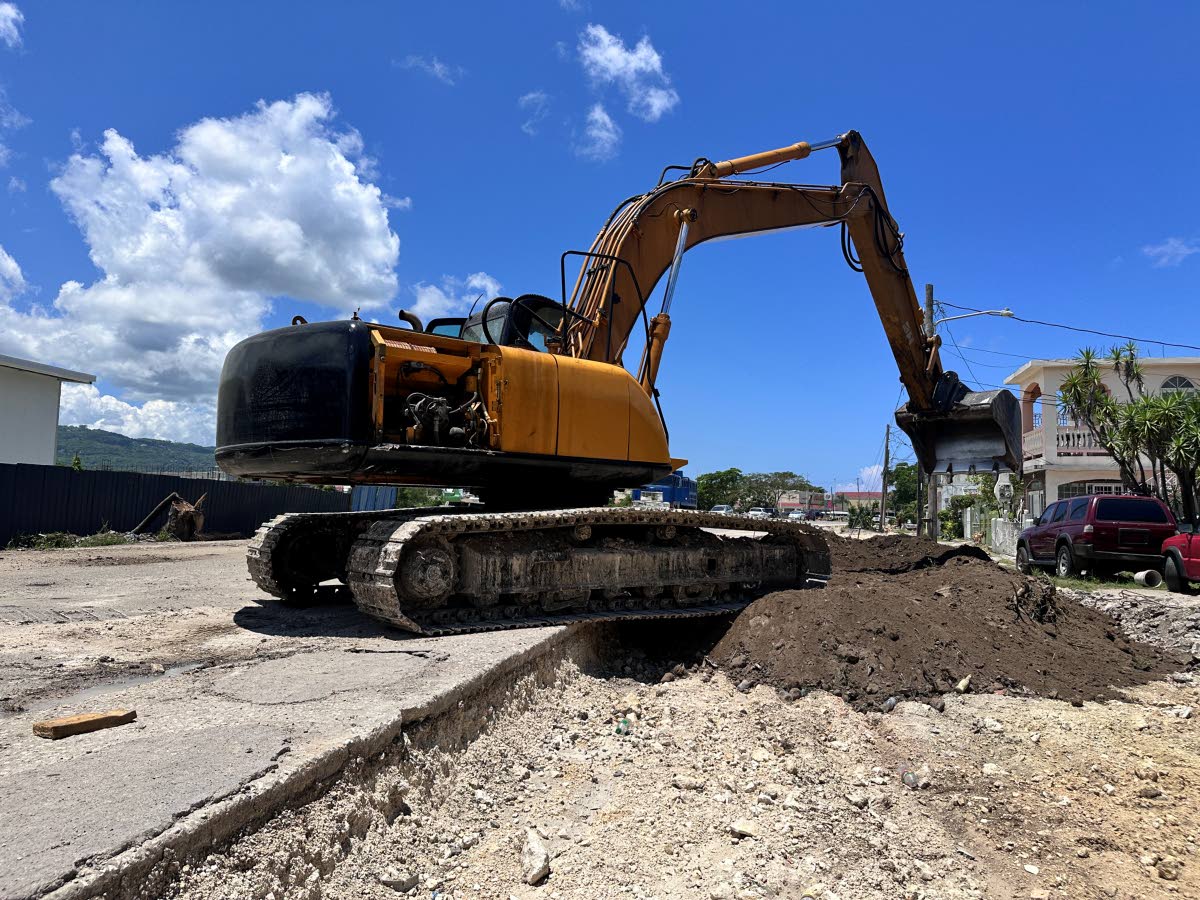 Roadworks being done in a section of Catherine Hall, Montego Bay, in St James in April 2025.
-
 Minister in charge of works, Robert Morgan.
-
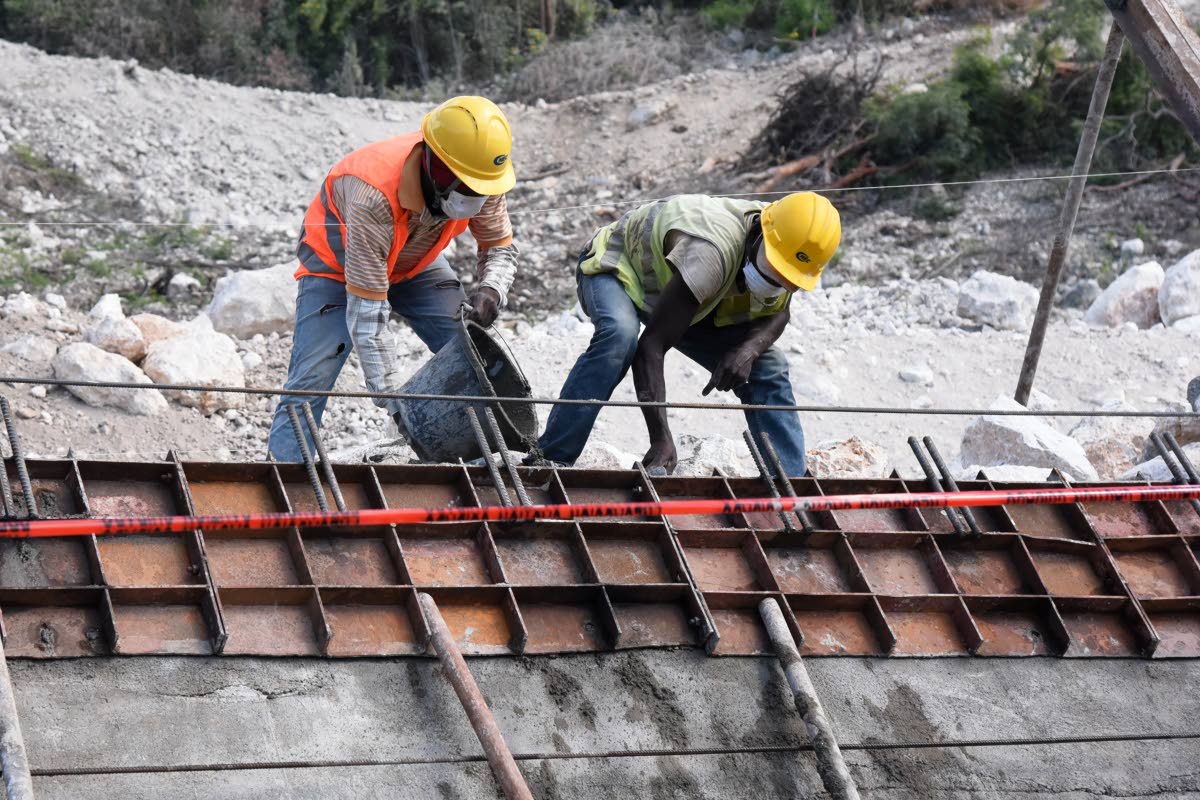 An employee of China Harbour Engineering Company Ltd (CHEC) constructs a retaining wall along the St Thomas main road in the vicinity of the Grants Pen community in 2020.
-
 File photo
-
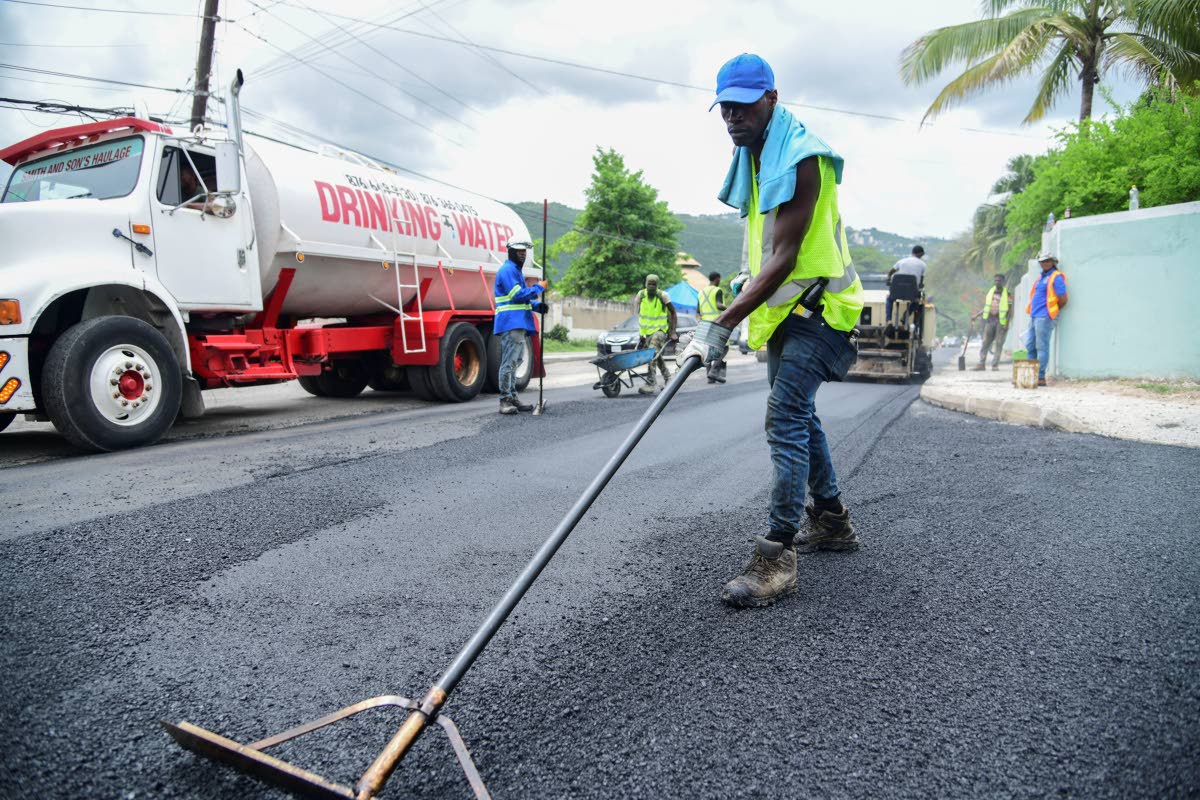 A team from the National Works Agency paves the intersection of Patrick Drive and Auburn Terrace in St Andrew in 2024.
The Government is aiming, within the next 24 months, to establish the single entity it has been touting to take charge of national roads in the country and which has been named the One Road Authority (ORA).
According to Robert Morgan, minister with responsibility for works, the entity, which has already been signed off on by Cabinet, will be an executive agency that folds the National Works Agency and the Toll Authority into a single body and aims to modernise road-sector governance. He said it would do so by creating “a single national framework for standards, quality assurance, compliance monitoring, and performance reporting across all road classes, while bringing disciplined implementation to the national network”.
Morgan, addressing a ministerial roundtable on transport in developing countries and held at World Bank Headquarters in Washington DC last Wednesday, highlighted the ORA as one element of a medium-term vision for Jamaica to rebuild from the catastrophic destruction caused by Hurricane Melissa last year that left the island suffering combined damage, losses and additional costs estimated by the Planning Institute of Jamaica at J$1.95 trillion.
“That is a staggering figure. But we have chosen not to treat it only as a crisis. We are treating it as a mandate to build differently, finance differently, and grow faster than we have ever grown before,” the minister said at the roundtable.
However, the ORA, announced by Morgan last November and approved by Cabinet in January, is already facing pushback, most notably from local government representatives who have expressed concern over how it was being conceptualised and ultimately who would responsible for municipal roads.
Just last week, Mayor of Kingston Andrew Swaby said during the monthly meeting of the Kingston and St Andrew Municipal Corporation that he had yet to hear from the minister who had indicated an intention to consult with municipal corporations and other stakeholders about the framework for the ORA.
Morgan told The Sunday Gleaner that the ORA would not be taking charge of all muncipal roads and that a designation criterion was being worked on to determine which of those roads would be identified as ‘national’.
Earlier, in January, Kijana Johnson, People’s National Party councillor for the Race Course division in Clarendon, in a column published in The Gleaner, called for a rejection of the proposed agency after Morgan indicated it had received Cabinet approval.
Johnson said at the time that the proposed agency would not solve the real problems behind Jamaica’s failing road network but in fact threatened to make them worse.
Funding problem, not a structure problem
“Jamaica’s road crisis has never been about confusion over who owns which road. The issue is far more straightforward and far more serious. Jamaica has a funding problem, not a structure problem. The agencies responsible for maintaining our roads simply do not have enough resources. Creating a new authority does not add a single dollar to the system. All it does is shift the same limited resources into a bigger bureaucracy, giving the appearance of reform without delivering the tools needed to actually fix the roads,” Johnson wrote.
He said that if the Government were proposing to properly fund road maintenance, or reimplement the protected Road Maintenance Fund, the conversation would be different.
Johnson argued that what was being offered was an organisational reshuffle dressed up as transformation.
“You cannot fix a funding problem by rearranging the chairs in the room, You cannot undo decades of neglect by renaming departments and you certainly cannot solve Jamaica’s road crisis by centralising it under one authority which will be overstretched.”
However, a document crafted by Morgan’s ministry and examining the framework for the ORA notes that there is no intention to strip municipal corporations of their authority.
“It is important to state plainly what ORA is not. ORA is not a move to disempower parish councils (municipal corporations) or weaken local government. Parish councils are closest to communities and will remain essential to identifying needs, responding to concerns and supporting delivery on local priorities. The reform is about strengthening the entire system so that when a road is selected for attention, whether at the local or national level, it is done to a consistent standard backed by clear planning and verified through proper quality assurance,” the document stated.
“The ORA is a practical reform aimed at ending fragmentation and creating one coherent national framework for how roads are regulated, maintained and delivered in Jamaica so that we get better results from every dollar spent and safer, more reliable roads for every citizen.”
According to the document, for too long the management of the country’s roads has been fragmented across multiple entities, each operating with different standards, different priorities, and different levels of technical capacity.
“The result is predictable: inconsistent quality, uncertainty about responsibilities, uneven maintenance and a cycle of deterioration that repeatedly costs taxpayers and motorists more than it should,” it stated.
According to the document, at its core, the ORA is built on the principle that Jamaica cannot continue to operate with multiple “mini-systems” for roads.
“We need one system, one set of standards, one set of performance expectations and one clear line of accountability,” it stated.
The ORA, the document further reads, will be established as an executive agency under the portfolio ministry with a board and a CEO.
“It will bring modern governance and operational discipline to the sector, while ensuring that responsibilities are clear and enforceable.
“In simple terms, every public road should be built and maintained to a consistent national standard regardless of which entity executes the work.”
Morgan, in his presentation at the World Bank roundtable, explaining why the ORA was being established, said it was being created as part of the Jamaican Government’s reform agenda.
Modernise road-sector governance
“ORA will modernise road-sector governance by creating a single national framework for standards, quality assurance, compliance monitoring, and performance reporting across all road classes, while bringing disciplined implementation to the national network. Put simply, NaRRA (the National Reconstruction and Resilience Authority) will help Jamaica rebuild at speed after [Hurricane] Melissa, and ORA will ensure Jamaica maintains and upgrades the road network to consistent standards so the gains are protected over time,” he said.
Morgan added that, in transport, the pipeline will focus on investments that directly drive competitiveness: logistics corridors linked to ports and industrial zones, airport connectivity, major tourism routes, and the urban bottlenecks that impose daily productivity losses, pointing out that the priority will be risk-informed and criticality-informed, so that capital flows to corridors that reduce user costs, improve reliability, and withstand hazard exposure.
“ORA will strengthen this pipeline because investors finance predictability; consistent standards, stronger quality assurance, clearer accountability, and transparent performance reporting reduce execution risk and improve lifecycle value. That governance discipline is what turns infrastructure investment into long-term competitiveness.
“We also intend to build to stronger resilience standards so we are not rebuilding the same assets repeatedly. The early rapid estimate of physical damage [after Melissa] was around US$8.8 billion and, as comprehensive assessments matured, the total impact expanded materially. That reinforces the point: resilience and lifecycle performance are not optional. They are the economics of survival,” he said.
The minister said while the Government would use the NaRRA to build back resilience at emergency speed, the ORA would be used to lock in consistent standards and accountability so the road network performs and lasts.
“We will use a programmatic pipeline and structured PPP frameworks to crowd in private capital. And we will use this reconstruction moment to expand the economic base of communities that were previously not connected to opportunity at scale.”
He said that, for investors, the message is that Jamaica will combine credibility with a prepared pipeline and stronger institutions.
“Melissa was a national shock. But it is also a national inflection point. We will rebuild stronger, we will finance smarter, and we will use infrastructure to drive a higher growth path,” said Morgan.
editorial@gleanerjm.com