Farmers back in the field at Parnassus Agro Park
Loading article...
-
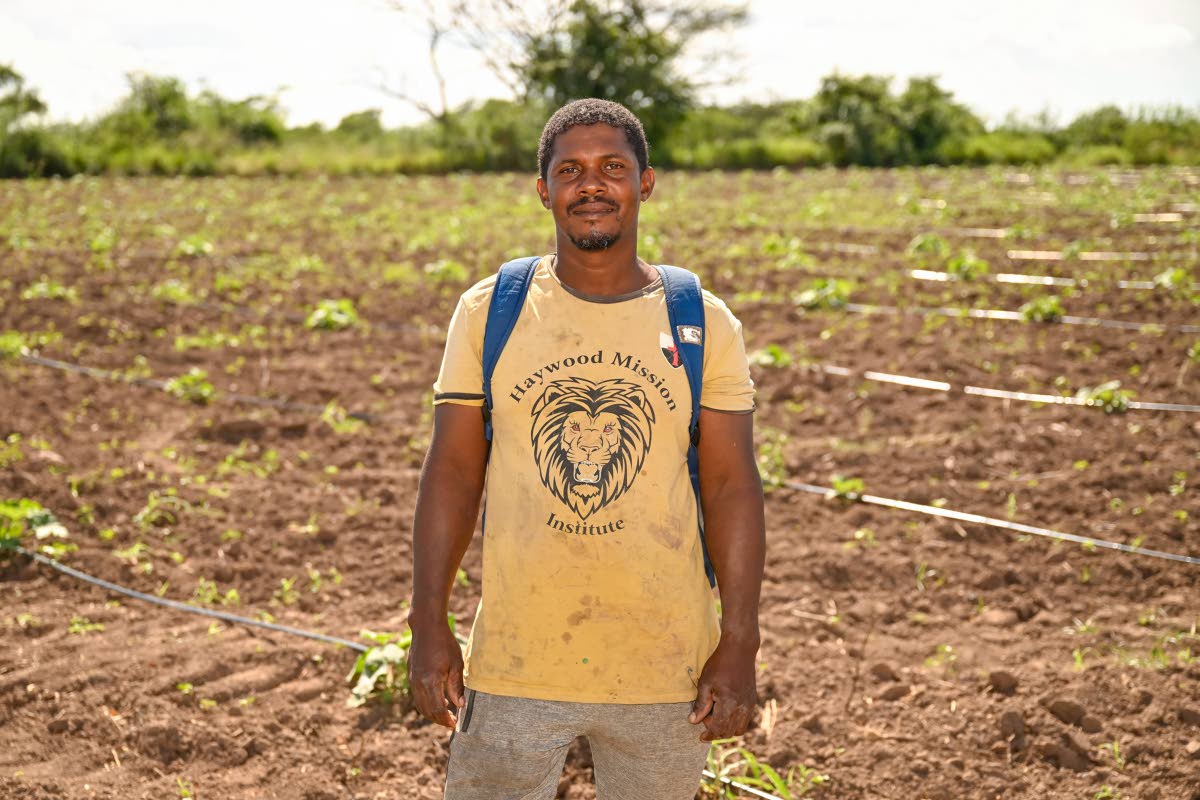
 Farmer Noel Reid smiles for the camera despite reflecting on the over $4-million damage to his crops and farming equipment caused by Hurricane Melissa. Photo - Contributed
-
Farmer Noel Reid smiles for the camera despite reflecting on the over $4-million damage to his crops and farming equipment caused by Hurricane Melissa. Photo - Contributed
-
 Kenneth Robinson takes a moment from working on his farm. Photo - Contributed
The love for farming and irrigation access have been cited by farmers on the Parnassus Agro Park in Clarendon as reasons they returned to their fields after the devastation caused by Hurricane Melissa on October 28.
The Parnassus Agro Park falls under the Southern Plains Agricultural Development (SPAD) Project, which utilises former sugar lands for agricultural production in Clarendon and St Catherine.
Kenneth Robinson, who has been a farmer for 25 years, three of which have been spent on a 4.7-acre lot on the agro park, said his loss was significant, as he had crops almost ready to reap when his farm was flooded.
“Where my farm is located there’s a bend [in the river], so that the water could go around, but because of the amount of water that came in the river from the flood, it cuts straight across and all those farmers in that area, with about 20 to 30 acres of land, their fields, including my own, were covered up for about two days underneath water,” Robinson recalled.
He had an acre of pumpkin that was close to maturing, melons that were blossoming, half an acre of callaloo, some pok choi and okras that were destroyed.
Additionally, the farmer had land prepared with drip hoses for irrigation that were damaged or washed away.
“Of course, those had been washed away and torn up and all of that. So, it was devastating. [I] couldn’t do anything for weeks after the storm. Mi traumatised because all of those implements, it takes years to buy and put them together. It is not one week or two weeks, because it costs thousands, probably millions of dollars,” Robinson said.
He explained that he only returned to his farm after the catastrophic Category 5 storm passed, because farming is all he knows. His parents farmed, which funded his schooling and other achievements the family gained. Farming is also what Robinson loves to do.
“And I have the love for farming. So, no matter how much time we get damaged, lose crops in terms of no market sometimes, in terms of disaster, in terms of larceny, drought, whatever circumstances, we always go and start over again,” he said.
The farmer disclosed that since the hurricane he has reinvested more than $300,000 in labour and material to restart planting.
Robinson emphasised that insurance is critical in instances such as these, as he believes he would be in a better position to get back to doing what he loves, adding that he will seek more information about the insurance.
Another farmer, 42-year-old Noel Reid, shares that he lost more than $4.6 million in crops and farming equipment when his farm was also flooded by the river during the passage of Hurricane Melissa.
“Before the hurricane, me did have 30,000 callaloo; 14,000 sweet corn, 20,000 sweet peppers, 3,000 cabbages, 3,000 tomatoes, three acres of melon and four acres of pumpkin, but everything gone,” Reid said, adding that he also lost drip hoses and pipes used to irrigate his farm.
He has since returned to his lot at the agro park, clearing land and replanting crops that typically take a short time to mature, such as callaloo, with others, including pumpkin, melon, cabbage and sweet peppers, set to be reaped in early 2026.
Reid disclosed that he has reinvested more than $800,000 to get his farm up and running since the major storm.
He attributed his willingness to return to his farm to the access provided by the Parnassus Agro Park.
Prior to the establishment of the agro park, he could have potentially lost 50 per cent of his profits, due to a lack of water access. Now, he can almost guarantee a 100 per cent return on his investment, as water is easily accessible on his farm.
He is encouraging other farmers to try and get back to farming on their own and not rely on help before replanting, especially those who may have some surplus that can be invested.
“You can’t give up; and a lot of times they say help is going to come, but you can’t wait on help. You can’t have a million dollars and just sit on it, you have to invest the money because if you sit on it, it is going to finish. You just have to dust off and try again,” he urged.
Not everyone in the agro park was brought to their knees by Hurricane Melissa. George Black, who manages a 70-acre operation, counts himself lucky as only his water storage tank was removed from its stand and thrown a mile away during the storm.
He said that he had planted a plot of scallion seedlings a week before the hurricane made landfall in Jamaica and the crops suffered no damage.
His only issue was access to water, as the agro park lost power for two days and water could not be pumped to the farms.
“I just came in the week after the rain and with my staff, we used backpack spray because there was no electricity, so there was no water. And me take that van, load it up with four drums go to York Town, make [up to] eight trips a day, put the backpack on our backs and watered [the scallion],” Black explained, giving thanks to God.