Earth Today | Environmental Solutions Limited offers waste reduction model
Loading article...
-
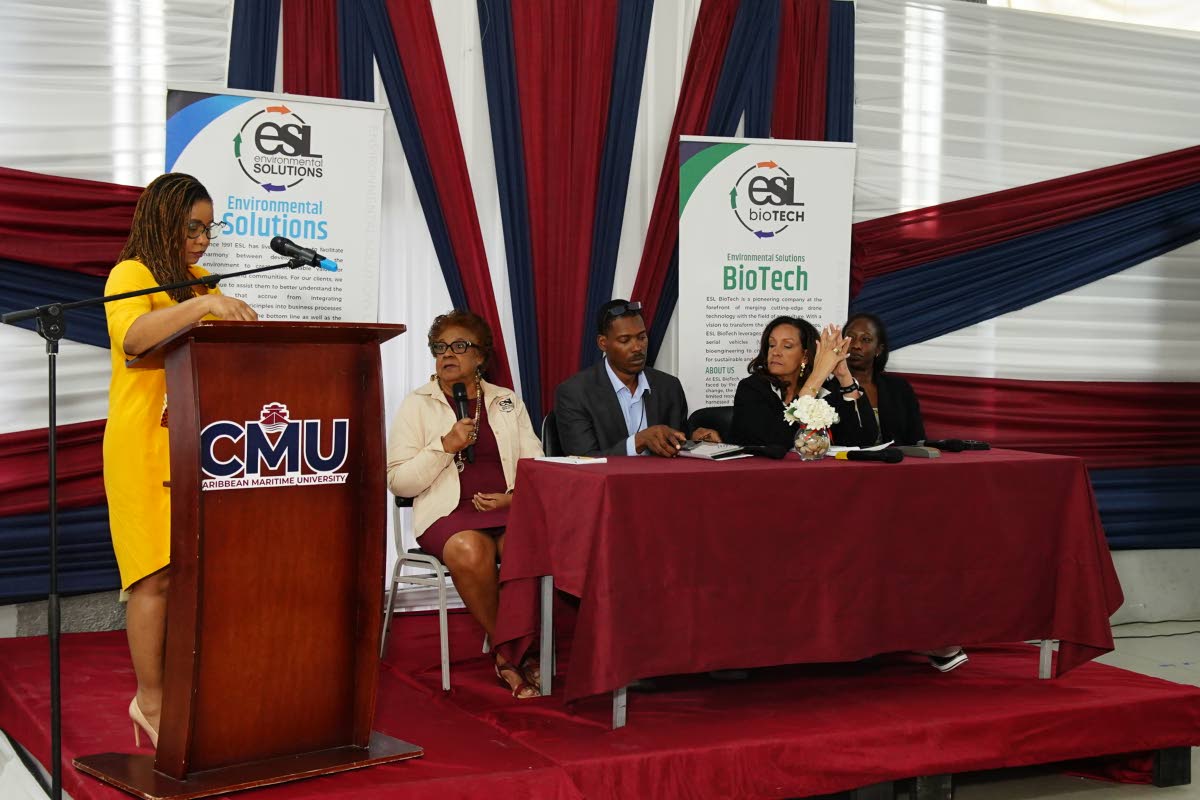 Presenters at the ‘Advancing the Circular Economy’ Workshop, staged at the Caribbean Maritime University on Tuesday. Among them is Eleanor Jones (seated, first from left), head of Environmental Solutions Limited, which organised the event. Photo - Contributed
-
Presenters at the ‘Advancing the Circular Economy’ Workshop, staged at the Caribbean Maritime University on Tuesday. Among them is Eleanor Jones (seated, first from left), head of Environmental Solutions Limited, which organised the event. Photo - Contributed
-
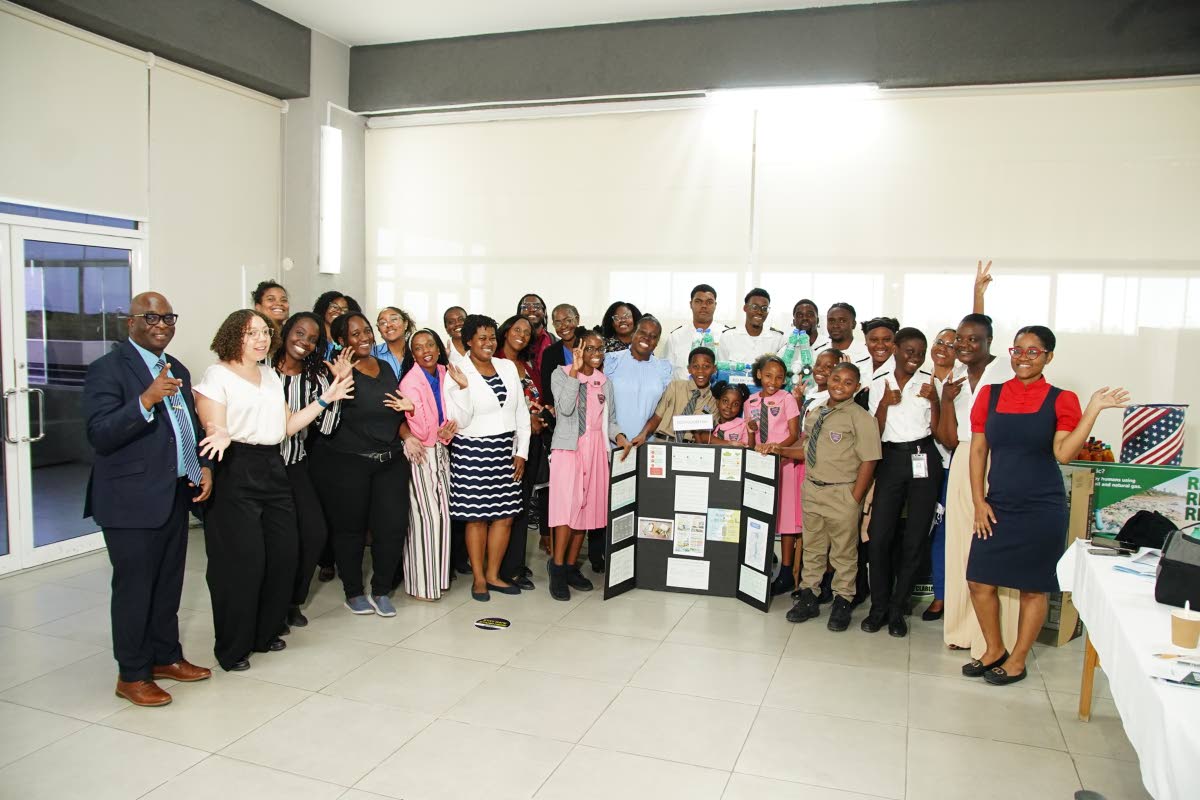 Participants at Tuesday’s ‘Advancing the Circular Economy’ workshop share lens time. Photo - Contributed
-
 Circular economy snap. Photo - Contributed
JAMAICA IS being encouraged to accelerate its transition away from the ‘take-make-dispose’ model of a linear economy that sees products flooding the island’s waste disposal sites long before the end of their useful life.
The case for the transition has been made in a recently released paper, titled Advancing the Circular Economy: A Pathway to Marine Protection and Sustainable Development.
Published by the consultancy firm, Environmental Solutions Limited (ESL), the paper was made public on Tuesday, (February 17 during a workshop with the same focus, hosted at the Caribbean Maritime University.
According to the paper, it is time to fully embrace a circular economy, one that runs on a Circular Systems Transformation Framework that champions material inputs, enabling systems, circular pathways and system outcomes as part of the solution. The framework was developed by the ESL with funding support from the Caribbean Biodiversity Fund.
When it comes to ‘material inputs’, the paper explained, the island has made good progress on plastic waste regulation but plastics are only one part of the problem.
“Scrap metals hold higher economic value per ton but are often exported with minimal local processing. Organic waste dominates landfill volume and generates potent methane emissions. Disaster debris, as demonstrated by Hurricane Melissa and other recent storms, can overwhelm disposal capacity and contaminate coastal environments if not managed systematically,” the paper explained.
Jamaica generates a reported 1.45 million tonnes of municipal solid waste annually, with more than 60 per cent disposed at facilities operating below sanitary landfill standards, the paper revealed.
INTERVENTIONS
Meanwhile, regarding ‘enabling systems’, the recommendation is that circularity be operationalised through attention to shared infrastructure, including energy systems and water treatment; as well as through attention to the policy and legislative environment, and cross-sectoral coordination which are conducive to greater efficiency and effectiveness.
Circular pathways, it noted, must also be created through the adoption of the principles of reuse and repair, refurbishment and re-manufacturing and value-added material processing – in order to squeeze the maximum value from each product that is made.
As for ‘systems outcomes’, it is important to be aware of the benefits, including greater resource productivity and green job creation that “occur throughout circular economy value chains”.
Jamaica, the paper said, is in a good position to accelerate its efforts, with existing “informal and embryonic circular practices that illustrate both existing potential and structural constraints requiring policy intervention”.
ESL has itself been involved in landfill rehabilitation and engineered waste management projects at disposal sites such as Riverton.
“These interventions, while primarily framed as environmental remediation and public health measures, also create the foundational conditions necessary for circular practices, which include waste segregation, recovery of recyclables, and the potential for waste-to-energy applications,” the paper noted.
“Application of the framework indicates that 50 to 65 of Jamaica’s current landfill inputs could be diverted through a combination of material recovery, organic waste processing, and extended producer responsibility schemes. Such diversion would simultaneously reduce environmental harm, lower greenhouse gas emissions, create employment, and strengthen climate resilience,” it added.
pwr.gleaner@gmail.com