Earth Today | ‘Global environmental cooperation alive’
Loading article...
-

Inger Andersen
-
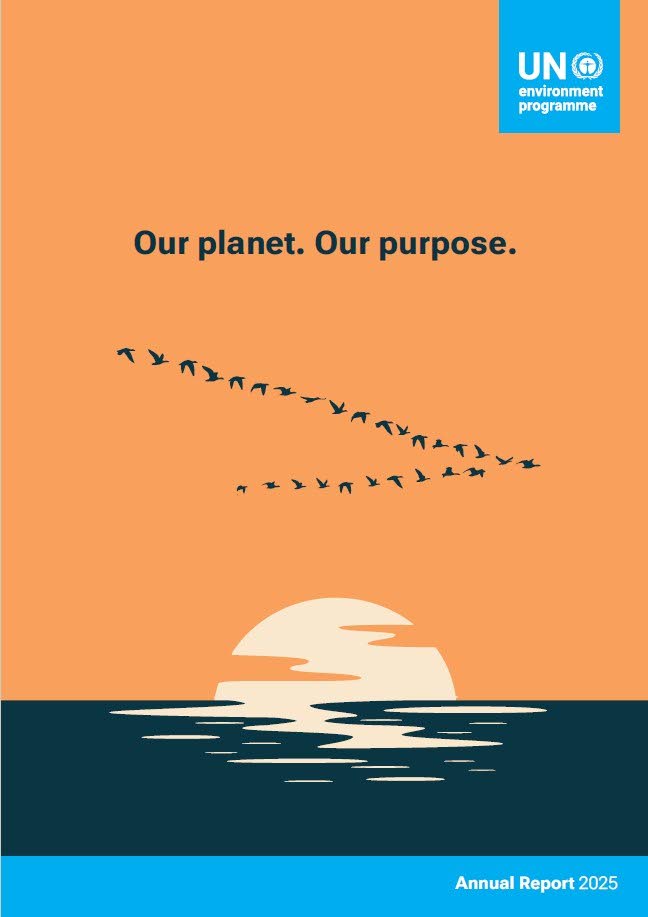 UNEP annual report
THE UNITED Nations Environment Programme (UNEP) has insisted that international environmental cooperation is alive and kicking – deserving of financial support and continued political will, in the interest of both human and planetary health.
“Amid global tensions and shifting national priorities, multilateralism is undoubtedly facing challenges. Even so, 2025 was a year in which nations showed that environmental multilateralism is the beacon that rises high above the fog of geopolitical differences to rally the world in united action,” said UNEP boss Inger Andersen, in its 2025 annual report, titled Our Planet, Our Purpose.
“UNEP remains at the centre of this environmental multilateralism, backing global efforts to tackle climate change, nature and biodiversity loss, land degradation and desertification, and pollution and waste – and so creating a better and more resilient future for people and planet,” the executive director added.
However, to do its work effectively requires money.
“UNEP needs a steady source of predictable, flexible financing – particularly to the Environment Fund, which is UNEP’s backbone. It funds our science, helps us respond to emerging environmental issues, allows us to bring nations together and enables us to take a long-term approach. Additionally, it leverages and supports the capacity for nearly US$3.3 billion of policies and programmes globally,” Andersen explained.
A reported 106 member states contributed to UNEP in 2025, “with a record number of them doing so at their full-share level”.
“UNEP is tremendously grateful to all our funding partners. Last year, more than 100 Member States contributed to the Environment Fund, with a record number at their full-share level — and UNEP expresses deep gratitude to those Member States that are in a position to contribute above their full share and have chosen to do so. This strong performance underscores the increasing confidence of Member States in UNEP and widening commitment to its work,” Andersen noted in the report.
“I call on all Member States to make their full contributions so that we at UNEP can deliver what you have asked us to deliver, with results and impact … Every single Member State, every single city, every single business and every single individual will benefit from a stable climate, thriving biodiversity, healthy and thriving lands, and a pollution-free planet. To achieve these goals, the world needs environmental multilateralism more than ever. And Member States need a strong UNEP to realise this ambition,” she added.
The annual report, meanwhile, highlights notable achievements of the last year, echoing a clarion call to country partners to step up their ‘green’ game. Among the achievements is the establishment of the Intergovernmental Science Policy Panel on Chemicals, Waste and Pollution, established after three years of negotiations under UNEP’s leadership.
“The panel will provide policymakers with the science they need to take on the mounting tide of pollution and waste,” the report noted.
Also, more than 170,000 square kilometres of natural spaces were either made protected or are being sustainably managed to the benefit of some 2.3 million people; while 54 countries were supported in climate change resilience building and “life-saving early warning systems” extended to “storm-prone Pacific states”.
Communities were supported, too, to deal with the aftermath of conflict and in efforts to ratify a landmark agreement to protect biodiversity in the high seas, which is facing climate change, over-fishing and pollution threats.
In addition, UNEP published its Emissions Gap Report 2025 and the seventh edition of the Global Environmental Outlook that, respectively, provide key insights into the world’s alarming lack of progress in living up to climate pledges and demonstrate how environmental action can deliver trillions in additional gross domestic product. They were developed and published in line with its mandate “to produce science that policymakers can use to address some of the world’s most pressing environmental challenges”.
pwr.gleaner@gmail.com