Jamaica secures US$50m Green Climate Fund boost for major agriculture resilience project
Loading article...
-
 Minister of Agriculture, Fisheries and Mining Floyd Green (left) and Minister of Water, Environment and Climate Change Matthew Samuda.
-
Minister of Agriculture, Fisheries and Mining Floyd Green (left) and Minister of Water, Environment and Climate Change Matthew Samuda.
-
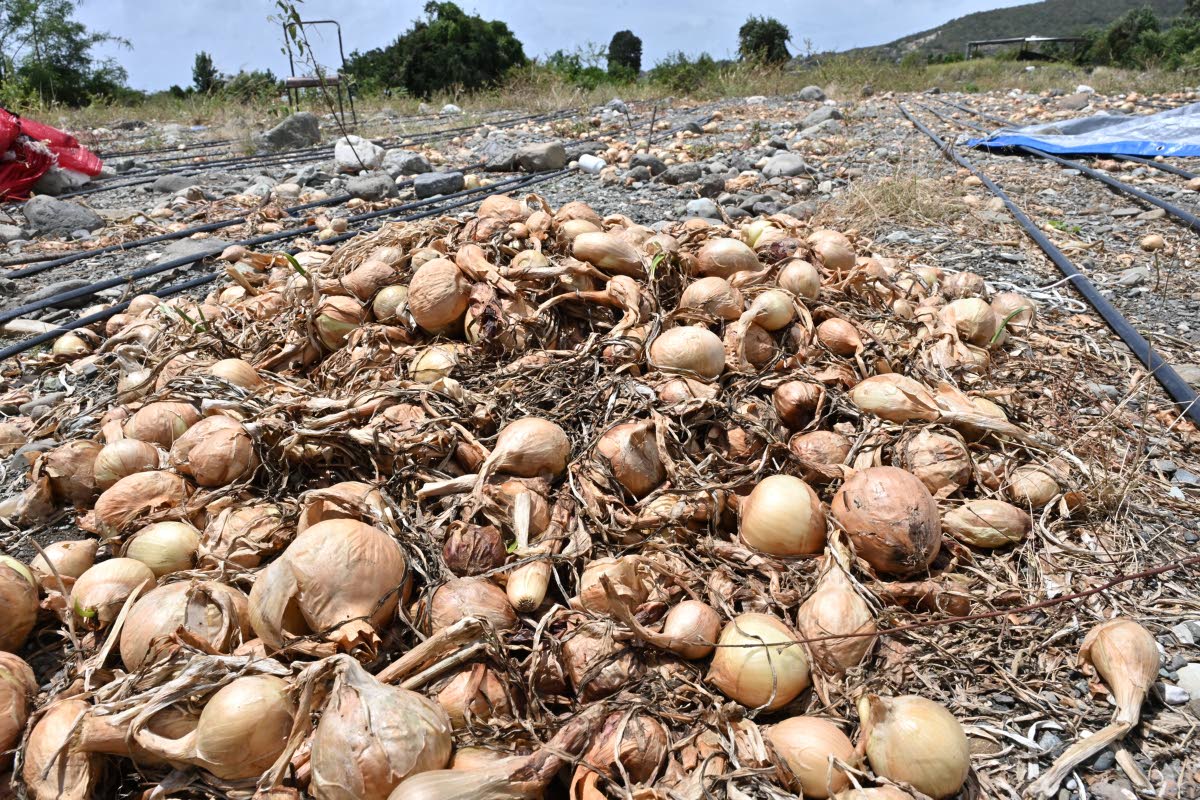 A farm in Jamaica grappling with with spoilage. -File photo. Photo - Rudolph Brown
The Green Climate Fund has approved a US$50 million climate adaptation project for Jamaica to strengthen resilience in the country’s agriculture sector through support for vulnerable small farmers, the Government announced on Monday.
The initiative is expected to benefit more than 736,000 people, including over 334,000 women, in communities exposed to worsening climate impacts such as drought, stronger hurricanes and erratic rainfall, said a statement from the Ministry of Water, Environment and Climate Change.
It marks Jamaica’s first single-country project approved by the Green Climate Fund and was endorsed during the 44th GCF Board Meeting in Songdo, South Korea. The GCF, considered the world's largest fund of its kind, was created by the United Nations to support the efforts of developing countries reduce greenhouse gas emissions and adapt to climate change.
The initiative, titled ADAPT Jamaica: Enhancing Climate Change Resilience of Vulnerable Smallholders in Central Jamaica, will be implemented with support from the Food and Agriculture Organization (FAO).
Co-financing for the project will come from the Jamaica Social Investment Fund (JSIF), the Ministry of Agriculture, Fisheries and Mining, the Development Bank of Jamaica (DBJ), and the FAO. JSIF and DBJ will also serve as co-executing partners, alongside FAO, ensuring national ownership and long-term sustainability of the project.
Speaking at a news conference, Agriculture Minister, Floyd Green noted that farmers in Clarendon, Trelawny, Manchester, St Ann, St Catherine, and St Elizabeth, responsible for approximately 70 per cent of the island’s domestic production, will benefit.
These areas, he said, have a combination of high climate exposure, rural poverty, food insecurity, land degradation, and limited access to irrigation and financing.
“We will look to develop model farms and farm clusters where we will deploy climate-resilient solutions to show them work in real time, including things like solar-powered irrigation, reinforced greenhouses that are designed to withstand stronger storms, efficient water management systems, such as drip irrigation, especially for our vulnerable farmers,” he said.
“We will have a strong training component and provide access to simple, affordable tools that are focused on rainwater harvesting and water-efficient technology. Importantly, we will design a climate information system that will tie directly into our farmers. So, our farmers are better equipped to know when we are having these weather changes,” he added.
Additionally, Green said focus will also be placed on crop zoning, with a special target on women and youth.
Stressing that the comprehensive project will build sustainability in Jamaica’s agriculture sector, the Minister stated that it will also bring forward at least nine automatic weather stations, 35 rainfall loggers, and a national climate information system tailored to agriculture.
He said implementation will be done over the next five to six years.
Meanwhile, Minister of the Environment and Climate Change, Matthew Samuda, said that as the effects of climate change become more severe, it is more important than ever for Jamaica build climate resilient agriculture, and strengthen partnerships to achieve this goal.
“We know the damage that would have been done in every sector of the economy, but we know when the damage is done in the agricultural sector of the economy, it hurts a little more because it is one of the most inclusive parts of our economy,” he said.
The Government noted that recent extreme weather events have caused significant damage to the sector, including losses of more than $7 billion from Hurricane Beryl in 2024 and over $32 billion from Hurricane Melissa in 2025, underscoring the urgency of climate adaptation measures.
The project is expected to promote climate-smart agriculture practices such as agroforestry, soil conservation, mulching and contour farming, while also introducing solar-powered irrigation systems, water harvesting, and cold storage facilities to reduce post-harvest losses.
It will also strengthen climate information and early warning systems, expand access to finance and markets for farmers, and introduce hurricane-resilient greenhouse technologies.
Follow The Gleaner on X, formerly Twitter, and Instagram @JamaicaGleaner and on Facebook @GleanerJamaica. Send us a message on WhatsApp at 1-876-499-0169 or email us at onlinefeedback@gleanerjm.com or editors@gleanerjm.com.