A prayer for Anna
Loading article...
-
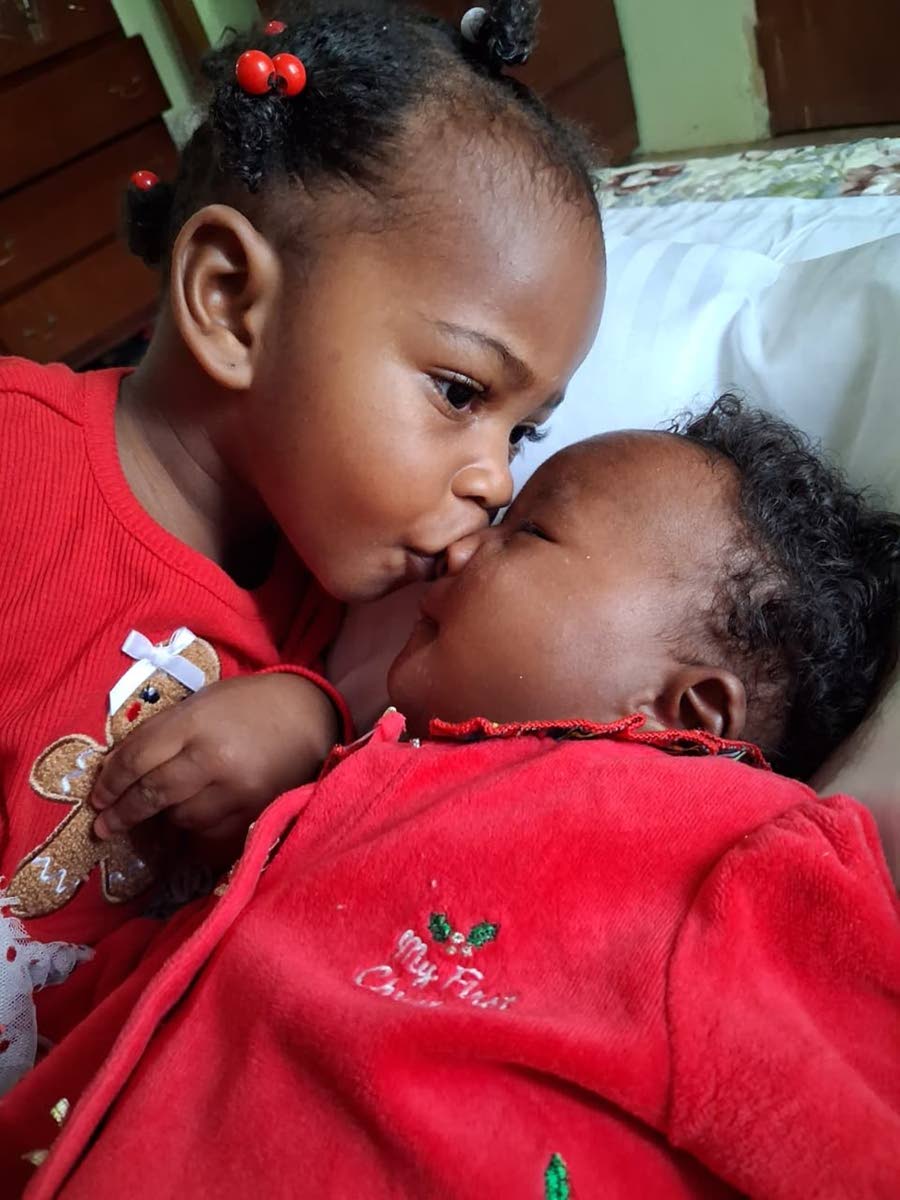
Big sister Arielle kisses ‘Boy’, her nickname for little sister Anna-Olivia.
-
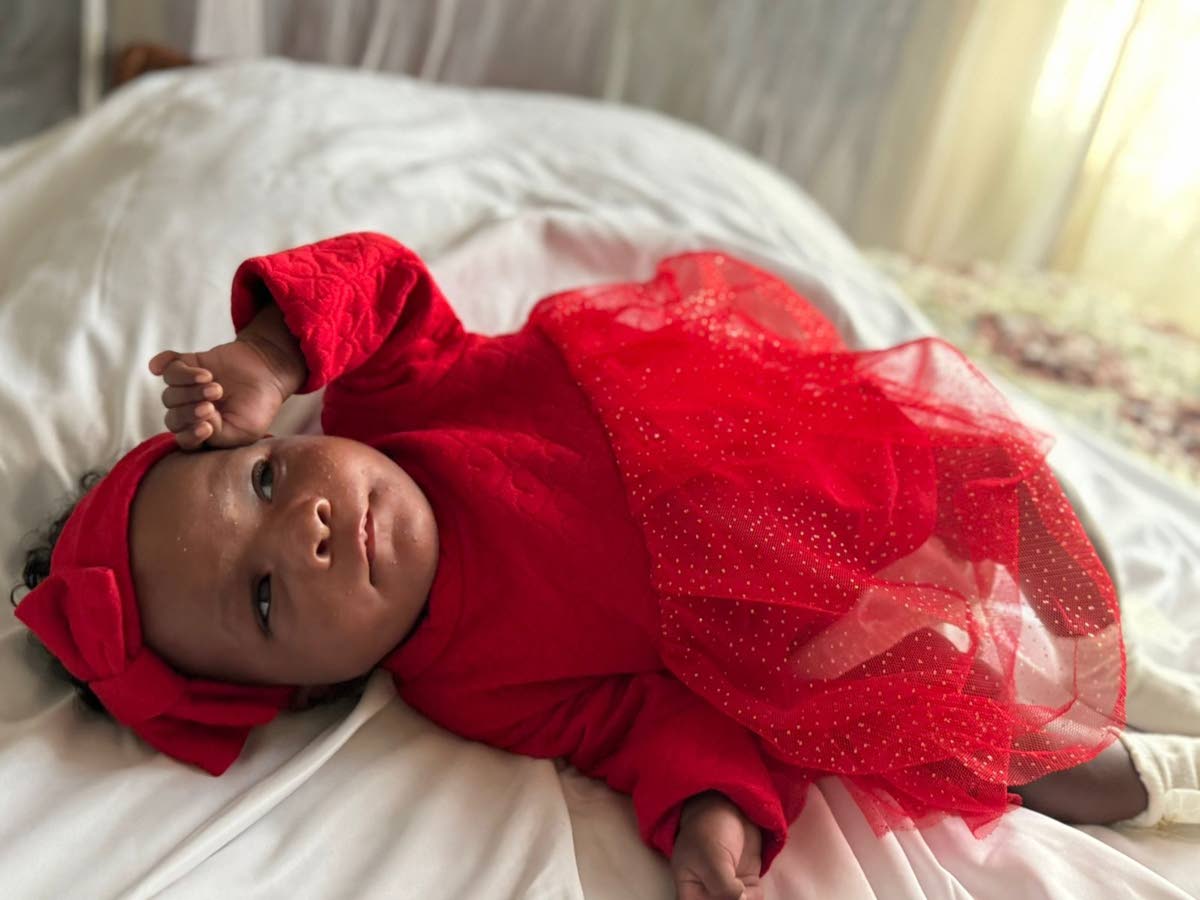 Anna-Olivia Gardener, who has been diagnosed with Patau syndrome, or Trisomy 13.
-
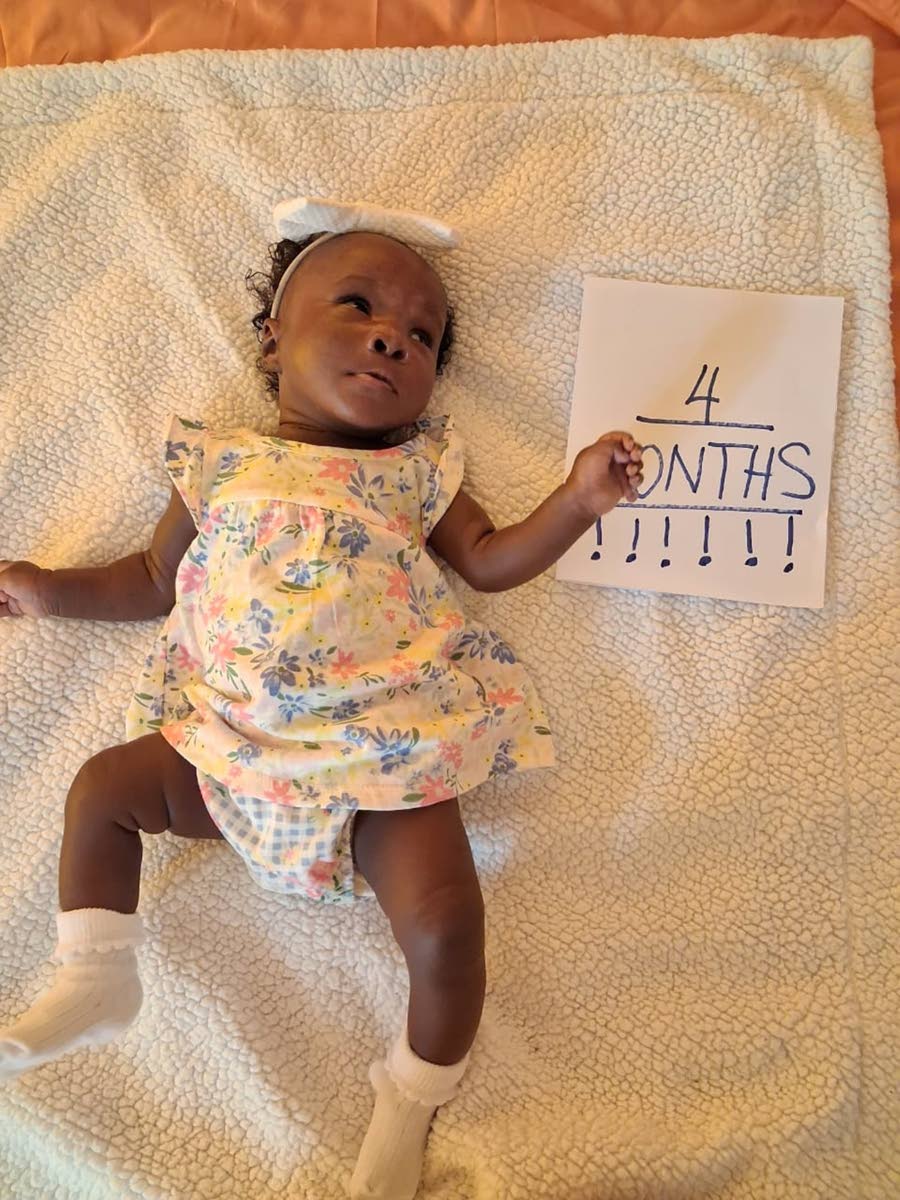 Anna-Olivia Gardener, who has been diagnosed with Patau syndrome, or Trisomy 13.
-
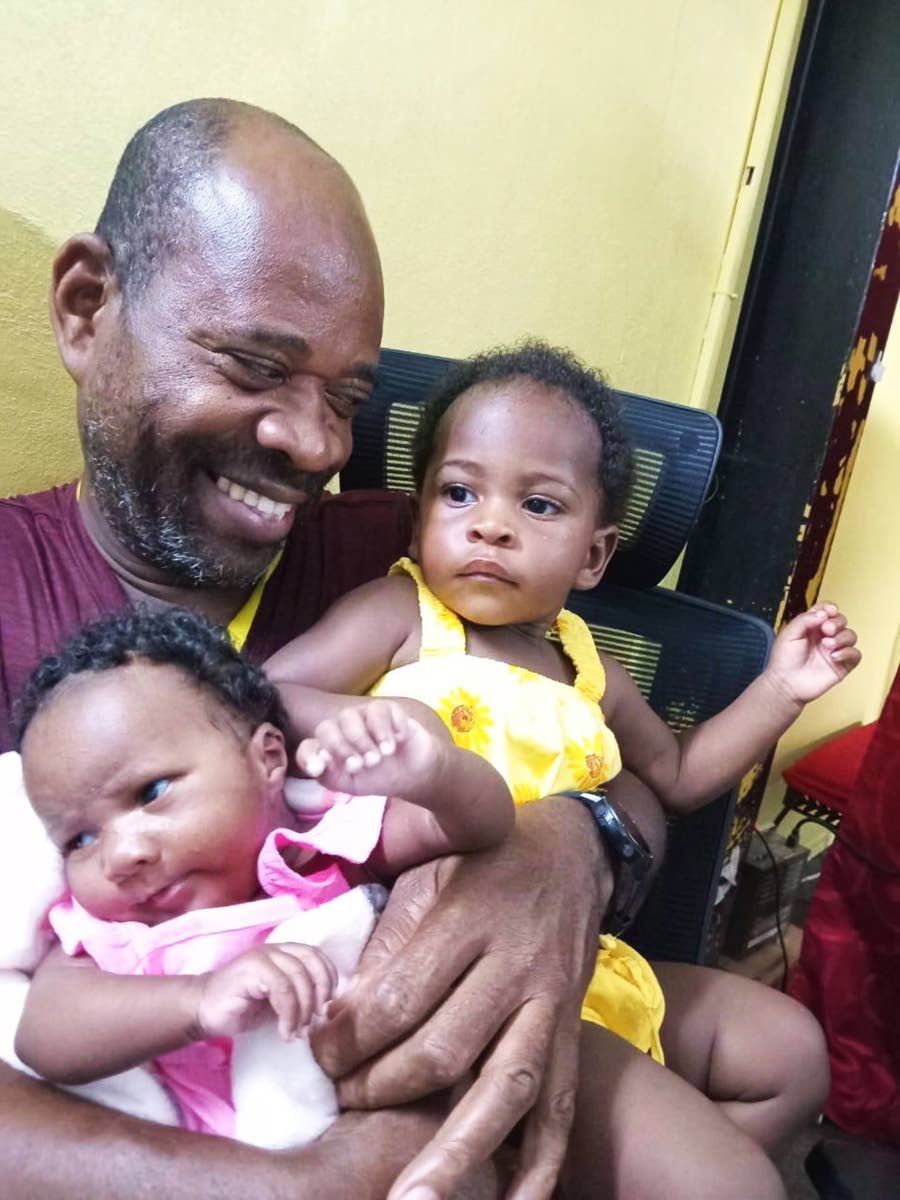 Dad Nathan Gardener, with Arielle and Anna-Olivia.
-
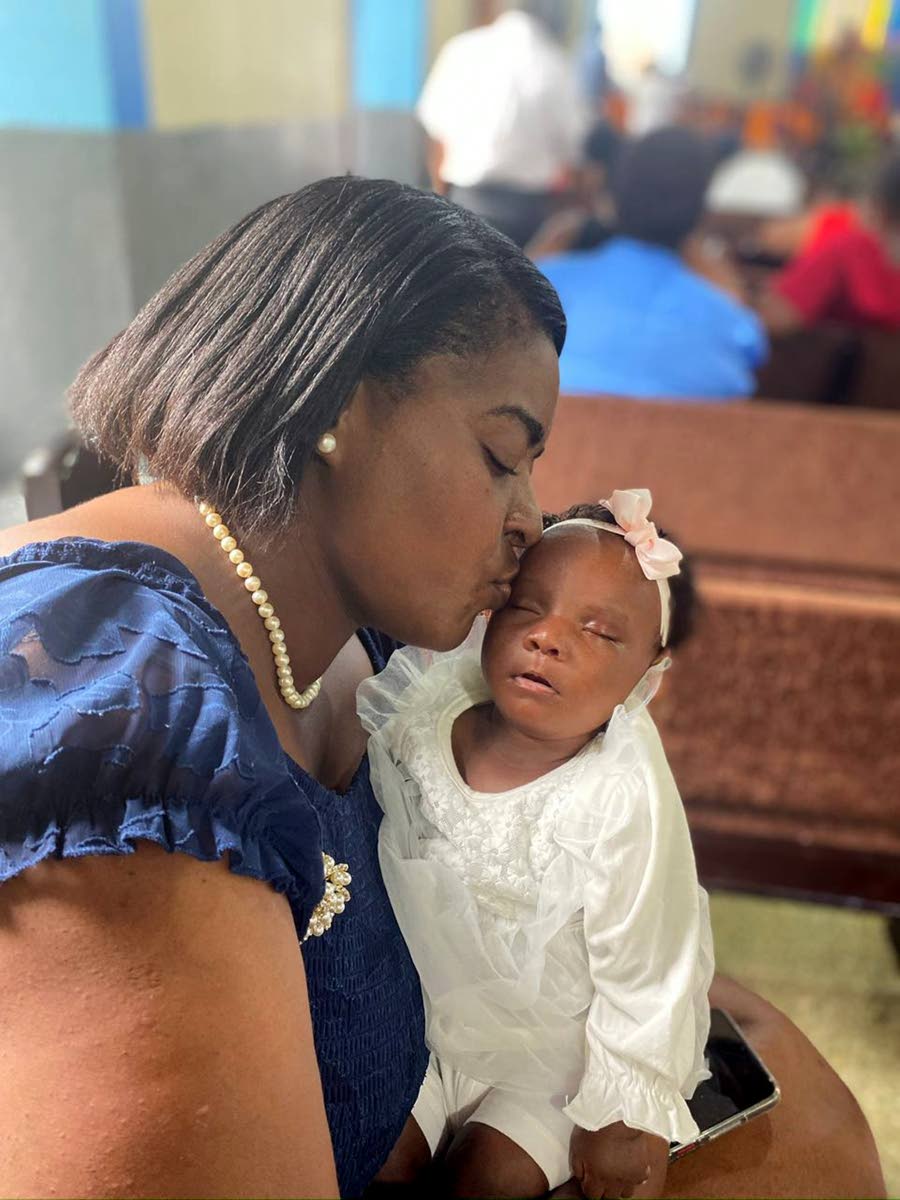 Mom Natalia Gardener with baby Anna-Olivia.
A Trelawny mother who gave birth six months ago to a baby with Trisomy 13, or Patau syndrome, has come forward to share aspects of the family’s journey with the child, who is currently hospitalised.
Babies affected by Patau syndrome have a low life expectancy, with up to 95 per cent dying within the first year. However, for six-month-old Anna-Olivia Gardener, there are high hopes that she will be a blessed exception and go on to live a life as close to normal as possible.
Her mother, Natalia Whyte-Gardener, a teacher, has expressed disappointment with the long delay in accessing much-needed stimulation services from a government facility in Kingston. Nevertheless, she hopes that by sharing her experience, she can raise awareness of the condition and benefit not only parents of children with trisomy, but the wider public.
Trisomy is not a widely recognised term in Jamaica, but mention Down syndrome (sometimes referred to as Down’s syndrome) and the condition becomes immediately familiar.
Down syndrome, or Trisomy 21, is just one of several trisomy conditions. Other more common types include Edward syndrome (Trisomy 18) as well as Patau syndrome. There are also less common forms, such as mosaic trisomy and sex chromosome trisomy.
Trisomy is an unpreventable genetic condition that results in an extra copy of a chromosome, with affected individuals having 47 chromosomes instead of the usual 46.
Patau syndrome can be identified through a range of symptoms affecting the brain and nervous system, resulting in severe developmental challenges. It is also associated with craniofacial defects such as a sloping forehead, a small head, small or missing eyes, cleft lip or palate, malformed ears, and scalp defects.
Heart defects occur in about 80 per cent of cases, including ventricular septal defects, along with other abnormalities. There may also be extremity differences, such as extra fingers or toes, and rocker-bottom feet – a deformity in which the feet are rounded, resembling the rockers of a rocking chair. Internal organ anomalies may affect the kidneys, abdominal wall, and genitals.
Pregnancies involving trisomy often end in miscarriage, though some result in live births. While more babies with trisomy are born to women under age 35, the risk increases after age 35.
A study conducted at the Bustamante Hospital for Children over a decade ago indicated that trisomy occurred in approximately one in every 800 to 900 children seen there. Trisomy 21 remains the most common type in Jamaica, with associated congenital heart conditions present in over 76 per cent of cases.
The government-run Early Stimulation Programme provides support for young children with developmental disabilities, including those with Down syndrome.
Anna-Olivia does not have a cleft lip or palate, but according to Whyte-Gardener, “She has an extra digit – an extra finger on one of her hands. She has a small, low chin, and her ears are set low, below the eyes.”
Shortly after birth, Anna-Olivia was admitted to the Neonatal Intensive Care Unit (NICU) due to an infection, where she spent nine days. It was during this period that the dysmorphic features associated with trisomy were first observed.
Whyte-Gardener said that prior to the diagnosis, although she was familiar with Down syndrome, she had never heard of Patau syndrome. She only learned about it when a doctor told her the baby exhibited dysmorphic features and appeared to have a syndrome.
“I was like, ‘What? The only syndrome I know is Down syndrome, and this is not a Down syndrome baby,’” she recalled.
Prompted by the doctor’s comment, she began asking questions and doing her own research. Eventually, a member of the medical staff explained Edward syndrome and Patau syndrome, and how to distinguish between them.
At first, she was sceptical.
“When I looked at my baby, she didn’t look like an Edward baby. And when I thought of Patau syndrome, the first image that came to mind was a baby with a cleft palate or lip. My baby didn’t have either. That led me to do more research, and when I started reading about Trisomy 13, I realised the scientific journals describe it as a fatal syndrome.”
Research shows that Trisomy 13 is a severe genetic disorder with a high mortality rate, with most babies dying within days or weeks of birth. Only between five and 10 per cent survive beyond the first year.
Struggled to accept it
Anna-Olivia was initially placed in the NICU, and based on those early observations, Whyte-Gardener was not convinced her baby had Patau syndrome. However, three days after being discharged, when she was able to observe her more closely, she became convinced – though she struggled to accept it.
“When I saw the baby at the NICU, I knew she had the syndrome. My gut was telling me. I told my friends, and they didn’t believe me. Even though I realised it, I was still in denial.”
Eventually, she came to terms with the reality that her three-day-old daughter had Patau syndrome – a moment, she, that said hit her hard.
“I went over and started crying, and then I wrote this piece. It’s a prayer for Anna-Olivia, dated September 13, 2025, three days after her birth. ‘Thank you, Lord, for Anna-Olivia Victoria Gardener. Lord, you know why you gave me a special-needs baby. You made her born before term with a good weight, no cleft mouth. Lord, thank you for giving me a healthy baby girl. She looks healthy to me right now.’”
Whyte-Gardener said that over time, she felt strengthened by her faith.
“It was like God helped me to cope, to help my family to thrive through all of this, and to take care of her – because it’s not easy raising a special-needs baby.”
Between September and December, Anna-Olivia began experiencing seizures intermittently, prompting doctors to conduct an MRI of her brain.
“We’ve seen where she has breathing problems. Her breathing is noisy because the larynx is not properly developed, and her cries are very, very quiet. She has poor muscle tone. At six months, a baby should be able to sit up, move the head, and coordinate movements, but she hasn’t been able to do that, so they classify her as having global developmental delay (GDD).”
This diagnosis has presented another challenge for the family. Babies with GDD require early, specialised intervention across multiple areas to support development, along with several additional tests.
Whyte-Gardener explained that while the baby receives specialised physiotherapy in hospital, the family must seek these services independently after she is discharged. The main option is the Early Stimulation Programme (ESP), located on Hanover Street in Kingston and facilitated by the Ministry of Labour and Social Security – but access is significantly delayed.
“In mid-January, I got a referral from a clinic and called ESP the very next day. They scheduled an interview and later told me Anna’s appointment date is December 13, 2027. That’s almost a two-year wait just to begin early stimulation,” she said, disappointment evident in her voice.
She added that a similar facility in Montego Bay, St James, has remained closed since Hurricane Melissa last October.
Given the already challenging prognosis associated with Patau syndrome, such delays in accessing care can be deeply stressful for families.
Still, as she waits for the next chapter, Whyte-Gardener expressed gratitude to the staff at St Ann’s Bay Regional Hospital.
“Big them up, especially Dr Tapper and Dr Wisdom,” she said.
At home, Anna-Olivia’s older sibling, Arielle, who is not yet two years old, has taken a special liking to her baby sister and spends time with her whenever she is home.
“She calls her ‘Boy’,” Whyte-Gardener revealed.
And now, the entire family is praying that ‘Boy’ will be okay.
carl.gilchrist@gleanerjm.com