Care on ICE - Detainees across the US describe medical neglect
Loading article...
-
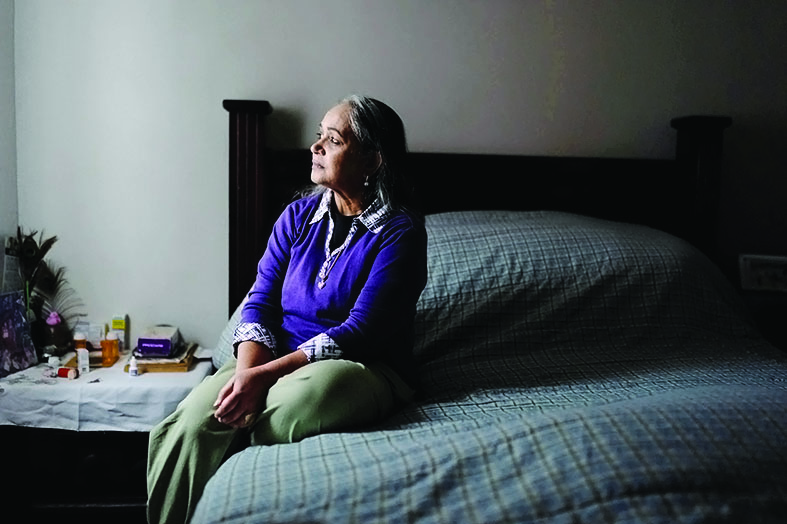
Masuma Khan, an immigrant from Bangladesh who was held at an immigration detention facility in California City the previous year, sits for a photo in her bedroom in Altadena, California, April 21.
-
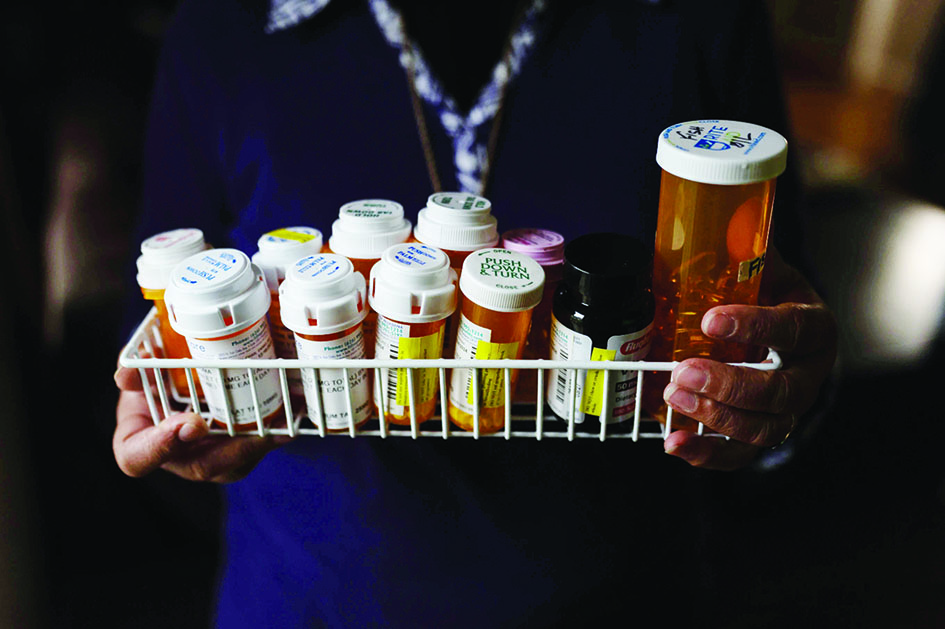
Masuma Khan holds the medications she takes daily.
-

A person, who was detained at the Stewart Detention Centre in Lumpkin, Georgia, and did not wish to be identified, poses for a portrait, April 22. AP photos
An Albanian man’s pain grew so unbearable, he said, that he pulled out his own tooth as he languished for months in a New Mexico immigration detention centre. A Honduran mother of two said she was hospitalised for a heart problem after she was denied blood pressure medication while held in Florida. A Venezuelan man said his leg grew purple and swollen from flesh-eating bacteria when staff at a Vermont facility did not take him to a scheduled doctor’s appointment.
Hundreds of detainees across at least 33 states allege in federal lawsuits that immigration detention facilities are failing to provide adequate medical care, an investigation by KFF Health News and The Associated Press found.
Detainees say they did not receive medication on time — or at all — for conditions including high blood pressure, diabetes, depression, epilepsy, Parkinson’s and HIV. Requests for help went unanswered for weeks. Blood sugar levels rose. Infections festered. Cancers remained untreated. Detainees collapsed and had seizures.
US jails and immigration detention centres have long struggled to meet the medical needs of the people in their care. But the system is under strain amid an influx of detentions since President Donald Trump returned to office: more than 75,000 immigrants were being detained by US Immigration and Customs Enforcement as of mid-January, up from around 40,000 a year earlier.
KFF Health News and AP analysed thousands of court cases filed since Trump’s second inauguration that use a legal route known as habeas corpus to argue that people are being held illegally by Immigration and Customs Enforcement (ICE).
The records offer a rare window into how those detained say — often under penalty of perjury — ICE is handling their medical needs. Reporters also interviewed more than 50 detainees, family members and lawyers.
The investigation revealed that medical neglect is alleged across the sprawling detention system, including in offices not designed to house people, county jails and hastily set-up sites with nicknames such as “Alligator Alcatraz”.
ICE custody is deadlier than it has been in two decades, researchers wrote in JAMA in April. The Department of Homeland Security reported that 51 people had died in detention since the start of Trump’s second administration, with suicides rising to an unprecedented level.
KFF Health News and AP asked DHS for comment, but it did not respond. The department’s acting chief medical officer, Sean Conley, previously said “it is both policy and longstanding practice for aliens to receive timely and appropriate medical care from the moment they enter ICE custody” and that DHS recruits healthcare professionals to maintain high standards. “This is better, more responsive healthcare than many aliens have ever received in their entire lives,” he said.
Individual facilities and private prison companies contracted by DHS that responded to requests for comment said they follow ICE standards and that detainees receive medical care when required. Some said they were unfamiliar with the allegations outlined in court documents; others blamed the detainees themselves for lapses in their medical care.
“I have never seen such disregard or medical neglect like this anywhere,” Vardan Gukasian, a political dissident and former paramedic who spent years behind bars in Armenia, wrote in a court declaration in March to contest his detention in Henderson, Nevada, as it stretched to 13 months despite his health problems.
BASIC CARE DENIED
The administration’s mass deportation effort has swept up hundreds of thousands of people during routine immigration check-ins, at traffic stops, at their homes and in hospitals.
About 70 per cent of detainees have no criminal conviction. Their immigration proceedings are civil, not criminal.
“I couldn’t understand why they treated me so harshly,” said a father of six in Georgia. He said he was injured while shackled in custody when the vehicle transporting him to an Atlanta facility jolted, throwing him out of his seat and into a metal armrest. His wound became infected with E. coli, he said, because he had to sleep on a dirty concrete floor amid leaking toilets.
Like other detainees interviewed, he spoke on condition of anonymity; they said they feared for their safety, for the safety of their families or that speaking out would jeopardise their immigration cases.
Staff at Stewart Detention Centre in rural Lumpkin, Georgia, did not adequately respond to that man’s request for medical help, court records say, until he passed out and was taken to a hospital about an hour away. There, he said, a doctor told him he had narrowly escaped amputation of his left leg. Medical staff found no records of a case matching this description, according to Brian Todd, a spokesperson for CoreCivic, a private prison company that runs the facility.
The 48-year-old, who moved to the US from Guatemala more than two decades ago, was released in October and is now a legal permanent resident. But he is unsure whether he will be able to return to his job in construction because he said he can no longer lift heavy items due to his injury.
Some detainees or their lawyers said even basic care was denied: gauze to protect an open foot wound, prenatal care for a high-risk pregnancy, a pillow to ease the pain of sleeping with advanced stomach cancer, sanitary pads for postpartum bleeding.
“I would like to believe the government has the best interest of those it holds in detention for whatever period of time,” Judge Benita Pearson, a federal judge in Ohio, said during a hearing in October concerning a 70-year-old who alleged the government lost her glasses during her arrest. “If one is unable to see due to the loss of glasses when detained, that should be fixed.”
Dora Schriro, who worked for ICE and now serves as a special adviser to the American Bar Association, said case law requires the government to treat people in immigration detention with the same care it affords those in traditional jails awaiting trial. But administrators are granted discretion and medical care standards vary.
Detainees are frequently moved across the country, often without warning, interrupting treatment. A woman from El Salvador said she missed a week of HIV medication when she was transferred from Colorado to a county jail in Wyoming.
Advocates say even obvious disabilities, such as legal blindness, are ignored.
A detainee who lost one eye and had severe glaucoma in the other required twice-daily drops to maintain what vision remained. But, he said, some days the drops never came.
“Now, I can only see a little bit straight in front. It now often looks like I’m seeing through gauze,” the man wrote in a court declaration. “This makes me very afraid that one of these times I am going to open my eyes and not be able to see anything at all.”
Even court orders are not always enough. One California judge ordered the government to take a man showing signs of prostate cancer to a specialist for diagnosis and treatment. Records show they did not take him.
Lawyers representing ICE told the judge that officials missed the appointment because of an “internal scheduling error.” CoreCivic, which runs that facility, said it was unable to comment on active litigation.
When immigrants file habeas corpus petitions, they exercise a right to challenge unlawful imprisonment that dates back to medieval times.
More than 40,000 such petitions have been filed during Trump’s second term, fuelled by decisions last year to deny bond to many people held on immigration charges. Judges are split on whether that is legal; the question appears headed to the Supreme Court.
Many habeas claims have been successful, but judges typically cite reasons unrelated to the medical neglect described in the petitions, such as people being held too long before deportation.
The more than 300 medical neglect claims identified in this investigation represent a fraction of the problem. The details of habeas corpus cases are often hidden due to a federal rule barring the public from viewing such documents online. KFF Health News and AP obtained some documents directly and received records on 4,400 cases from Habeas Dockets, a project of the non-profit Immigration Justice Transparency Initiative. But tens of thousands more remain largely inaccessible.
Some judges have written that the habeas process is not the appropriate way to raise allegations of medical neglect and have declined to release detainees over those claims. Not every detainee who believes they experienced medical neglect files a habeas petition or cites their medical issues if they do.
LOVED ONES DETERIORATE
Detainees receiving inadequate healthcare have little recourse. DHS last year gutted the Office of the Immigration Detention Ombudsman. In early May, it shut the office entirely, citing a lack of funding from Congress.
Previously, ombudsman staffers could facilitate medical care or investigate complaints of neglect, according to Matt Boles, an immigration attorney in Georgia. Now, he said, there’s no one to call.
Meanwhile, detainees’ families said they feel helpless, making desperate calls to facilities, the government and their legislators while watching their loved ones deteriorate.
Riya Khan saw her mother get sicker at the California City Detention Facility, which is owned by CoreCivic. When she visited a week after her mother arrived at the facility in the Mojave Desert, Riya said, the 64-year-old woman stumbled into her seat. She was shaking and her breathing was laboured.
Masuma Khan came to the US from Bangladesh in 1997. She has no criminal history, her records say, and was detained in October when she showed up for her regular ICE check-in.
For the month she was detained, according to her daughter, she only intermittently received her medications for conditions including high blood pressure, hypothyroidism and prediabetes.
CoreCivic treats chronic conditions in line with applicable medical standards, according to Todd, its spokesperson.
“Nothing matters more to CoreCivic than the health, safety and well-being of the people in our care,” Todd said.
Khan said she got her asthma medication for the first time two days before she was released and her eye drops for glaucoma never arrived. Staffers told Khan she needed to buy some of her medications from the commissary but it didn’t stock them, her daughter said.
Before ICE detained Masuma she made friends with everyone, her daughter said. She had worked for years at Lucky Boy, an iconic Pasadena fast-food restaurant, and in her free time fed birds and left out fruit for bees that visited her apartment’s balcony.
Now she’s too scared to go outside. She still must regularly check in with ICE, and she’s terrified each time.
-AP