Elderly couple living in cramped cornershop
Loading article...
-
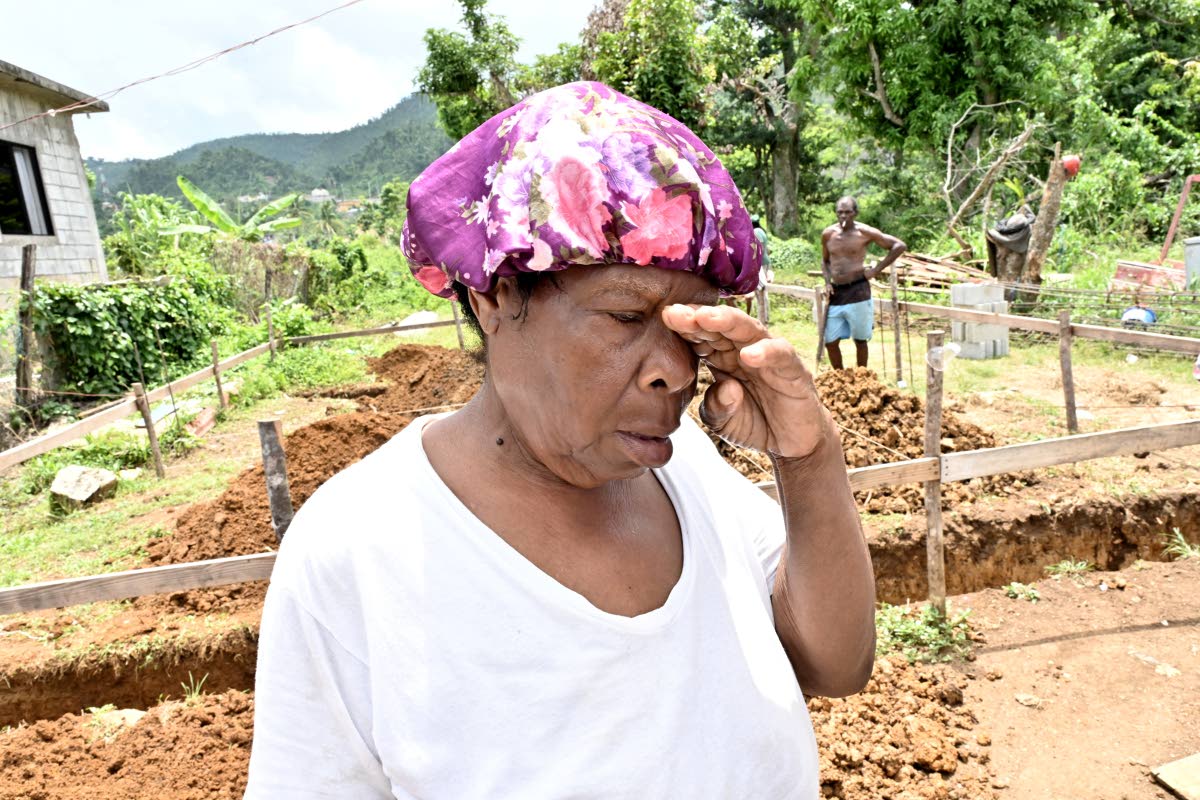 Thelma Lynn Robinson is moved to tears as she relates the struggles living in a cramped cornershop with her husband Mickey since Hurricane Melissa destroyed their home last October. Photo - Rudolph Brown/Photographer
-
Thelma Lynn Robinson is moved to tears as she relates the struggles living in a cramped cornershop with her husband Mickey since Hurricane Melissa destroyed their home last October. Photo - Rudolph Brown/Photographer
-
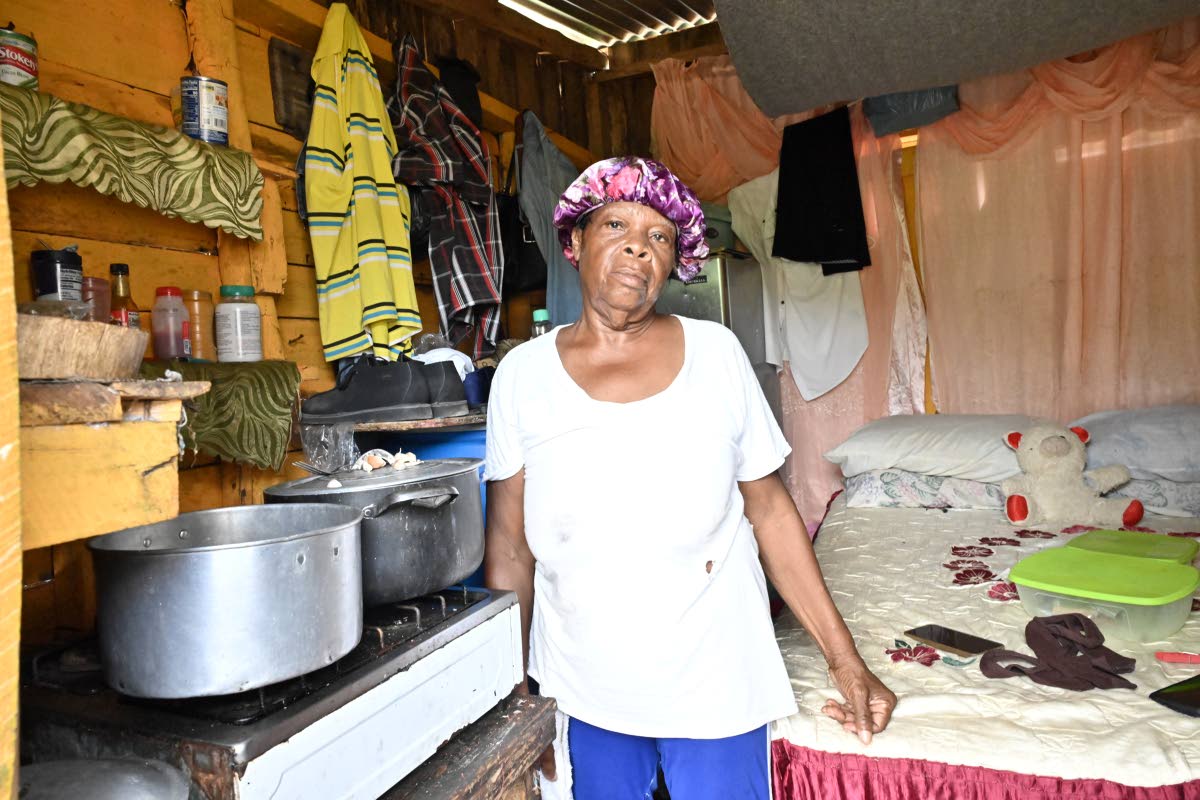 Thelma Lynn Robinson stands inside the shop-turned-living space, which is only big enough to accommodate a bed, a stove and a barrel for their clothes. Photo - Rudolph Brown/Photographer
-
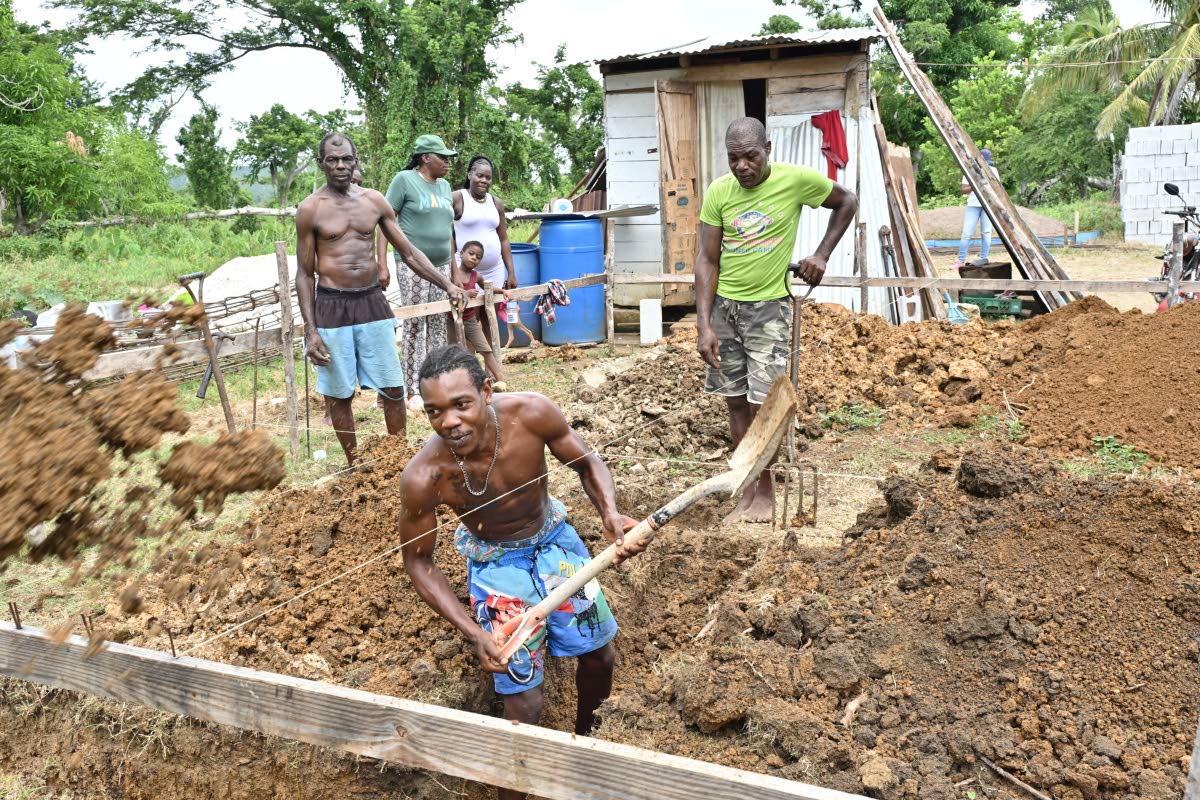 Mickey Robinson (left), grandson Davin Bennett (centre), and son Uion Robinson outine the home for the elderly Robinson couple in Galloway, Westmoreland, last Tuesday. The couple has been living in a shop (background) since the storm destroyed their home. Photo - Rudolph Brown/Photographer
In the quiet rural district of Galloway, Westmoreland, Mickey Robinson diligently digs the foundation of the one-bedroom house he is rebuilding with the help of his son and grandson.
Ten months has passed since their house was destroyed by Hurricane Melissa, forcing Mickey and his wife, Thelma Lynn Robinson, to repurpose their shop as a home.
But the cramped space is only big enough to accommodate a bed and a barrel for their clothes. Outside in the yard, a dresser, refrigerator and chairs lay abandoned.
“It feel uncomfortable ‘cause mi hardly can move,” Thelma told The Sunday Gleaner last week.
She said the trauma from the storm – which forced them to rush to a neighbour for shelter as their home of more than 40 years was ripped apart – has taken a toll on her health.
“Mi sick out, stress out. Every night, mi cough. Mi go a doctor till mi tiad. Mi all have medication fi buy now and cya fill it,” she said.
But, despite those challenges, Thelma said she is grateful for the opportunity to rebuild her home.
In April, she said, her family was given a $500,000 grant under the Government’s Restoration of Owner or Occupant Family Shelters (ROOFS) Programme.
The programme provides financial assistance for the reconstruction of homes damaged by Hurricane Melissa, through the Ministry of Labour and Social Security.
50,000 homes impacted
Portfolio Minister Pearnel Charles Jr said last week that the initiative has facilitated the restoration of more than 50,000 homes impacted by the Category Five storm.
Hurricane Melissa struck Jamaica on October 28 last year, killing at least 45 persons and causing widespread destruction of homes and businesses, particularly in western parishes.
It damaged nearly 156,000 homes, including 24,000 total losses. The Category 5 storm affected roughly 900,000 people, with total damage, losses and associated costs at $2 trillion – four times more costly than Hurricane Gilbert, according to the Planning Institute of Jamaica.
118,000 assessments
“We have gone past 118,000 assessments and we have disbursed close to $11 billion, and counting, in support, which would be either in materials or cash, and we have assisted 50,000 families,” Charles said.
Robinson said his grant allocation was used to purchase building blocks, cement, steel and stone.
“A just material mi get outta it. I don’t suck a sweetie,” he said.
But it took them more than three months to start working on the house ,because the couple could not afford to pay the workmen.
Seventy-year-old Robinson said he works as a saw operator, and Thelma used to operate the shop which now serves as their home.
It was his boss who, understanding their situation, travelled from St James to line out the foundation of the home last Tuesday, which allowed Robinson and his offspring to finally start the rebuilding process.
“Mi no haffi pay dem, but di man dem weh build di steel and sitting, mi haffi find money fi pay dem,” he said, adding that it cost about $100,000.
“It rough still, but mi a gwaan. Mi nuh have no money, but mi a get likkle help otherwise,” he said.
The previous house was a two-bedroom dwelling which Robinson built for his family. The couple had been together for 51 years and married for 38. Their union has produced six children – four daughters and two boys who are all adults now.
At the time of the hurricane, one of their sons, Uion Robinson, was living at home with his child. However, Thelma noted that this new home will consist of a room, bathroom and kitchen for herself and her husband.
The decision to build a smaller house was based on affordability and the immediate need. She said her son has been living comfortably with a relative in the community.
And, although Robinson is uncertain as to when or how they’ll be able to fund the completion of their home, he is grateful that, at least for now, he has the assistance of his family and friends.
“If mi neva have no pickney or grandpickney, maybe a mi one would haffi dweet. Mi would haffi find money fi pay other somebody fi dweet,” he said.
“It rough but mi a gwaan ‘cause mi well wah comfortable, ‘cause mi ol’, y’know. If a even wah one year or wah two year, if mi live so long, mi wah comfortable. Mi a gwaan do weh mi can do,” he added. “If it cya complete, well, a suh it go. Dem young, dem wi complete it.”
sashana.small@gleanerjm.com