Education minister urges businesses to help shape workforce skills
Loading article...
-
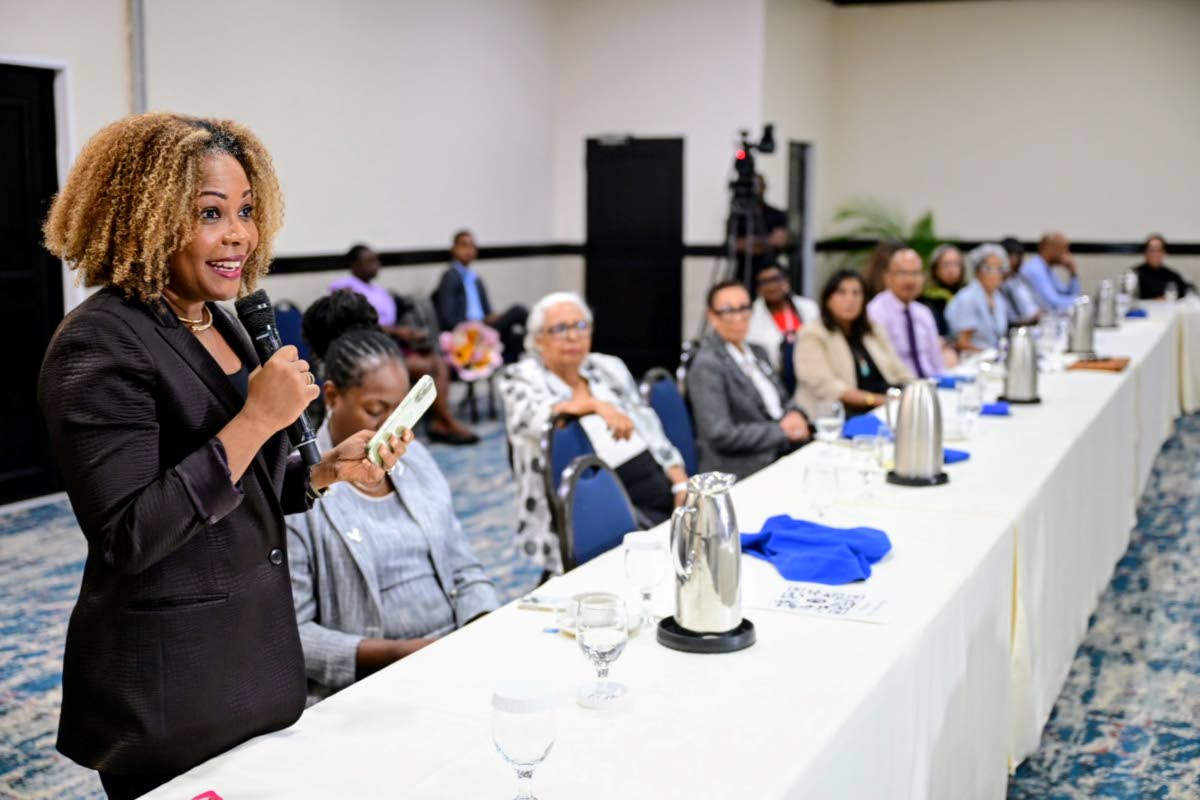 Minister of Education, Skills, Youth and Information, Senator Dr Dana Morris Dixon, responds to questions at the High-Level National Digital and AI Skills Round Table on Tuesday at The Jamaica Pegasus hotel. Photo - Contributed photos
-
Minister of Education, Skills, Youth and Information, Senator Dr Dana Morris Dixon, responds to questions at the High-Level National Digital and AI Skills Round Table on Tuesday at The Jamaica Pegasus hotel. Photo - Contributed photos
-
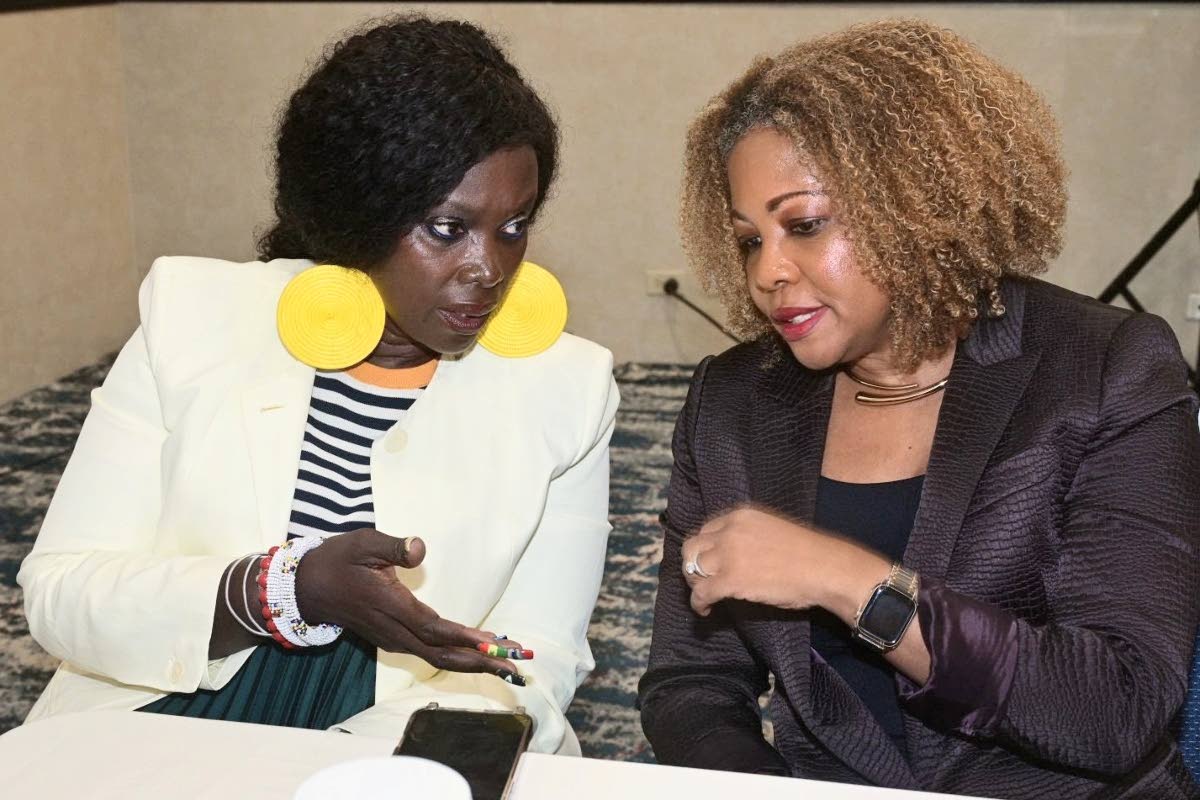 Minister of Education, Skills, Youth and Information, Senator Dr the Hon Dana Morris Dixon (right), converses with founder of the iamtheCODE Foundation, Lady Marieme Jamme, at the High-Level National Digital and AI Skills Roundtable.
Minister of Education, Skills, Youth and Information Senator Dr Dana Morris Dixon has called on private-sector leaders to work more closely with the Government in shaping Jamaica’s future workforce, warning that rapid changes in the labour market will require a fundamental rethink of skills training.
Addressing the High-Level National Digital and AI Skills Roundtable at The Jamaica Pegasus hotel on Tuesday, Morris Dixon said nearly 40 per cent of job-related skills are expected to change by 2030, making stronger collaboration between industry and the education sector critical.
“Nearly 40 per cent of the skills required in jobs are expected to change by 2030. Four out of 10 jobs will have to change ... . Our task is bigger than training for training’s sake. The policy mission of the administration is to build a skills system that is connected directly to economic opportunity,” she said.
The minister said Jamaica’s education system is already undergoing structural changes to better prepare students for the evolving labour market, pointing to improvements in students’ performance on the Primary Exit Profile (PEP) examinations as evidence that critical-thinking skills are being strengthened at the primary level.
She argued, however, that institutions such as the HEART/NSTA Trust must continue adapting to meet the changing needs of the economy.
“So, this new model that we’re looking at, we have to ask industry some questions as we do our work in the Ministry of Education,” Morris Dixon said.
“We have to ask, what do you need? What occupations are becoming difficult to fill? What kinds of skills are becoming more valuable? And, perhaps most importantly, what skills do you anticipate needing three or five years from now?”
She said the answers would help guide adjustments to the education system, particularly at the secondary level, ensuring graduates are equipped with skills that match industry demand.
The roundtable was hosted by the Private Sector Organisation of Jamaica (PSOJ) in collaboration with iamtheCODE Caribbean, the regional arm of the Africa-led global movement founded by Lady Marieme Jamme.
Co-founder of iamtheCODE Caribbean Mariame McIntosh Robinson also stressed the need for greater collaboration among government, educators and business leaders. Citing World Bank data, she noted that while 36 per cent of Jamaicans ages 25 to 64 hold Caribbean Secondary Education Certificate (CSEC) qualifications, many have limited formal digital-skills training.
“Access to capital is often cited as a constraint to business growth. But, lately, the whispers have crescendoed into an outcry where businesses are saying, I can’t find access to human capital. So ... our goal is to ensure that we make our mark pulling people together to make a difference from a human capital standpoint,” Robinson said.
She outlined the progress of iamtheCODE Caribbean, which was launched in Jamaica last year. The self-paced, fully remote programme offers an eight-module curriculum that combines computer coding with skills such as design thinking, communication and project management.
Robinson announced that applications are now open for the initiative’s second cohort, which is scheduled to begin in November.
The first cohort attracted 160 participants, with 90 completing the foundational HyperText Markup Language (HTML) course and 40 completing all eight modules.
“While iamtheCODE focuses on girls and women across the world, for Jamaica, we made it clear at the beginning that we have an equal focus on men and women, boys and girls, because of what we’re trying to strive for in our society,” she added.
Jamaica is the 89th country to join the global iamtheCODE movement, which aims to equip one million women and girls with digital and STEAMD (Science, Technology, Engineering, Arts, Mathematics and Design) skills by 2030.