WWKIDS Conference trains teachers in proven reading methods
Loading article...
-
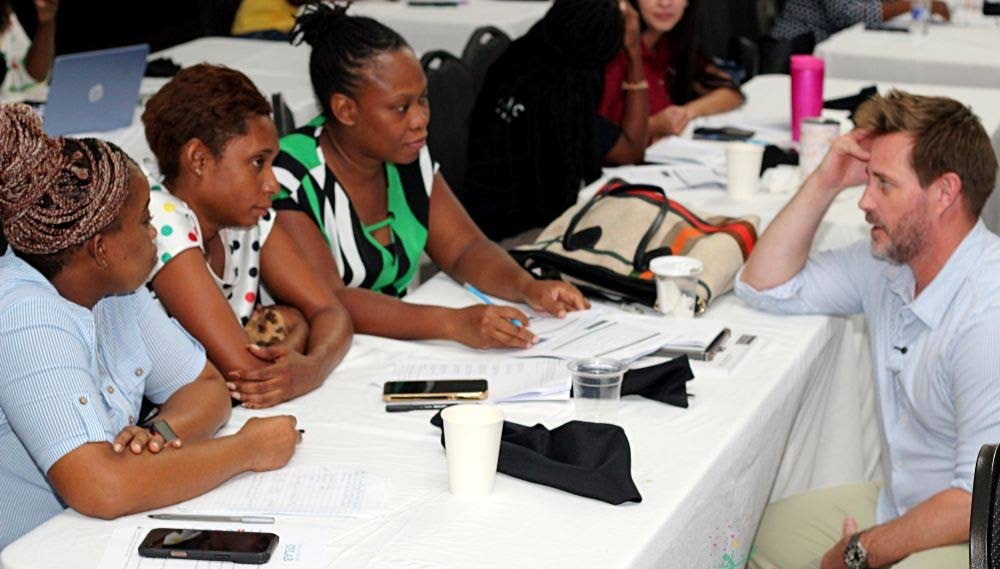 Dr Benjamin Powers, executive director of The Southport School, co-founder of The Southport CoLAB in Connecticut, and director of the Haskins Global Literacy Hub at the Yale Child Study Center, engages in discussion with Nakitalee Francis, Deonne Buchanan, and Akevia Burt, educators from North Street Congregational Primary School in Kingston. Photo - Contributed photos
-
Dr Benjamin Powers, executive director of The Southport School, co-founder of The Southport CoLAB in Connecticut, and director of the Haskins Global Literacy Hub at the Yale Child Study Center, engages in discussion with Nakitalee Francis, Deonne Buchanan, and Akevia Burt, educators from North Street Congregational Primary School in Kingston. Photo - Contributed photos
-
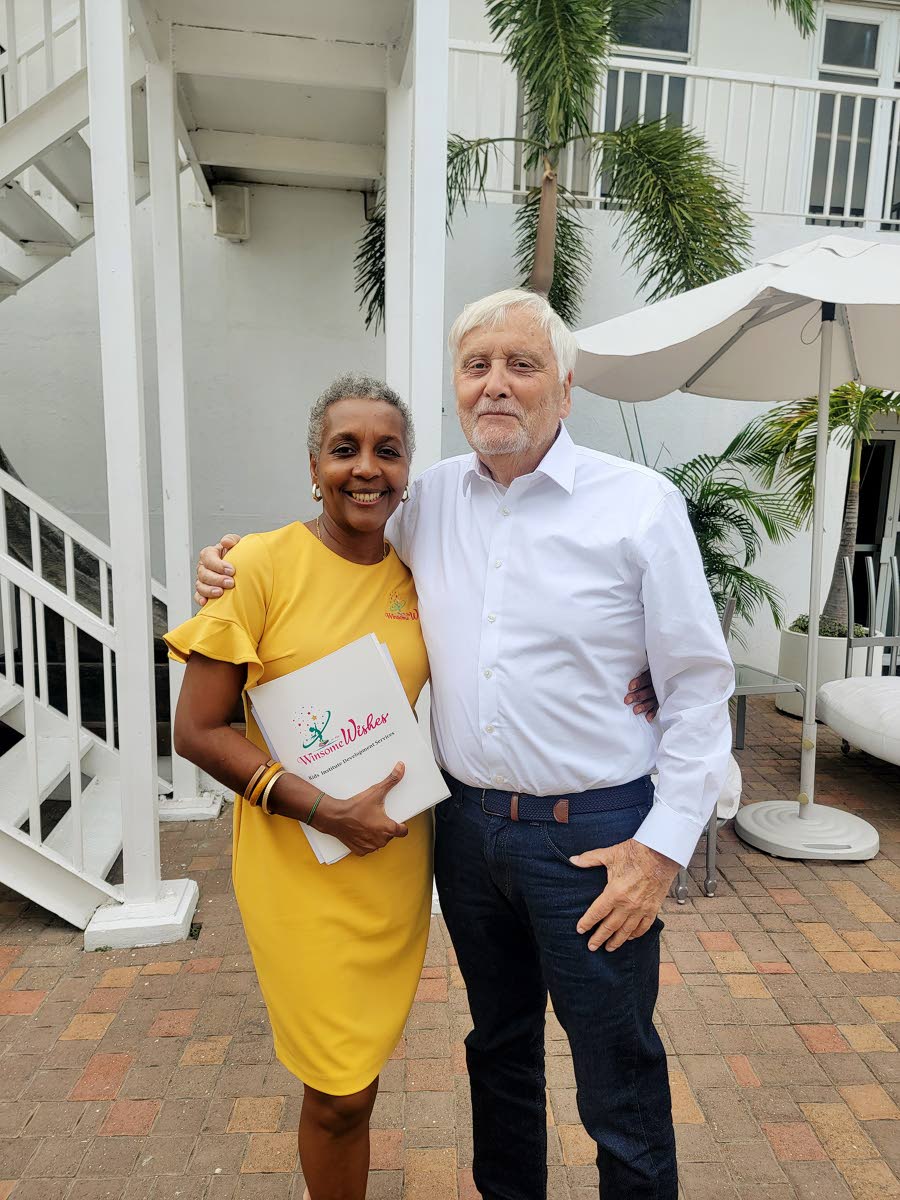 Simone Sobers, founder and president of Winsome Wishes for KIDS, and Dr John Jay Russell of the Haskins Global Literacy Hub at the Yale Child Study Center pose for a photograph following the conference.
-
 Steflyn Gayle, Tashonie Evans, and Sashanna Hearne, educators from Morgan’s Pass Primary School in Clarendon. Photo - Contributed photos
-
 Diane Happas and Nicole Berkowitz, speech-language pathologists at The Windward School and Windward Institute in New York; Aleecia Green, teacher at Holy Trinity School; Dr John Jay Russell, WWKIDS chief education advisor and associate director of the Haskins Global Literacy Hub at the Yale Child Study Center; and Shanalee Griffiths-Brown, teacher at Quickstep Primary School in St Elizabeth.
Nearly 120 Jamaican educators recently gathered at the S Hotel Kingston for an annual education conference, where they received training in evidence-based literacy instruction and classroom strategies designed to improve student outcomes.
Hosted by Winsome Wishes for KIDS (WWKIDS) and endorsed by the Jamaica Teaching Council, the conference combined evidence-based approaches to literacy instruction with practical strategies that teachers could immediately apply in their classrooms. The event opened with remarks from Nicole Bella, head of the Education Programme at UNESCO Caribbean.
The opening keynote, delivered by Dr John Jay Russell of the Haskins Global Literacy Hub at the Yale Child Study Center, focused on how children learn to read and why effective instruction remains critical, even for students who have struggled for years.
Titled ‘It’s Never Too Late, but Earlier is Better: How the Brain Learns to Read’, the presentation explored the science of reading and the role of targeted instruction in developing literacy skills. Its central message was that a child who struggles to read today can still become a successful reader tomorrow.
The conference coincided with the start of Dyslexia Awareness Month on October 1. Participants received training in explicit, systematic instruction, an approach widely recommended for all learners, including students with dyslexia. Dyslexia is a specific learning difficulty that affects accurate and fluent reading and spelling but is unrelated to intelligence.
The programme was shaped by feedback from previous participants and curated by Dr Russell and the Haskins Global Literacy Hub.
Day one focused on how children learn to read, day two examined the relationship between reading and writing, and day three addressed executive functioning, behaviour management and student grouping. The structure was designed to move participants from theory and research to practical application and independent implementation.
Breakout sessions for teachers of grades K-6 and grades seven to 11 emphasised collaboration. Facilitators and presenters worked closely with participants, answering questions, demonstrating strategies, and providing individual guidance aimed at building confidence alongside knowledge.
For Sheisha Palmer-McLean, a teacher at Morgan’s Pass Primary School in Clarendon, the experience inspired poetry:
“Thanks for the exposure to skills in Literacy.
Showing us the fact of Brain Plasticity.
Reminding us of Phonemes and how they relate to Graphemes.
Letting us know about the Centre named Cox.
Showing us how to manipulate the Sound Box.
With resources like Grapho Game
May our teaching progress and never be the same.”
Meanwhile, Simone Sobers, founder and president of WWKIDS, noted that when teachers feel supported and empowered, the benefits extend beyond the classroom.
“We wanted teachers to leave with a deeper understanding of how children learn, strategies they can confidently use, and the reassurance that every child deserves the opportunity to succeed,” she said.
Helping families
The conference’s focus extended beyond teachers. More than 50 parents and caregivers attended the workshop ‘Understanding How Your Child Learns’, led by Dr Karine Clay of Higher Potential for Learning.
Held on September 30 and October 3, the sessions were also delivered to families at St Jude’s Primary School in collaboration with the 180 Degree Foundation.
A recurring theme was the importance of assessment and early intervention for children who learn differently.
“Many parents have geniuses at home who simply learn differently,” said Sobers. “But some are afraid of assessments because of the labels that might follow. If we never assess and reassess, how will we know how best to guide a child’s development? An evaluation is not a limit. A professional assessment helps us develop the genius within.”
That message was reinforced through excerpts from Dislecksia: The Movie, a film by Harvey Hubbell V that explores learning differences through a story of resilience and achievement.
Support for the event came from The Schwartz Family Foundation, AFJ and Harvey Hubbell V, whose sponsorship enabled student teachers from Church Teachers’ College in Manchester and other early-childhood educators to participate.
The conference forms part of WWKIDS’ broader effort to improve literacy outcomes in Jamaica through teacher training, the PAF Reading Intervention Programme, GraphoGame, Summer Literacy Boost, and partnerships with local schools and international specialists.