Higher borrowing costs ahead as BOJ raises benchmark policy rate to 6.5%
Loading article...
-
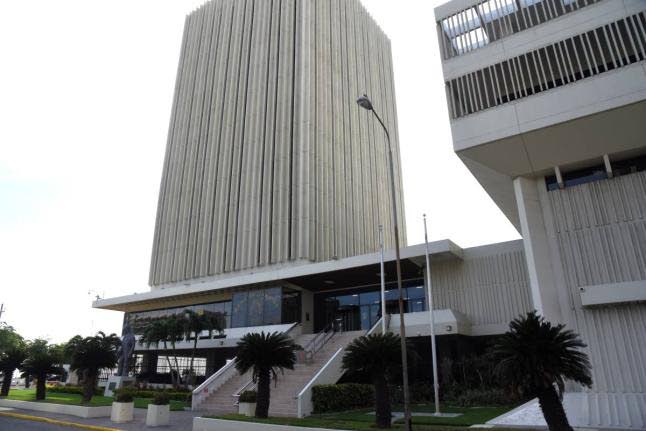 The Bank of Jamaica in downtown Kingston. Photo - File
-
The Bank of Jamaica in downtown Kingston. Photo - File
-
 Professor Andre Haughton. Photo - Contributed
The Bank of Jamaica (BOJ) has raised its benchmark policy interest rate by 50 basis points to 6.5 per cent and signalled that inflation could remain above its 4-to-6 per cent target range until late 2027, prompting warnings that borrowing costs may stay elevated for months to come.
"This decision was taken in the context of an upside risk that inflation could remain above the target range until late 2027, which represents a more persistent breach than previously communicated," the Monetary Policy Committee of the BOJ said on Wednesday.
The increase, which takes effect on November 19, follows a 50-basis-point hike in September and leaves the policy rate 75 basis points higher than the 5.75 per cent in place a year ago.
The latest move leaves the policy rate at its highest level in a year.
Annual inflation slowed to 8.2 per cent in October from 8.6 per cent in September but remained above the upper limit of the target range for a fifth consecutive month.
The central bank cited higher food prices, transport costs and electricity rates among the main contributors to the increase.
Reacting to the news, Professor Andre Haughton, professor of applied macroeconomics and international finance and associate dean for partnerships in the Faculty of Social Sciences at The University of the West Indies, Mona, said the central bank's forecast effectively signals that policymakers could keep rates elevated or increase them further if inflation fails to moderate.
"Economics works off expectations," Haughton told The Gleaner.
"If inflation is expected to remain above target, the implication is that the bank may have to continue tightening policy in order to bring inflation back into its target range."
Monetary tightening refers to actions taken by a central bank to slow inflation by making money more expensive to borrow.
The policy rate is the interest rate paid by the Bank of Jamaica on deposits held by commercial banks and other deposit-taking institutions and serves as the benchmark for borrowing costs across the financial system.
When the policy rate rises, commercial banks often increase rates on mortgages, motor vehicle loans, personal loans, and business credit.
The goal is to encourage saving and reduce borrowing and spending, which can help moderate price increases.
"The Bank of Jamaica's mandate is really price stability," Haughton said.
"Under the Taylor Rule, whenever inflation is higher than target, you have to increase the interest rate. So, because the Bank of Jamaica wants to control inflation, they are increasing the interest rate."
However, he said the policy comes with trade-offs.
"The flip side is that higher interest rates make loans more expensive," Haughton said.
"Because it becomes more difficult for companies and households to borrow, you're going to have less investment in the economy."
The central bank's effort to cool inflation is occurring at the same time the Government is increasing spending to support reconstruction activity following Hurricane Melissa.
Haughton said the BOJ is attempting to slow demand to bring inflation under control while government reconstruction spending is supporting economic activity, creating competing pressures within the economy.
"There is a tug of war," Haughton said.
"If you give up growth, you can fight inflation, and if you pursue stronger growth, inflation becomes harder to contain."
The Bank of Jamaica said inflation pressures are being driven by several factors, including higher international commodity prices linked to conflicts in the Middle East and Ukraine, worsening El Niño conditions, elevated inflation expectations and increased government spending related to rebuilding efforts.
The central bank expects inflation to peak in the March 2027 quarter before gradually returning to its target range by late 2027.
The next monetary policy decision is scheduled for December 18.
carolyn.guniss@rjrgleaner.com
Follow The Gleaner on X, formerly Twitter, and Instagram @JamaicaGleaner and on Facebook @GleanerJamaica. Send us a message on WhatsApp at 1-876-499-0169 or email us at onlinefeedback@gleanerjm.com or editors@gleanerjm.com.