‘Don’t look for the cheap one’
Loading article...
-
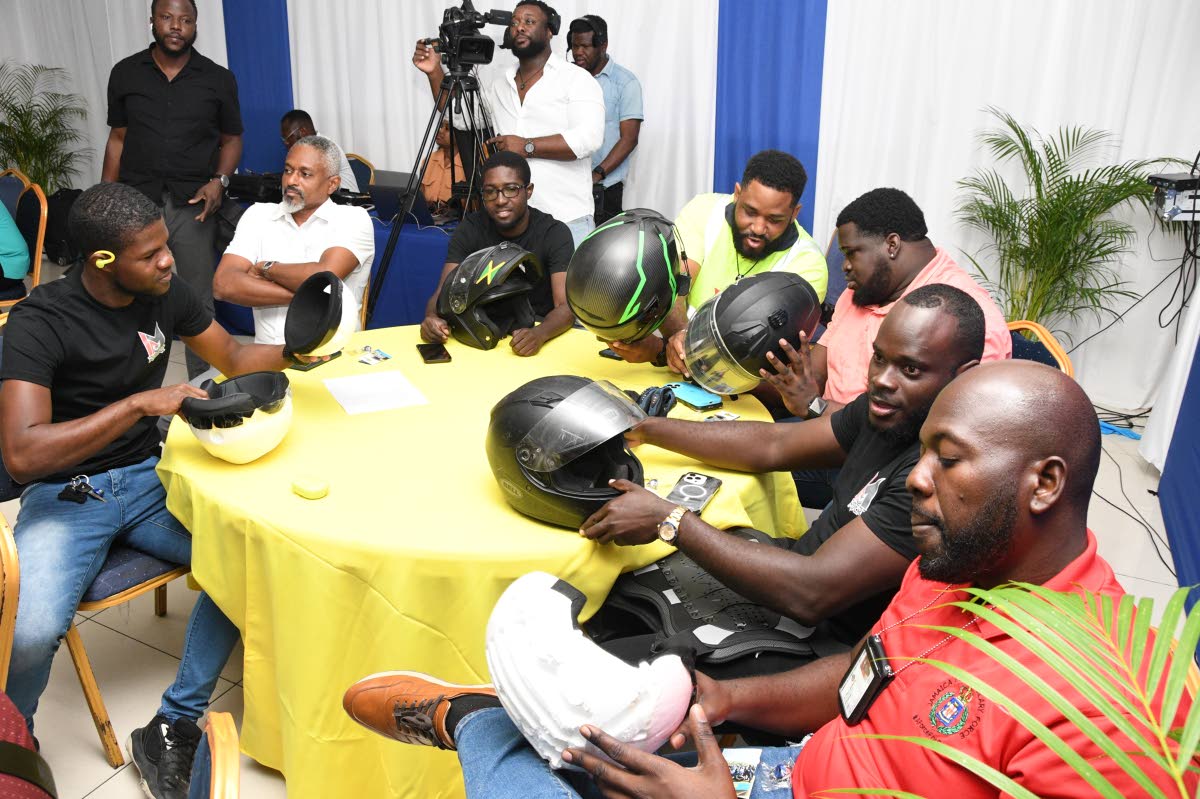 Bikers participating in a training session organised by the JN Foundation through the National Helmet Wearing Coalition. Photo - File
-
Bikers participating in a training session organised by the JN Foundation through the National Helmet Wearing Coalition. Photo - File
-
 Preddie
For Devon Kinkead, helmet safety is not just a recommendation. It is a personal commitment shaped by years of experience around motorcycles and a deep concern for the lives of riders in his community.
The owner of a car accessories store in Santa Cruz, St Elizabeth, Kinkead has long been immersed in motorcycle culture. His business plaza hosts motorcycle events, many of his closest friends are riders, and he spent years riding motorcycles himself before making the switch primarily to e-bikes. Those experiences have convinced him that protective gear, especially a certified helmet, should be an essential part of every ride.
“Whenever I am going to ride, which is mainly e-bikes I ride now, I make sure I use a helmet, gloves, and a safety jacket,” he says. “Not even my regular pedal bicycle; I don’t ride it without a helmet.”
Although Kinkead does not consider himself a technical expert on helmet standards, he understands enough to recognise the value of a quality helmet. He knows that helmets are designed for specific purposes, carry manufacturing dates and, when properly certified, are built to provide critical protection in the event of a crash.
“I always try to encourage all who I know to use a helmet,” he says.
One tragedy in particular continues to fuel that passion for helmet safety. He recalls offering a helmet to a young schoolteacher from his community who had recently begun riding motorcycles.
“I said to him that I have helmets in the storeroom. If you want, you can go up there and choose one. They are all new,” Kinkead remembers.
The young man politely declined, explaining that he already had a helmet at home. Not long after, he was out of the country and received news that he was involved in a crash and later died from his injuries. He was not wearing a helmet at the time of the crash.
“That was one of the deaths that really shook me up,” Kinkead says. “He was such a nice guy and very respectful. He had so much talent.”
Experiences like that have strengthened his resolve to speak up when he sees unsafe behaviour.
One piece of advice from a fellow rider remains at the centre of his approach to safety.
“When you’re buying a helmet, don’t look for the cheap one,” he recalls being told. “Look for a good helmet because that is what is most likely to save your life.”
That advice fundamentally changed the way he views helmet purchases. Rather than seeing a certified helmet as an expense, he sees it as an investment in personal safety. Unlike sub-standard helmets, certified helmets are designed and tested to meet recognised safety standards, featuring impact-absorbing liners, durable outer shells, and secure retention systems intended to reduce the forces transferred to a rider’s head during a collision.
The benefits are backed by evidence. International road safety studies have found that motorcycle helmets reduce the risk of head injury by approximately 69 per cent and the risk of death by about 42 per cent in a crash. The World Health Organization also notes that quality, standards-compliant helmets can reduce the risk of death by more than six times and decrease the risk of brain injury by up to 74 per cent.
“To me, buying a good helmet isn’t an everyday purchase,” Kinkead explained. “It’s not like you need to buy a helmet this year and buy another one next year if nothing happens to it.”
His advocacy extends far beyond his own riding habits. Troubled by the growing number of motorcycle-related injuries and fatalities, specifically among young men, he regularly encourages other riders to prioritise their safety.
For Kinkead, there is no such thing as a journey that is too short to warrant protective gear.
“What I realise is that one chance you take, that is when you die,” he said.
Sydoney Preddie, who is the Lead for Youth and Education Programmes at the JN Foundation, believes that community advocates like Kinkead are vital to the National Helmet Wearing Coalition’s mission.
“Research tells us that helmets save lives, but information alone does not change behaviour,” Ms Preddie says. “People are more likely to listen to and learn from individuals they know and trust. That is why community-based advocates are such an important part of the National Helmet Wearing Coalition’s work. Individuals like Kinkead bring authenticity and lived experience to the conversation, helping riders understand not only why certified helmets matter but why wearing one every trip can make the difference between life and death.”
She added that the coalition’s work extends beyond awareness-building.
“Through the NHWC, we are working to support the implementation of the Jamaican Helmet Standard, promote the use of certified helmets, and foster a stronger culture of road safety across Jamaica. Community advocacy is central to that effort because lasting behaviour change starts within communities.”
Kinkead remains steadfast on his mission.
“Think about all the friends and other motorcyclists that you know that have lost their lives,” he stated. “It’s full-time now you start protecting yourself.”
In a culture where too many riders still take chances on short trips or choose cheaper, uncertified options, he hopes more people will recognise the value of investing in their own safety because in his view, no ride is too short, and no destination is worth risking a life over.