Mayank Joshi | Celebrating peace, tolerance, and the legacy of Mahatma Gandhi
Loading article...
-
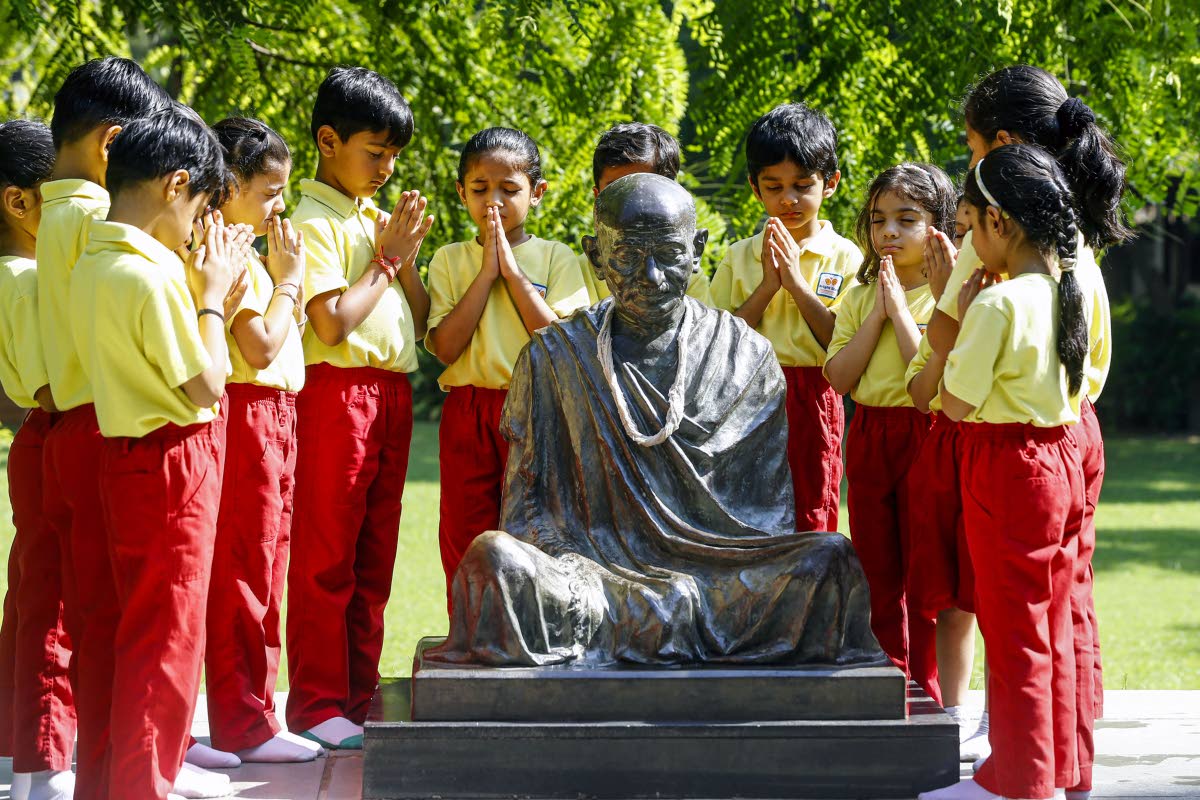 Students pay homage to the statue of Mahatma Gandhi on the eve of Mahatma Gandhi Jayanti observed on October 2 during their visit to the Gandhi Ashram, in the western Indian city of Ahmedabad. Photo - ANI
-
Students pay homage to the statue of Mahatma Gandhi on the eve of Mahatma Gandhi Jayanti observed on October 2 during their visit to the Gandhi Ashram, in the western Indian city of Ahmedabad. Photo - ANI
-
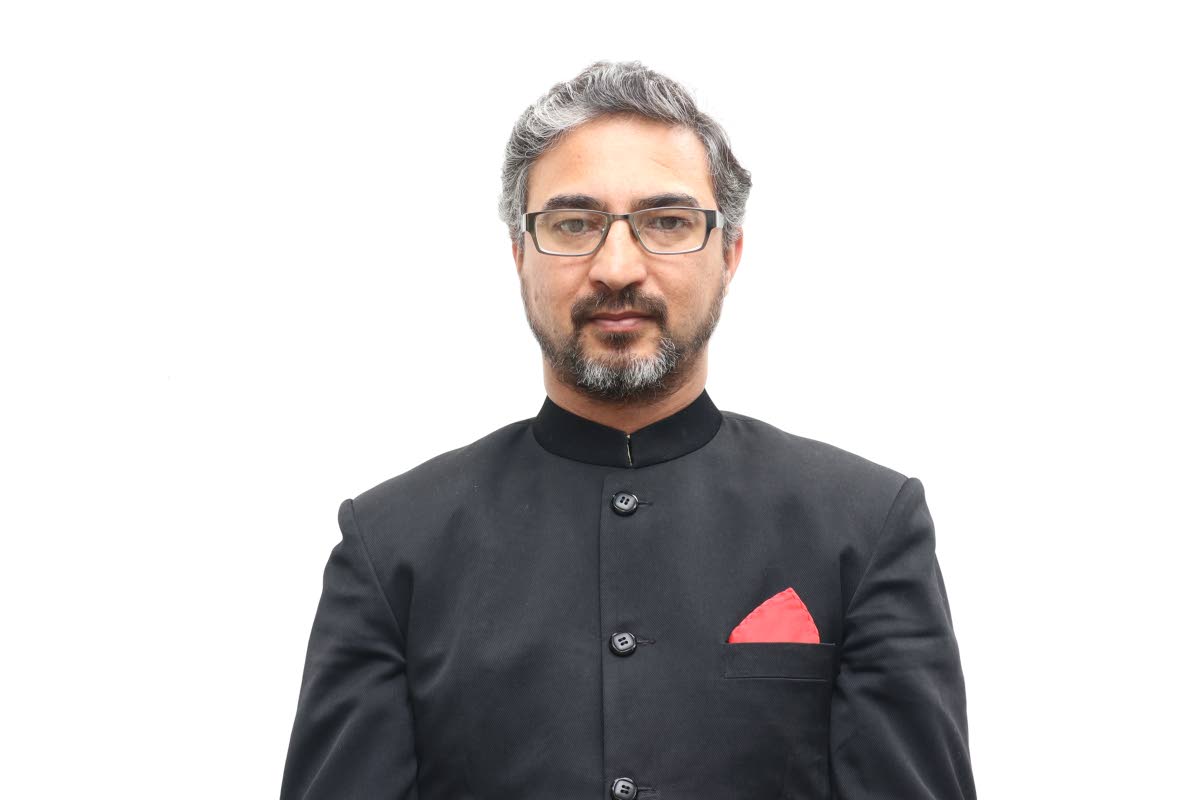 Mayank Joshi, high commissioner of India to Jamaica. Photo - Contributed
The International Day of Non-Violence, celebrated annually on October 2, marks the birth anniversary of Mahatma Gandhi, a global beacon of peace and non-violence. This day, proclaimed by the United Nations in 2007, serves as a global reminder of Mahatma Gandhi’s enduring philosophy of peace and non-violence. Observed on his birth anniversary, this day pays tribute to the principles of non-violent resistance that he championed throughout his life.
Mahatma Gandhi’s philosophy and methods of non-violence and truth, known as Satyagraha, had a profound influence on movements for civil rights and freedom across the world. His peaceful protests against British colonial rule exemplified his belief in the power of non-violence to confront oppression. One of Gandhi’s most notable acts of protest was the Salt March in 1930.
He and scores of Indians walked 240 miles from Sabarmati Ashram in the western Indian state of Gujarat to the coastal village of Dandi to produce salt from seawater, defying the British monopoly on salt production and sales. This act of civil disobedience galvanised the Indian population and drew international attention to the Indian independence cause. Satyagraha remains one of the most potent forces for change in modern history.
For Gandhi, non-violence was a way of life, grounded in the belief that peace could only be achieved through peaceful means.
He once said, “Non-violence is the greatest force at the disposal of mankind. It is mightier than the mightiest weapon of destruction devised by the ingenuity of man.” This belief continues to inspire movements around the world, from Martin Luther King Jr.’s fight for civil rights in the United States to Nelson Mandela’s struggle against apartheid in South Africa. His ideas influenced countless leaders and movements, underscoring the universal appeal of non-violence as a powerful instrument of resistance and reform.
India’s Prime Minister Narendra Modi has emphasised that Mahatma Gandhi’s timeless principles of truth and non-violence continue to guide efforts towards achieving a more inclusive, harmonious, and peaceful future. In a message on Mahatma Gandhi, PM Modi said: “Gandhi Jayanti is about paying homage to the extraordinary life of beloved Bapu (father), whose ideals transformed the course of human history. He demonstrated how courage and simplicity could become instruments of great change. He believed in the power of service and compassion as essential means of empowering people. We will keep following his path in our quest to build a Viksit Bharat (Developed India).”
STRONG FOUNDATIONS
In an era marked by political, social, and environmental challenges, Mahatma Gandhi’s principles of non-violence, truth, self-reliance, and sustainability provide strong foundations to counter today’s global challenges such as terrorism, conflict, climate change, and growing inequality. These urgently need peaceful solutions. Gandhi’s belief in the intrinsic goodness of humanity offers a road map for healing divisions and addressing modern crises, including pandemics and poverty.
Gandhi championed Swadeshi (self-reliance), promoting Indian-made goods and Khadi as symbols of simplicity and economic independence. His vision extended beyond political freedom to cleanliness, sustainability, and responsible consumption, captured in his enduring message: “There is enough for everyone’s need but not for everyone’s greed.”
In contemporary India, PM Modi has given renewed national momentum to these values through major people-led initiatives. The Swachh Bharat Abhiyan (Clean India Mission), launched by him on Gandhi Jayanti in 2014, sought to translate Gandhi’s vision of cleanliness into a nationwide mass movement, while Mission LiFE (Lifestyle for Environment), launched in 2022, promotes individual and collective action for sustainable living and responsible use of resources. Together, these initiatives place cleanliness, conservation, community participation, and responsible living at the heart of India’s development journey.
COMMUNITY INITIATIVE
Another significant recent community initiative in India is Sewa Pakhwada (Community Service Camp), observed from September 17, Prime Minister Narendra Modi’s birthday, to October 2, Mahatma Gandhi’s birth anniversary. Through activities of volunteerism, cleanliness, environmental action, health initiatives, blood donation, and support for vulnerable communities, the fortnight emphasises Gandhian values of service to society, cleanliness, and collective responsibility.
The legacy of Gandhi also resonates with Jamaica’s struggle against slavery, colonialism, and injustice and its quest for freedom, dignity, and self-determination. Jamaica’s National Heroes championed many of the same fundamental aspirations for human dignity, equality, and justice. A noteworthy historical connection came in 1926, when Gandhi acknowledged receiving The Philosophy and Opinions of Marcus Garvey from Amy Jacques Garvey, Marcus Garvey’s wife and collaborator.
Gandhi’s enduring place in India-Jamaica friendship is symbolised by three memorials: at The University of the West Indies, installed in 2012; in front of the Kingston Library; and at Clarendon Library in May Pen, installed in 2021.
Every October 2, the High Commission of India joins Jamaican friends and the Indian community in commemorating the birth anniversary of Mahatma Gandhi. This year, as part of the Sewa Pakhwada campaign during the fortnight prior to the commemoration, the High Commission organised various community activities, including a cleanliness run at Harmony Beach in Montego Bay, a blood-donation drive, support for the elderly in Ocho Rios, school outreach in Kingston and Port Maria, and tree planting in Kingston and Montego Bay, with strong participation from the Indian community and partners.
The success of Gandhi’s struggle for India’s freedom rested on his remarkable ability to transform that struggle into a people’s movement. At the heart of this movement was his abiding faith in the principles of truth and non-violence through which he demonstrated that lasting change could be pursued without hatred or violence. This message transcended India’s borders and continues to inspire people and movements across the world. Gandhi is remembered in India as the Father of the Nation and globally as an enduring symbol of peace, non-violence, and moral courage. By carrying forward the values of service to people, dialogue, tolerance, and the peaceful resolution of differences, we pay the most meaningful tribute to his legacy and to his profound contribution to humanity.
Mayank Joshi is the High Commissioner of India to Jamaica. Send feedback to columns@gleanerjm.com.