Jalil Dabdoub | Constitutional reform and the realities of Jamaican politics
Loading article...
-
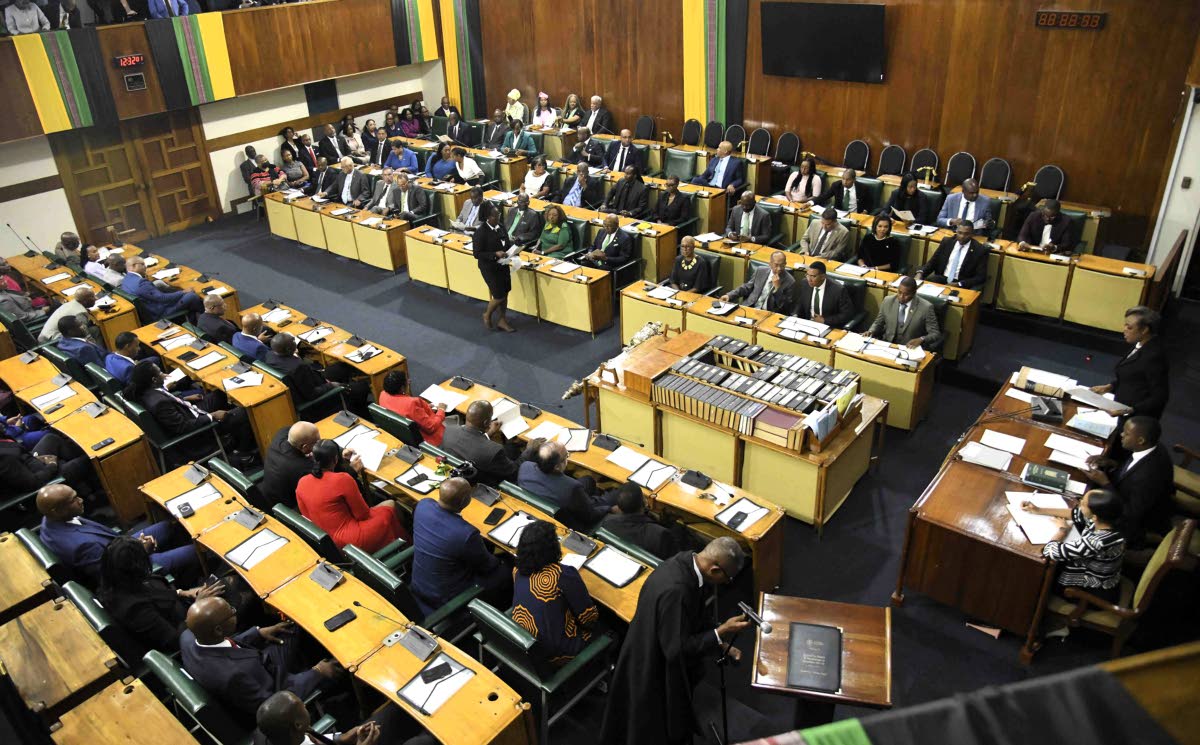 Members of Parliament before at the swearing-in ceremony for members of the upper and lower houses of Parliament held on September 18, 2025 in Gordon House. Photo - File
-
Members of Parliament before at the swearing-in ceremony for members of the upper and lower houses of Parliament held on September 18, 2025 in Gordon House. Photo - File
-
 Jalil Dabdoub. Photo - Contributed
Jamaica’s constitutional reform has focused largely on removing the British monarch, becoming a republic and changing our final appellate court. Important though these questions are, they risk distracting from a more fundamental one: how do we prevent those entrusted with political power from abusing it or exercising it without meaningful accountability?
Sovereignty belongs to the people. Government does not own power; it exercises authority entrusted to it by the people through the Constitution. Politicians are our servants, not our masters.
Constitutional reform must therefore be grounded in the political realities of Jamaica. We must design our Constitution not around the politicians we wish we had, but around those we have historically had. Party loyalty often trumps institutional responsibility, and political expediency prevails over principle. A Constitution that depends on politicians voluntarily limiting their own power is an inadequate safeguard against abuse.
Recent events are instructive.
Jamaica’s decision to abstain from the UN resolution calling for an end to the embargo against Cuba, after supporting it for more than three decades, exposed a serious failure of parliamentary accountability. On October 27, Parliament debated and passed a Government-sponsored motion on Cuba. The following day, Jamaica abstained at the United Nations. Yet Parliament had not been informed that a significant departure from longstanding policy was under consideration, notwithstanding the foreign minister’s subsequent acknowledgment that the matter had been considered for some time.
The Government has argued that the parliamentary motion did not dictate how Jamaica should vote at the UN. That misses the point. Parliament was debating the very subject on which a significant change in Government policy was being contemplated. To withhold from Parliament that the Government was actively considering a departure from longstanding policy, while inviting Parliament to debate that very policy, was, at best, an exercise in Anancy politics. Parliament was permitted to debate without knowing that the Government was contemplating a fundamentally different position. That is neither meaningful parliamentary accountability nor meaningful debate.
The IC’s experience, including its investigations and the subsequent prosecution and conviction of former Speaker Dalrymple-Philibert, reinforces the importance of accountability. Independent institutions must be protected from political interference through secure funding, transparent appointments and protection against arbitrary removal. But independence does not mean immunity. Those empowered to investigate others must themselves remain subject to due process and judicial oversight. Independence and accountability are complementary, not competing, constitutional principles.
The weakness of our political arrangements is also apparent in Parliament. A powerful executive, supported by a parliamentary majority whose members are generally expected to defend the Government, leaves the institution responsible for scrutinising the executive compromised by the political machinery it should hold accountable. Party discipline, patronage and a prime minister’s influence over ministerial appointments reinforce this imbalance. The problem is a system that rewards loyalty and patronage while punishing independent judgment.
Westminster convention expects the Speaker to rise above party politics and serve as Parliament’s impartial guardian. But conventions developed in different political cultures cannot simply be transplanted and assumed to work here. In our political culture**,** convention alone is no protection.
We should therefore consider electing the Speaker from outside Parliament, from among suitably qualified, politically independent Jamaicans, through a transparent process requiring substantial bipartisan support. The office should have clear qualification criteria, constitutionally protected tenure and removal only on clearly defined grounds. A predetermined independent mechanism must resolve any appointment deadlock. The objective is not simply an impartial individual, but an institution whose independence does not depend on the personal character of its holder.
Changing the Speaker alone will not correct Parliament’s structural weakness. Parliamentary committees must have constitutionally protected powers to obtain information, summon officials and investigate matters of public importance. The Opposition must have guaranteed representation and chairmanship of key oversight committees, together with adequate independent resources. These safeguards should strengthen Parliament.
The concentration of power in a prime minister also requires review. A prime minister who controls Cabinet, commands a parliamentary majority, exercises considerable influence over public appointments and determines the legislative agenda possesses enormous authority. Ministerial appointments can become instruments for securing political loyalty and reinforcing executive control. Independent commissions and public bodies cannot effectively restrain government if their appointments, funding or tenure remain vulnerable to those they are supposed to oversee. Transparent appointment procedures, meaningful parliamentary scrutiny and protection against arbitrary removal are therefore critical.
We must abandon the mistaken belief that those elected will invariably possess the integrity, judgment or restraint necessary for good governance. That is why constitutions exist: not only to facilitate good governance, but to protect the people against bad government.
None of this requires abandoning Westminster parliamentary government. It requires recognising that conventions and political goodwill are insufficient safeguards against excessive executive power in our political culture.
We should preserve what works, discard what does not and introduce safeguards suited to our own political culture. The question is not whether a reform conforms to Westminster convention, but whether it protects Jamaica against the abuse of power.
Constitutional reform must mean considerably more than changing the Head of State. A republic that retains the same structural weaknesses in the exercise and accountability of political power will have changed the symbolism of governance without changing its substance.
Political office does not confer ownership of power; it carries an obligation of trust**, a** fiduciary responsibility owed to the people. Our Constitution must do more than encourage politicians to behave responsibly. It must establish institutions sufficiently independent and powerful to hold them accountable when they fail.
We know that political parties will put their own interests first. Why, then, should we design a Constitution that continues to depend on them putting Jamaica first? The Constitution we create must serve not merely the generation that adopts it, but the unborn millions yet to come.
Jalil Dabdoub is an attorney at law. Send feedback to columns@gleanerjm.com