Earth Today | Why the ocean agenda matters
Loading article...
-
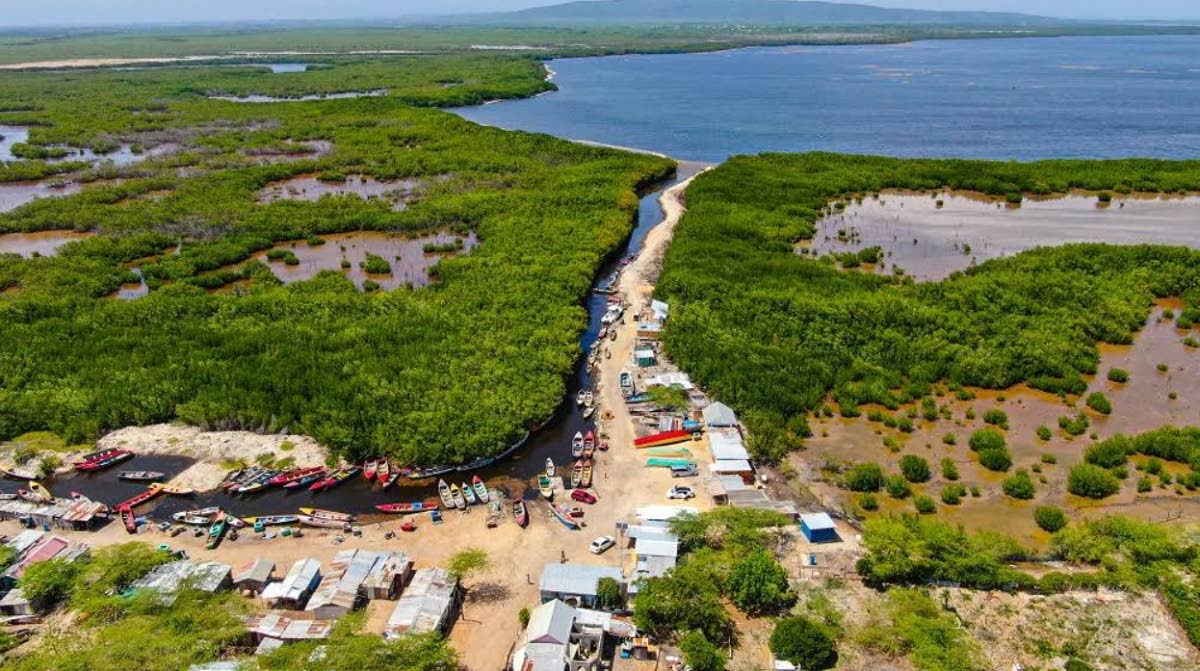 The Portland Bight Marine Protected Area in Jamaica, an example of what it means to bring the global 30x30 target closer to home.
-
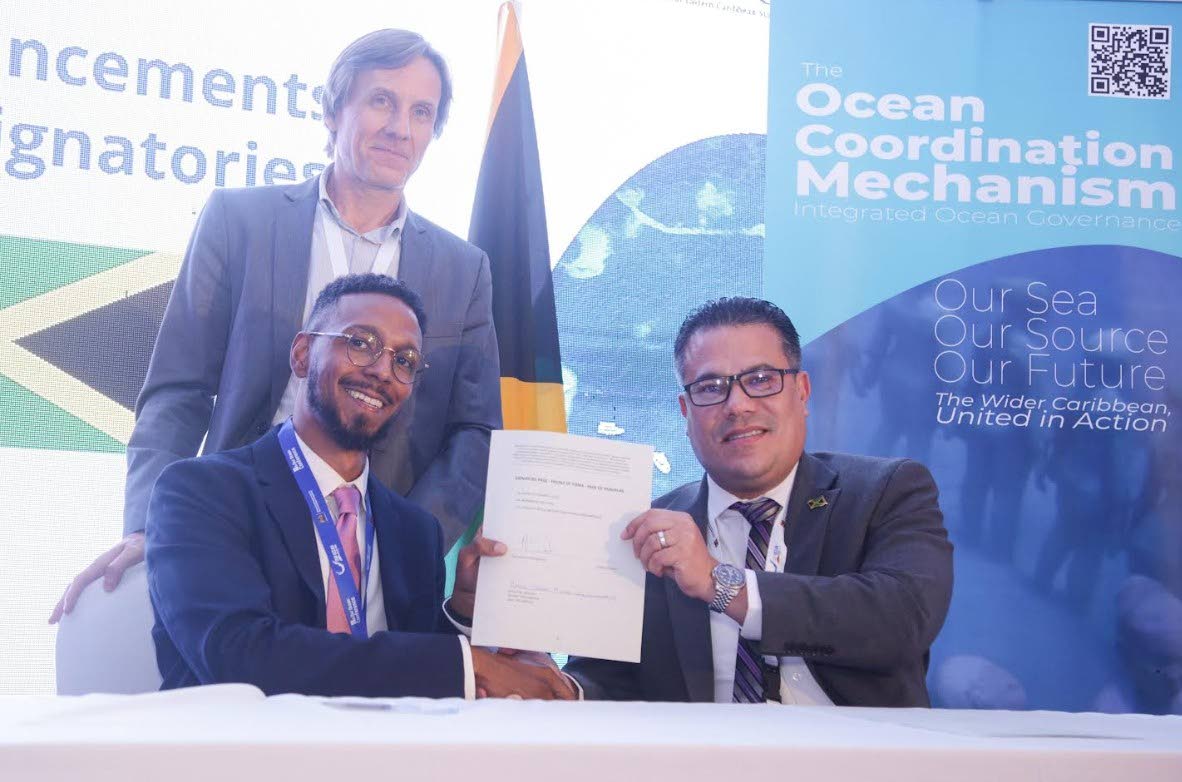 Matthew Samuda (right), minister of water, environment and climate change from the Government of Jamaica, signs the Wider Caribbean Ocean Coordination Mechanism MOU at the Our Oceans Conference in Mombosa, Kenya.
THE KUNMING-MONTREAL Global Biodiversity Framework’s ‘30x30’ target, which calls for protecting 30 per cent of coastal and marine resources by 2030, is an urgent survival mandate for the Caribbean and internationally.
Yet, only 8.2 per cent of the world’s oceans are protected and 2.7 per cent effectively managed.
Where effective marine management is established, marine biodiversity restores fish population and safeguards coastal livelihoods. However, we face a USD 576 million annual funding gap for marine conservation. Without stable resources, protected areas risk becoming lines on a map with no enforcement.
In the Caribbean, conserving 30% of our waters can help safeguard 36 million jobs and drive a USD 500 billion GDP through sustainable fisheries and tourism. Fortunately, we are not starting from scratch. The current regional push for 30x30 builds directly on the foundations laid by the Caribbean Challenge Initiative, which successfully galvanised 11 governments to protect 47,000 square kilometres of near-shore marine environments.
To sustain this, the Caribbean Biodiversity Fund (CBF) worked with leaders to establish the regional Caribbean Sustainable Finance Architecture that continues to grow and develop. To date, the CBF has disbursed over USD 50 million towards more than 100 projects in 16 countries, and the positive results are staggering.
To scale our successes, the CBF and the Blue Nature Alliance launched the USD 250 million Marine Protected Areas Finance Facility (MPAFF) at the 11th Our Ocean Conference in Kenya earlier this year. The MPAFF shifts us from short-term grants to sustainable, blended finance, channeling funds directly to national trust funds and local NGOs targeting effective, long-term management of Marine Protected Areas. The vision of the CBF is to not only meet the current needs of Caribbean MPAs, but to still be doing that for any regional MPA 20 years from now.
The momentum has been strong. Fifteen governments have endorsed the Actioning Blue shared vision and roadmap, cementing our regional blueprint to protect 30% of the Caribbean Sea by 2030. Jamaica recently signed this 30x30 roadmap along with Barbados and St Vincent and the Grenadines. This expanded the Ocean Coordination Mechanism to 23 signatories.
While regional political resolve is stronger than ever, it must be met with sustained political commitment and financing. Jamaica’s role as host of the Our Ocean Conference in 2029 provides an important opportunity to keep the Caribbean at the forefront of the global ocean agenda and build on the momentum already underway.
For us as a region, achieving the 30x30 target will secure a living, thriving ocean that will continue to sustain our islands, communities and economies long after the metrics are met.
Contributed by Karen McDonald Gayle, chief executive officer, Caribbean Biodiversity Fund.